Descrição
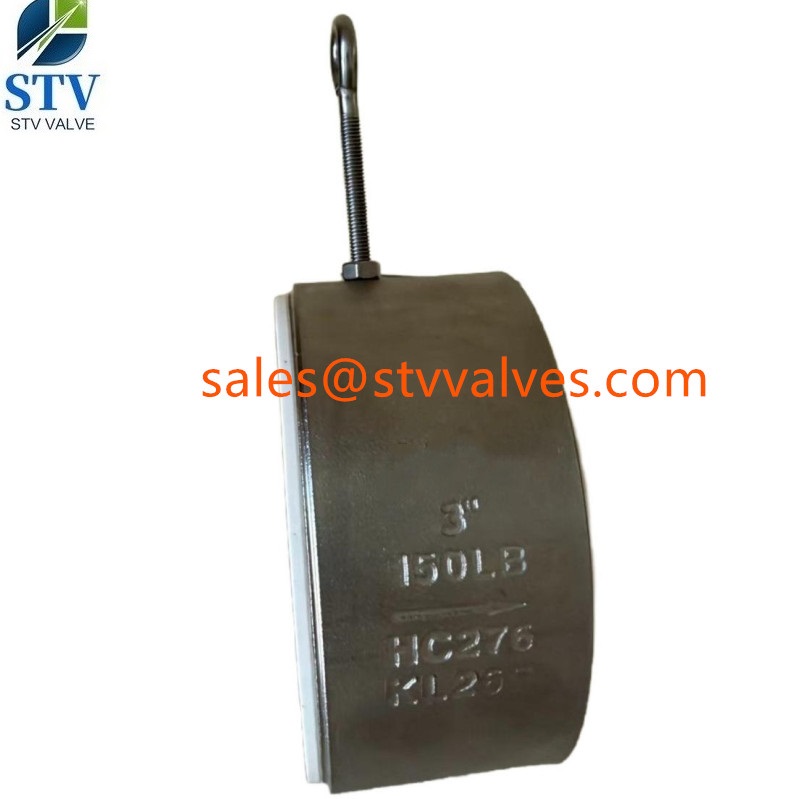
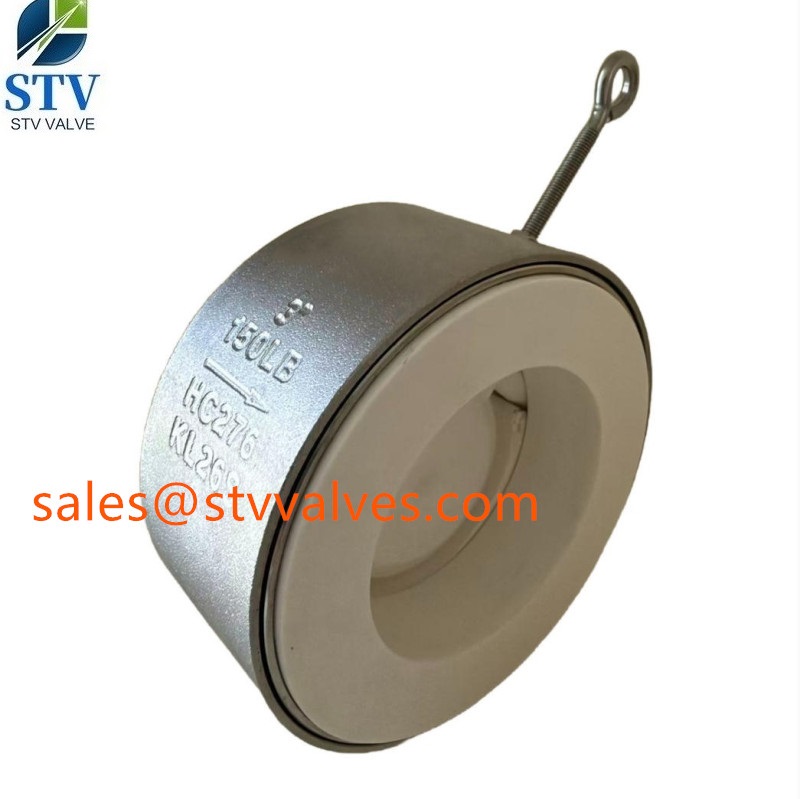
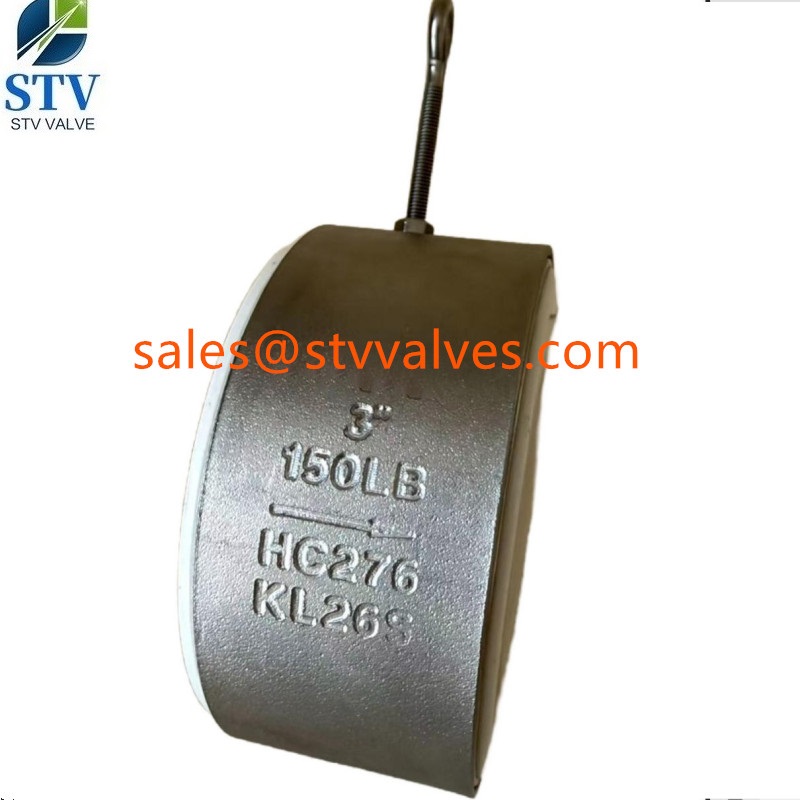
PTFE Wafer Check Valve, HC276 Body, 3 Inch, Class 150 – Corrosion Resistant Industrial Check Valve
1. Product Overview
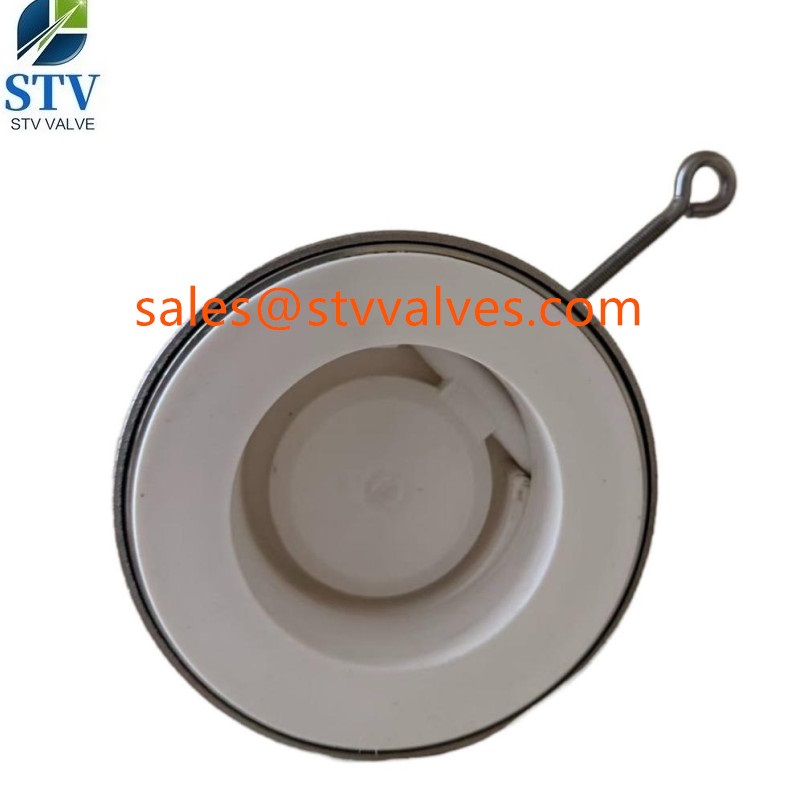
O 3 Inch Class 150 PTFE Wafer Check Valve with HC276 Body is designed for industrial piping systems that require reliable backflow prevention and excellent corrosion resistance. Combining a Hastelloy C-276 alloy body with a PTFE-lined internal flow passage, this valve provides an effective solution for handling aggressive chemicals, corrosive liquids, and demanding industrial media.
The HC276 body offers outstanding resistance to a wide range of corrosive environments, while the PTFE lining provides a chemically resistant contact surface that helps protect the valve interior from chemical attack.
With a compact wafer-style design, this check valve can be installed between compatible pipeline flanges, helping reduce installation space and overall piping weight.
STV VALVE supplies corrosion-resistant industrial check valves for chemical processing, petrochemical, pharmaceutical, and other demanding applications.
2. Key Product Specifications
| Parameter | Descrição |
|---|---|
| Nome do Produto | PTFE Wafer Check Valve |
| Nominal Size | 3 Inch (DN80) |
| Pressure Class | ASME Class 150 |
| Body Material | Hastelloy C-276 (HC276) |
| Internal Lining | PTFE |
| Tipo de válvula | Válvula de retenção de wafer |
| Conexão | Wafer Type, Between Flanges |
| Função | Automatic Backflow Prevention |
| Operação | Self-Actuated |
| Aplicativo | Corrosive Chemical Service |
| Manufacturer | STV VALVE |
Note: Disc, spring, gasket, lining thickness, face-to-face dimensions, and applicable design standards should be confirmed according to the approved technical drawing and project requirements.
3. HC276 Body – Excellent Corrosion Resistance
Hastelloy C-276 (HC276) is a nickel-molybdenum-chromium alloy recognized for its excellent corrosion resistance in severe industrial environments.
Compared with conventional stainless steel materials, HC276 offers improved resistance to many aggressive chemicals, particularly in environments containing chlorides, oxidizing agents, and reducing acids.
Key material advantages include:
- Excellent resistance to pitting and crevice corrosion.
- High resistance to chloride-induced corrosion.
- Good performance in various acidic chemical environments.
- Resistance to many oxidizing and reducing chemical media.
- Good mechanical properties in demanding industrial applications.
The HC276 body makes this 3-inch wafer check valve suitable for applications where standard carbon steel and stainless steel valves may not provide sufficient corrosion resistance.
4. PTFE Lining – Chemical Protection and Reliable Sealing
PTFE (Polytetrafluoroethylene) is widely used as a lining material in chemical-processing valves because of its excellent chemical resistance and low friction coefficient.
In this wafer check valve, the PTFE lining provides a protective barrier between the process medium and the valve’s internal surfaces.
Main benefits of PTFE lining:
- Excellent resistance to many acids and alkalis.
- Low friction and non-stick surface characteristics.
- Reduced risk of chemical attack on protected internal surfaces.
- Suitable for many corrosive liquid applications.
- Helps improve service life in compatible chemical environments.
The chemical compatibility of PTFE must still be evaluated against the actual process medium, temperature, pressure, and operating conditions.
5. Working Principle of PTFE Wafer Check Valve
A wafer check valve is an automatic valve designed to prevent reverse flow in a pipeline.
When the upstream pressure exceeds the downstream pressure and the required opening differential is achieved, the internal disc opens to allow fluid to pass through the valve.
When the flow decreases or reverses, the disc returns toward the closed position, helping prevent backflow into the upstream pipeline.
The main operating functions include:
- Forward Flow: The process medium pushes the disc open.
- Normal Operation: The valve maintains an open flow passage.
- Reverse Flow: The disc moves toward the closed position.
- Backflow Prevention: The valve helps protect pumps, pipelines, and other equipment.
The actual opening pressure and closing performance depend on the internal design, disc configuration, and spring arrangement, if fitted.
6. Main Advantages of HC276 PTFE Wafer Check Valve
1. Corrosion-Resistant Alloy Construction
The HC276 body is suitable for demanding chemical environments where corrosion resistance is a major selection requirement.
2. PTFE-Protected Internal Surface
The PTFE lining helps isolate compatible corrosive media from the valve’s protected internal surfaces.
3. Compact Wafer Design
The wafer configuration allows installation between compatible pipeline flanges, saving installation space.
4. Automatic Operation
No external actuator or manual operation is required. The valve responds automatically to flow and differential pressure.
5. Reduced Backflow Risk
The valve helps prevent reverse flow that could damage pumps, compressors, and other pipeline equipment.
6. Industrial Chemical Applications
The combination of HC276 alloy and PTFE lining makes the valve suitable for selected aggressive chemical services.
7. Typical Industrial Applications
The 3 Inch Class 150 HC276 PTFE Wafer Check Valve can be considered for the following applications, subject to chemical compatibility and engineering verification.
Chemical Processing Industry
Used in chemical transfer lines, acid circulation systems, and corrosive liquid pipelines.
Petrochemical Industry
Suitable for selected chemical processing and fluid handling systems involving aggressive media.
Pharmaceutical Industry
Can be considered for compatible chemical transfer and process utility systems.
Acid and Alkali Handling
Designed for selected acidic and alkaline fluid services where PTFE lining provides suitable chemical protection.
Industrial Wastewater Treatment
Used in compatible chemical dosing, treatment, and wastewater transfer systems.
8. Installation and Maintenance Recommendations
Correct installation is essential for reliable check valve performance.
- Confirm that the pipeline flange dimensions match the valve design.
- Check the flow direction arrow before installation.
- Ensure that the PTFE lining is not damaged during transportation or installation.
- Use compatible gaskets and appropriate bolting materials.
- Tighten flange bolts evenly according to the specified torque requirements.
- Avoid excessive pipeline stress on the valve body.
- Inspect the valve periodically for leakage, deposits, and internal wear.
The valve should be installed in the orientation specified by the manufacturer’s approved installation instructions.
9. Why Choose STV VALVE?
STV VALVE focuses on industrial valve manufacturing and supply for international customers in chemical processing, petrochemical, oil and gas, power generation, and general industrial markets.
Our product range includes:
- PTFE Lined Valves
- Wafer Check Valves
- Swing Check Valves
- Dual Plate Check Valves
- Titanium Valves
- Hastelloy Alloy Valves
- Stainless Steel Industrial Valves
- High-Pressure Industrial Valves
For special alloy valve requirements, STV VALVE can work with customers to confirm material grades, pressure ratings, connection dimensions, lining materials, inspection requirements, and project-specific technical specifications.
Website: https://www.stvvalves.com/
10. Frequently Asked Questions (FAQ)
Q1: What is an HC276 PTFE wafer check valve?
It is a non-return valve featuring a Hastelloy C-276 alloy body and PTFE-lined internal surfaces. It is designed to prevent reverse flow in corrosive industrial piping systems.
Q2: What are the advantages of an HC276 body?
HC276 provides excellent resistance to many aggressive chemical environments, including various chloride-containing and acidic media.
Q3: Why is PTFE used as the lining material?
PTFE offers excellent chemical resistance and a low-friction surface, making it suitable for protecting valve internals in many corrosive applications.
Q4: What does Class 150 mean?
Class 150 is an ASME pressure class designation. Its allowable working pressure depends on the material and operating temperature. It should not be interpreted as a universal 150 psi pressure rating.
Q5: What pipeline size is a 3-inch wafer check valve?
A nominal 3-inch valve generally corresponds to DN80. The actual flange compatibility and dimensional requirements should be verified against the applicable standard.
Q6: Can this valve be used for sulfuric acid or hydrochloric acid?
HC276 and PTFE are used in various acid-handling applications, but suitability depends on acid concentration, temperature, impurities, flow conditions, and the complete wetted-material configuration. A chemical compatibility review is recommended before ordering.
Q7: Does the wafer check valve require manual operation?
No. It operates automatically according to the direction of fluid flow and the pressure differential across the valve.
Q8: Can STV VALVE supply customized HC276 PTFE wafer check valves?
Yes. Special material combinations, dimensions, lining requirements, inspection documentation, and project specifications can be discussed with STV VALVE.
11. Conclusion
O PTFE Wafer Check Valve, HC276 Body, 3 Inch, Class 150 is a corrosion-resistant industrial valve solution for selected chemical and process applications.
Its combination of Hastelloy C-276 alloy construction, PTFE-lined internal surfaces, and compact wafer-style installation makes it a practical choice for engineers and industrial buyers seeking reliable backflow prevention in corrosive fluid systems.
Contact STV VALVE for technical specifications, material confirmation, drawings, and quotations.
STV VALVE – Industrial Valve Manufacturer and Supplier
Website: https://www.stvvalves.com/