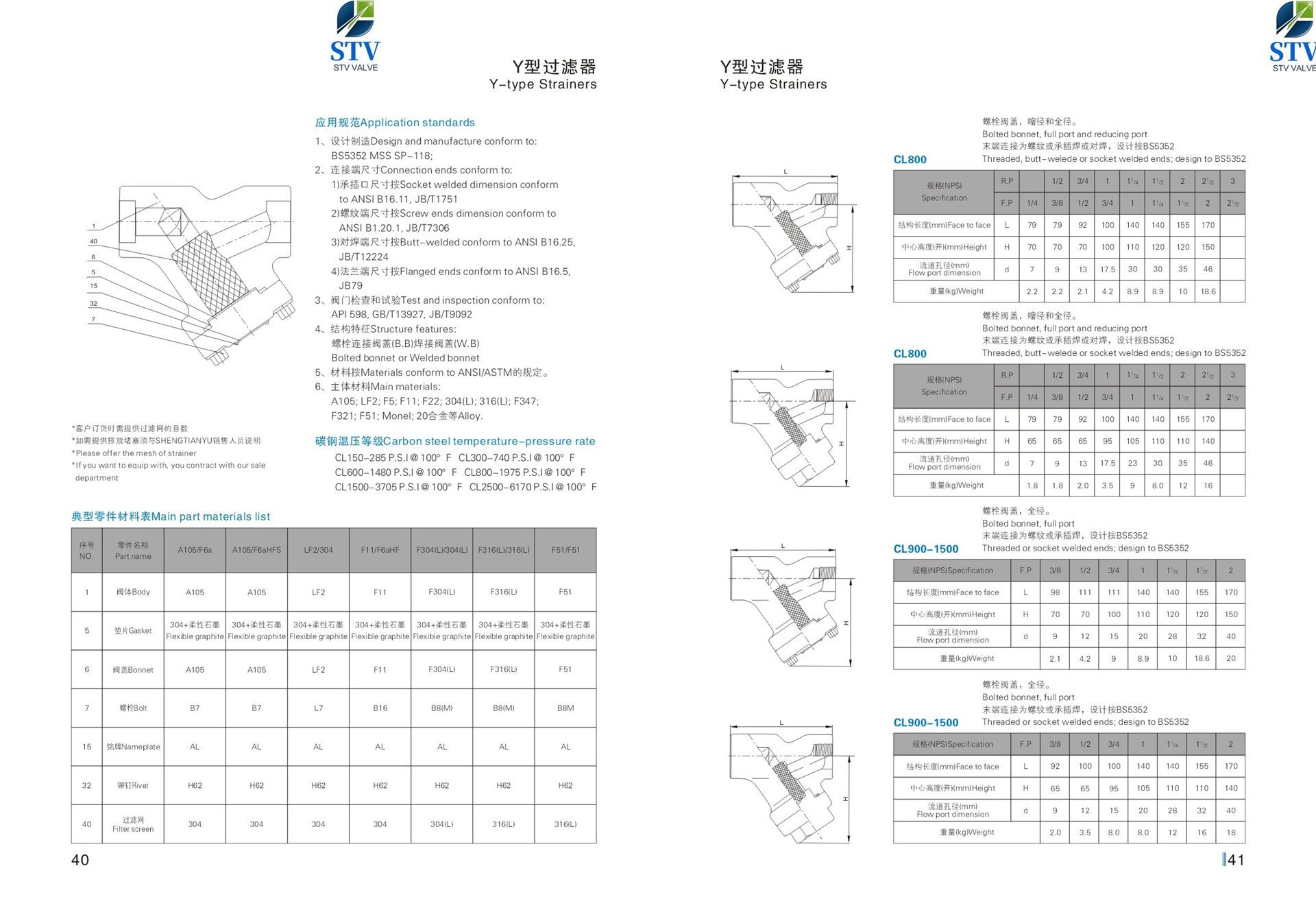
API 602 Forged Steel Y Strainer

Forged Steel Y Type Strainer Class 800, Forged Steel Y- Type Strainers, Forged Steel Y-Pattern Strainer, NPT or BW END, SW, Y Type Strainers and Filters, Y-type strainer,API 602 Forged Steel Y Strainer
You need good protection for your pipeline systems. The Forged Steel Y Strainer provides this safety. Built strong, it can handle high pressure with ease. This strainer effectively stops debris from damaging your equipment. Conforming to API 602 standards, you can trust the reliability of the Forged Steel Y Strainer. In demanding environments, it performs exceptionally well and is dependable. Each strainer you use lasts a long time, offering you excellent value.
Key Takeaways
- Forged Steel Y Strainers keep your pipeline safe by catching dirt and trash. This helps your equipment last longer and work better.
- Pick the best material for your strainer, like stainless steel or special alloys. This helps stop rust and makes the strainer work well.
- You need to clean the screen filter often. This stops clogs and helps the strainer filter things the right way.
- These strainers can handle strong pressure and hot or cold temperatures. This means you can use them in many kinds of factories.
- API 602 and ASME B16.34 rules make sure your strainer is safe and works well.
Construction
Forged Steel Y Strainer Materials
It is important to pick the right material for your strainer. Forged steel y-type strainers are made from strong metals. These metals work with many liquids and gases. You can choose forged carbon steel, stainless steel, or special alloys. Some special alloys are Monel, Inconel, and Hastelloy. Each material has its own benefits for filtering and strength.
Here is a table that lists the properties and how well these materials resist corrosion:
| Material | Properties | Corrosion Resistance |
|---|---|---|
| Stainless Steel | 303: Easy to machine, resists atmospheric corrosion. | Good for food and sterilization solutions. |
| 304: Common, low carbon, good for welding. | Used in food industry. | |
| 316: Contains molybdenum for better resistance to chloride corrosion. | Excellent for marine and pharmaceutical use. | |
| Monel | Alloy 400: Nickel/copper alloy, strong and ductile. | Not affected by stress corrosion cracking. |
| Inconel | Alloy 600: Acid resistant, high strength, easy to work with. | Resists corrosion and heat. |
| Hastelloy | Alloy C-276: Resists pitting and crevice corrosion. | Good for tanks, piping, and heat exchangers. |
Forged steel strainers are tough and last a long time. These materials help your filter system stay strong and work well.
Pressure Ratings
You want your forged steel y-type strainers to be safe under high pressure. These strainers come in different pressure classes. You can pick the best one for your needs. The pressure classes go from 150Lb up to 2500Lb. This means you can use them in many places. They work for low-pressure water lines and high-pressure steam or oil systems.
| Pressure Class | Maximum Allowable Working Pressure |
|---|---|
| Class 150 | N/A |
| Class 300 | N/A |
| Class 400 | N/A |
| Class 600 | N/A |
| Class 900 | N/A |
| Class 1500 | N/A |
| Class 2500 | N/A |
Forged steel y-type strainers help keep your equipment safe. They work even when the pressure is very high.
Temperature Range
You need a strainer that works in hot and cold places. Forged steel y-type strainers can handle a wide range of temperatures. They work from -29℃ to 650℃. This means you can use them for steam, oil, air, gas, water, and some corrosive liquids.
Here is a table that shows how different materials do at different temperatures:
| Material | Temperature Range |
|---|---|
| ASTM A105 | -20°F to 800°F |
| Stainless Steel | -20°F to 950°F |
- Duplex stainless steel S31803 works up to 600°F.
- Bronze materials can get soft if it gets too hot.
Your system will get good filtering and protection, no matter the temperature.
Tip: Forged steel strainers have a tight grain structure. This makes them stronger and tougher than cast steel strainers. They resist corrosion and erosion better. Your filter system will stay strong in hard conditions.
Forged steel y-type strainers are strong, handle high pressure, and work in many temperatures. These features make them a great choice for your filter needs.
Design
Y-Pattern Structure
You need a strainer that fits well in your pipeline. The Y-pattern shape is small and saves space. This design is good for tight spots. You can put forged steel y-type strainers where others will not fit. The Y-pattern lets fluid move easily and lowers pressure drops. You get good filtration and do not lose space.
The Y-pattern sends the flow through the filter screen. This helps catch debris and keeps it away from your equipment. Forged steel y-type strainers protect your system and stay strong. They work well even when it is hot or under high pressure.
Tip: The small size of the Y-pattern helps you plan your pipeline. Forged steel strainers are great for places with little space.
Bolted Bonnet & Minimized Risk of Leakage
You want your strainer to be tight and not leak. The bolted bonnet design helps keep it secure. The bonnet connects tightly to the body of the strainer. This makes a strong seal and lowers the risk of leaks. You can trust this design to keep your system safe.
When you need to clean or check the strainer, you can take off the bonnet. This gives you quick access to the screen inside. You do not need special tools or hard steps. You can check the filter and make sure it works well.
Forged steel y-type strainers have different end connections. You can pick RF, RTJ, BW, SW, or threaded ends. These choices help you match the strainer to your pipeline. You can also add things like a drain plug or a stainless steel screen for better filtering.
| End Connection Type | Description |
|---|---|
| RF | Raised Face |
| RTJ | Ring Type Joint |
| BW | Butt Weld |
| SW | Socket Weld |
| Threaded | Screw-in connection |
Maintenance
You need to keep your forged steel y-type strainers working well. It is important to do regular maintenance. You should clean the screen filter often. This stops clogging and keeps filtering strong. The design lets you check the strainer quickly.
Forged steel strainers make maintenance easy. You do not spend much time or money on work. You can clean or change the screen fast and do not stop your system for long. This saves money and keeps your system running well.
Note: If you follow a good maintenance plan, your forged steel strainers last longer. You also lower the chance of leaks and keep filtering strong.
You can count on forged steel y-type strainers for easy care, strong filtering, and good performance. These strainers help protect your equipment and keep your pipeline safe.
Compliance
API 602 & ASME B16.34
You want your forged steel y-type strainers to follow the rules. API 602 and ASME B16.34 are important standards. They set rules for design, size, and pressure. These rules help you trust your strainer will work well. They also help it last a long time. When you pick a forged steel y strainer, it follows these rules.
Here is a table that shows which standards match each part:
| Requirement | Standard |
|---|---|
| Design | API 602 |
| Face to Face | API 602 |
| Flange ends | ASME B16.5 |
| Butt-weld ends | ASME B16.25 |
| Threaded Ends | ASME B1.20.1 |
| Socket-weld Ends | ASME B16.11 |
| Valves Marking | MSS SP-25 |
| Inspection and testing | API 598 |
| Body material | ASTM A105N, F11, F22, LF2, LF3, F304, F316L, F304L, F51, F55, F1, F5, F91 |
| Trim material | F6 stellite SS 304 STL, SS 316 |
| Size range | 1/2 – 2 Inch, DN15 – DN50 |
| Pressure range | Class 150 – 800 LB |
Forged steel y-type strainers follow these standards for every part. This means your strainer fits your system. It also works under the right pressure.
Quality Testing
You need to know your forged steel strainers are safe. Before they ship, each strainer gets checked and tested. API 598 gives the rules for these tests. The tests check strength, pressure, and leaks. If a strainer passes, you can trust it in your pipeline.
Here is a table that lists the main testing standards:
| Standard | Description |
|---|---|
| API 598 | Inspection and testing procedures |
| API 6D | Pressure testing standards |
| API 609 | Valve testing standards |
| API 527 | Testing for valve leakage |
| DIN 3230 | Quality assurance standards |
Most forged steel y-type strainers pass these tests the first time. Sometimes, problems like clogging or screen damage can make one fail. You can stop these problems by picking the right size. You should also install it right and keep it clean.
Tip: Check and clean your forged steel strainers often. This helps them last longer and work better.
You can trust forged steel y-type strainers to be safe and follow the rules in your system.
Performance of Forged Steel Strainers

Operational Reliability
You want your filter system to work well every day. Forged steel strainers are strong and can handle high pressure and heat. They work in hard places like chemical plants or steam lines. The forged steel y strainer has a filter you can change. This filter catches dirt and debris. It keeps your equipment safe and helps you avoid expensive repairs.
Filtration precision is important. Mesh screens give you fine filtration that fits your needs. If you pick the right mesh size, you stop particles from reaching pumps or valves. This also lowers the chance of clogging. Doing regular checks and cleaning helps you find problems early. You can clean the strainer and keep it working well.
Tip: Use pressure gauges to check for pressure build-up. This helps you stop leaks and keeps your system safe.
Forged steel strainers are made to lower the risk of leaks. The bolted bonnet and strong seal keep fluids inside. You can trust these strainers to protect your system and keep filtering strong.
Longevity
You want your strainer to last a long time. Forged steel strainers last for years because they are tough. The strong materials fight rust and damage. You get good filtration even in rough places.
Many things help your strainer last longer:
- Take care when moving it
- Install it the right way
- Clean and check it often
- Look for signs of damage
Filtration stays strong if you clean the screen and check for problems. If you follow a cleaning plan, you stop issues like erosion or pitting. You also keep the filtration working right.
Strainers with a filter you can change make cleaning easy. You can swap the screen without taking the whole strainer apart. This saves time and keeps your system running.
Note: Cleaning and checking your strainer often helps it last longer. You protect your equipment and get the best use from your forged steel strainers.
Applications of Forged Steel Y-Type Strainers
Industrial Uses
Forged steel strainers are used in many industries. They work well in steam pipelines and heat exchangers. You also see them in air and natural gas systems. Power plants use them near condensers and turbines. These places show why forged steel strainers are important for protecting equipment.
- Steam service pipelines
- Industrial heat exchangers
- Air and natural gas systems
- Power plants near condensers and turbines
These strainers help keep pumps and valves safe. If you put a strainer before a pump or valve, you stop dirt and debris from getting in. In steam and liquid filtration, forged steel strainers remove impurities and water drops. This helps your system work better and keeps equipment running. Chemical plants and HVAC systems use these strainers to filter chemicals and block debris from sensitive parts.
Tip: Forged steel strainers help you spend less on repairs. The filter inside can be changed, so cleaning is easy and keeps things working well.
Media Compatibility
You need strainers that work with many fluids and gases. Forged steel strainers can handle water, oil, steam, air, and some corrosive liquids. This means you can use them in lots of different jobs. The table below shows how these strainers do with different media:
| Medium Type | Compatibility Rating |
|---|---|
| Weak corrosively medium | Suitable for water, ammonia, oil, hydrocarbons |
| Corrosive medium | Suitable for sodium hydrate, caustic soda |
| Low temperature medium | Suitable for liquefied methane, ammonia, oxygen |
| Industry hygiene medium | Suitable for beer, beverages, dairy products |
| General media | Suitable for water, gas, oil, steam |
Forged steel strainers filter out solid bits and dirt. This protects important parts and lowers the chance of damage. Cleaning and taking care of them is simple, so you save time and money. Your system works well and gets better performance in every job.
Note: When you pick forged steel strainers, you get strong protection and good performance for your equipment in many places.
API 602 forged steel Y strainers keep your pipeline safe. They are very strong and tough. These strainers do not leak easily. You spend less money on fixing things. Your equipment stays safe and works longer.
- Stop dirt from hurting pumps and valves
- Help your system run smoothly and keep things clean
- Make it less likely for machines to break or stop working
These strainers work well in hard places. Pick forged steel Y-type strainers for your next job. They help make your system safer and more reliable.
FAQ
What sizes can you choose for API 602 Forged Steel Y Strainers?
You can pick sizes from 1/4 inch up to 2 inches. These sizes work for many pipelines. You have choices for different flows and uses.
How often should you clean the strainer screen?
Check and clean the screen every few months. Cleaning often keeps the filter working well. This stops clogs and helps your system run right.
Can you use these strainers with corrosive liquids?
Yes, you can use these strainers with corrosive liquids. Pick special alloys like Monel, Inconel, or Hastelloy for better safety. These help protect your equipment.
What end connections are available for installation?
You can choose RF, RTJ, BW, SW, or threaded ends. These options help you fit the strainer to your pipeline. This makes putting it in easy and safe.
How do you know the strainer meets quality standards?
API 602 and API 598 testing check the strainer for leaks and strength. These tests show the strainer is safe and works well. You can trust its performance.