

TA2 vs TA10 Titanium Valves: Material Differences, Corrosion Resistance and Selection Guide'>TA2 vs TA10 Titanium Valves: Material Differences, Corrosion Resistance and Selection Guide
TA2 vs TA10 Titanium Valves: Material Differences, Corrosion Resistance and Selection Guide
Introduction: Which Titanium Grade Is Better for Industrial Valves?
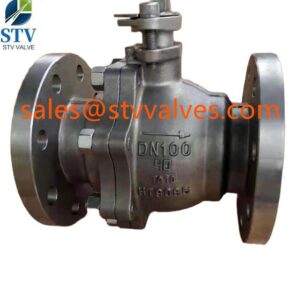
China TA10 Ball Valve
Choosing the right titanium material is essential when specifying industrial valves for corrosive environments. TA2 and TA10 are two commonly used titanium grades for industrial valve applications, including chemical processing, seawater transportation, marine engineering, and desalination systems.
TA2 titanium, generally corresponding to ASTM Grade 2, is commercially pure titanium known for its excellent corrosion resistance, good ductility, and weldability. TA10 titanium, generally corresponding to ASTM Grade 12, is a titanium alloy containing molybdenum and nickel. These alloying elements provide improved resistance to certain crevice-corrosion conditions, particularly in elevated-temperature brines.
So, which material should you choose?
- TA2 Titanium: A strong candidate for general industrial corrosion-resistant applications, seawater systems, and chemical processing environments where Grade 2 is compatible with the process medium.
- TA10 Titanium: Worth considering for more demanding chemical environments, elevated-temperature brines, and applications requiring improved crevice-corrosion resistance.
Both materials have important advantages. The correct selection depends on the process medium, operating temperature, pressure, valve design, and project specifications.
As an industrial valve supplier, STV VALVE focuses on Titan valve solutions designed for demanding pipeline applications.
1. What Is TA2 Titanium?
TA2 is a commercially pure titanium grade commonly associated with ASTM Grade 2 and UNS R50400.
Unlike conventional titanium alloys containing substantial amounts of aluminum or vanadium, TA2 is primarily titanium, with controlled quantities of oxygen, iron, carbon, nitrogen, and hydrogen.
It offers a practical balance of corrosion resistance, mechanical strength, ductility, and fabrication performance.
Main Properties of TA2 Titanium
1. Excellent Corrosion Resistance
TA2 forms a stable and protective titanium oxide film on its surface. This passive film helps protect the material from corrosion in many oxidizing, neutral, and selected reducing environments.
It is widely considered for seawater, marine equipment, chloride-containing solutions, and various chemical-processing applications.
2. Good Mechanical Strength
TA2 provides sufficient mechanical strength for many industrial valve applications.
Representative minimum annealed properties commonly associated with Grade 2 include:
- Tensile strength: 345 MPa minimum
- Yield strength: 275 MPa minimum
- Elongation: 20% minimum
- Density: Approximately 4.51 g/cm³
Actual requirements depend on the product form, dimensions, and governing material specification.
3. Good Weldability
TA2 can be welded using suitable titanium welding procedures, including TIG/GTAW.
Proper inert gas shielding is essential to prevent atmospheric contamination of the hot titanium and weld zone.
4. Lightweight Construction
Titanium has a relatively low density compared with steel. This can help reduce valve weight, particularly in large-diameter industrial installations.
Grade 2 titanium is widely used in chemical processing, marine engineering, heat exchangers, and desalination equipment.
Source: Grade 2 titanium technical data from Corrosion Materials and ACNIS.
2. What Is TA10 Titanium?
TA10 is a titanium alloy generally corresponding to ASTM Grade 12.
Its nominal alloying system is Ti-0.3Mo-0.8Ni, meaning that titanium is the primary element, with molybdenum and nickel added to improve selected corrosion and mechanical properties.
Typical composition ranges include:
| Element | Typical TA10 Composition |
|---|---|
| Titan | Balance |
| Molybdenum (Mo) | 0.2–0.4% |
| Nickel (Ni) | 0.6–0.9% |
| Iron (Fe) | Controlled |
| Oxygen (O) | Controlled |
Exact chemical composition limits must be verified against the applicable material specification.
Main Properties of TA10 Titanium
1. Improved Crevice-Corrosion Resistance
One of the important reasons for selecting Grade 12 titanium is its improved resistance to crevice corrosion in certain aggressive environments.
This is particularly relevant to elevated-temperature brines and applications where stagnant fluid can accumulate in narrow gaps or under deposits.
2. Better Elevated-Temperature Performance in Selected Conditions
Grade 12 was developed partly to improve performance in high-temperature brine environments.
It is also used in selected pressure vessels, piping systems, and heat exchangers where its mechanical and corrosion properties are advantageous.
3. Additional Alloying Elements
Molybdenum and nickel contribute to the material’s corrosion performance in selected environments.
However, the presence of these elements does not mean TA10 is universally resistant to every acid, chemical, or chloride solution.
4. Industrial Application Potential
TA10 can be considered for demanding chemical processing, industrial heat exchangers, and selected corrosive fluid transportation systems.
Source: Grade 12 titanium technical datasheet, Meltolit.
3. TA2 vs TA10 Titanium: Key Differences
The main difference between TA2 and TA10 is their chemical composition and resulting engineering performance.
TA2 is commercially pure titanium, while TA10 is an alloyed titanium grade.
The following comparison summarizes their major characteristics.
| Comparison | TA2 Titanium | TA10 Titanium |
|---|---|---|
| Common International Grade | Grade 2 | Grade 12 |
| UNS Designation | R50400 | R53400 |
| Material Type | Commercially Pure Titanium | Titanium Alloy |
| Main Alloying Elements | None intentionally added | Mo and Ni |
| General Corrosion Resistance | Excellent in many environments | Excellent in many environments |
| Crevice-Corrosion Resistance | Good in suitable conditions | Enhanced in selected aggressive conditions |
| Elevated-Temperature Brines | Application-dependent | Particularly relevant application |
| Mechanical Strength | Moderate | Intermediate |
| Fabrication | Good | Requires suitable alloy-specific procedures |
| Typical Applications | Marine, seawater, chemical processing | Chemical processing, brines, heat exchangers |
Note: Grade equivalencies and mechanical requirements should be checked against the relevant national and international product standards. UNS R53400 is the commonly referenced designation for ASTM Grade 12.
Which Material Has Better Corrosion Resistance?
There is no universal answer.
TA2 provides excellent corrosion resistance in many natural seawater and industrial environments. Its performance is well established in marine and desalination applications.
TA10 offers additional advantages in certain more aggressive conditions, especially where elevated-temperature brines and crevice corrosion are concerns.
For example:
- Natural seawater service may be suitable for TA2.
- Selected high-temperature brine applications may favor TA10.
- Acidic chemical service requires evaluation of concentration, temperature, aeration, and chemical composition.
- Chloride-containing environments require consideration of deposits, crevices, and flow conditions.
The best material should be determined using application-specific corrosion data rather than grade names alone.
4. TA2 vs TA10 Titanium Ball Valves
Titanium ball valves are widely considered for industrial pipelines requiring corrosion-resistant shutoff.
Both TA2 and TA10 can be considered for titanium ball valve construction, subject to manufacturing and design requirements.
TA2 Titanium Ball Valve
A TA2 titanium ball valve is a suitable option for many general corrosion-resistant applications.
Typical applications include:
- Seawater circulation systems.
- Industrial water treatment.
- Marine engineering.
- Selected chemical transfer pipelines.
- Desalination plant equipment.
Its corrosion resistance and fabrication characteristics make it an attractive material for many industrial valve configurations.
TA10 Titanium Ball Valve
A TA10 titanium ball valve may be preferred where the operating environment presents more demanding crevice-corrosion or elevated-temperature brine conditions.
Applications may include:
- Selected aggressive chemical processing systems.
- High-temperature brine transportation.
- Specialized industrial heat-transfer systems.
- Corrosive process fluid pipelines.
Important Ball Valve Selection Factors
When purchasing a titanium ball valve, engineers should consider:
- Floating or trunnion-mounted design.
- Pressure rating and temperature range.
- Full-bore or reduced-bore construction.
- Ball and stem materials.
- Seat material, such as PTFE or other compatible polymers.
- Flanged, threaded, or welded connections.
- Applicable design and testing standards.
Selecting the correct body material alone is not enough. The complete wetted assembly must be compatible with the process medium.
5. TA2 vs TA10 Titanium Gate Valves
Titanium gate valves are used in pipeline systems requiring isolation and shutoff.
They are particularly relevant to industrial services where conventional steel materials may experience unacceptable corrosion.
TA2 Titanium Gate Valve
TA2 is suitable for many general corrosion-resistant isolation applications.
Typical applications include seawater systems, chemical processing, and industrial fluid transportation where Grade 2 is compatible with the medium.
TA10 Titanium Gate Valve
TA10 may be considered for selected aggressive chemical environments and applications involving elevated-temperature brines.
Its improved resistance to certain crevice-corrosion conditions can be an advantage in demanding service.
Gate Valve Selection Considerations
Before ordering a TA2 or TA10 titanium gate valve, confirm:
- Valve size and pressure class.
- Gate and body materials.
- Wedge or gate configuration.
- Stem material.
- Seat design and sealing material.
- Flange connection standard.
- Operating temperature and fluid composition.
For critical applications, the material specification and pressure-containing design should be reviewed together.
6. TA2 vs TA10 Titanium Check Valves
Titanium check valves automatically prevent reverse flow in pipeline systems.
They are commonly considered for pump protection, seawater circulation, and corrosive fluid transportation.
Common titanium check valve configurations include:
- Wafer check valves.
- Dual-plate check valves.
- Swing check valves.
- Lift check valves.
TA2 Titanium Check Valve
TA2 titanium is a strong candidate for many seawater and marine check valve applications because of its excellent corrosion resistance.
For example, a TA2 Wafer Check Valve DN500 PN16 can be considered for large-diameter seawater pipelines when the complete valve construction meets the project requirements.
TA10 Titanium Check Valve
TA10 may offer advantages in selected chemical and elevated-temperature brine applications where enhanced crevice-corrosion resistance is required.
Why Must the Complete Valve Material Be Checked?
A titanium valve body does not automatically make the entire valve suitable for seawater.
Engineers should verify the material of:
- Valve disc.
- Hinge pin or shaft.
- Spring.
- Fasteners.
- Seat.
- Other wetted components.
Galvanic compatibility and crevice geometry should also be evaluated.
For large DN500 check valves, closing characteristics and water hammer protection are important additional considerations.
7. How to Choose Between TA2 and TA10 Titanium Valves?
The correct selection should begin with an understanding of the actual process conditions.
The following guide provides a practical starting point.
| Operating Condition | Material to Evaluate First |
|---|---|
| Natural seawater circulation | TA2 |
| General marine engineering | TA2 |
| Industrial water treatment | TA2 |
| General corrosive chemical service | TA2 or TA10, depending on chemistry |
| Elevated-temperature brines | TA10 |
| Applications with demanding crevice-corrosion conditions | TA10 |
| Chemical heat exchangers | TA2 or TA10, depending on service |
| Specialized aggressive chemical processes | Application-specific material evaluation |
Five Questions to Ask Before Ordering
1. What Is the Process Medium?
Identify the actual chemical composition, including chloride concentration, acidity, oxidizing agents, and other additives.
2. What Is the Operating Temperature?
Temperature can significantly affect corrosion performance and material suitability.
3. What Is the Operating Pressure?
Confirm normal pressure, maximum pressure, pressure surges, and required design conditions.
4. What Is the Valve Configuration?
Ball valves, gate valves, and check valves have different internal structures and sealing requirements.
5. What Are the Project Standards?
Confirm the required ASTM, ASME, API, EN, or other applicable specifications.
The final valve material and construction should be approved against the project’s engineering documents.
8. Applications of TA2 and TA10 Titanium Industrial Valves
Both materials have important roles in industrial corrosion-resistant equipment.
Seawater Desalination
TA2 titanium is widely used in many seawater-related industrial applications, including piping and heat-exchanger systems.
Titanium valves can help address corrosion concerns in desalination plants.
Chemical Processing
Chemical processing facilities handle a wide range of aggressive liquids.
TA2 and TA10 can both be considered, depending on the process chemistry and operating conditions.
Marine Engineering
Marine installations require materials capable of handling long-term exposure to seawater and marine environments.
TA2 titanium is commonly considered for seawater equipment, while TA10 may be appropriate for selected more demanding conditions.
Industrial Heat Exchangers
Titanium materials are used in heat exchangers where corrosion resistance is essential.
TA10 deserves consideration in selected elevated-temperature brine applications.
Offshore Engineering
Offshore installations require reliable fluid-control equipment.
Titanium valves may be selected for applications where weight and corrosion resistance are important engineering considerations.
9. Why Choose STV VALVE for Titanium Industrial Valves?
STV VALVE focuses on industrial valve solutions for demanding pipeline applications.
Our titanium valve product categories include:
- TA2 Titanium Ball Valves.
- TA10 Titanium Ball Valves.
- TA2 Titanium Gate Valves.
- TA2 Titanium Check Valves.
- Titanium Globe Valves.
- Corrosion-Resistant Industrial Valves.
When sourcing titanium industrial valves, customers should confirm material traceability, applicable manufacturing standards, pressure testing requirements, and complete valve specifications.
STV VALVE can discuss project-specific requirements, including:
- Valve size and pressure rating.
- TA2 or TA10 material selection.
- Flange and connection requirements.
- Seat and sealing materials.
- Technical drawings and datasheets.
- Inspection and testing documentation.
For customized titanium valve requirements, contact STV VALVE:
STV VALVE – Industrial Titanium Valve Solutions for Corrosive Pipeline Applications.
10. Frequently Asked Questions
Q1: What is the difference between TA2 and TA10 titanium?
TA2 is commercially pure titanium generally corresponding to Grade 2. TA10 is a titanium alloy generally corresponding to Grade 12, containing molybdenum and nickel to improve performance in selected aggressive corrosion environments.
Q2: Is TA2 equivalent to ASTM Grade 2?
TA2 is commonly associated with ASTM Grade 2. However, the exact material equivalence must be confirmed against the applicable product form, chemical composition, mechanical requirements, and material certification.
Q3: Is TA10 equivalent to ASTM Grade 12?
TA10 is commonly associated with ASTM Grade 12. Buyers should verify the relevant ASTM material specification and the supplied material test report.
Q4: Which is better for seawater, TA2 or TA10?
TA2 is an excellent candidate for many natural seawater applications. TA10 may offer additional advantages in selected elevated-temperature brine and crevice-corrosion conditions. Actual selection depends on service conditions.
Q5: Is TA10 stronger than TA2?
Grade 12 generally has higher specified mechanical strength than Grade 2 in comparable product forms and conditions. Exact values depend on the applicable standard, product form, and heat treatment.
Q6: Can TA2 and TA10 be used for titanium ball valves?
Yes. Both grades can be considered for titanium ball valve applications, provided the design, manufacturing procedures, pressure-temperature ratings, and material compatibility requirements are satisfied.
Q7: Which titanium grade is suitable for chemical processing?
Both TA2 and TA10 may be suitable for chemical processing. Selection depends on the exact chemical composition, concentration, temperature, and operating conditions. Corrosion testing or specialist review may be necessary for critical applications.
Q8: How can I select the right titanium valve supplier?
Look for a supplier capable of providing clear material specifications, traceable material documentation, dimensional drawings, pressure testing records, and technical support for your application.
Abschluss
TA2 and TA10 are two important titanium material options for industrial valve applications.
TA2 titanium offers an excellent combination of corrosion resistance, ductility, weldability, and general industrial usability. It is a strong candidate for seawater, marine, and many chemical-processing applications.
TA10 titanium provides additional alloying advantages and is particularly worth considering for selected elevated-temperature brine and crevice-corrosion environments.
For titanium ball valves, gate valves, and check valves, material selection should always consider the complete valve construction and actual operating conditions.
Looking for TA2 or TA10 Titanium Industrial Valves?
Contact STV VALVE to discuss your titanium valve requirements, technical specifications, and customized industrial pipeline solutions.
Website: https://www.stvvalves.com/