
Unitech Stainless Steel Screwed Ball Valves: Engineering and Application Guide
Selecting the appropriate configuration depends on fluid compatibility, operating pressures, operating temperatures, and thread standard alignment. Because operating limits vary across body designs and seat compounds, system designers must consult Unitech product documentation for specific ratings before final installation.
How Screwed Ball Valves Function in Process Systems
A screwed ball valve relies on a rotatable sphere suspended between polymer seats within a threaded valve body. When the valve stem turns ninety degrees, the ball bore rotates into alignment with the pipe interior to permit straight-through flow with minimal resistance.
Rotating the stem back places the solid metal face of the sphere directly against the fluid stream, blocking line passage. Resilient internal seals surround the ball ports, compressing slightly under line pressure to prevent downstream leakage and stem egress.
Bore Alignment
Rotating the ball positions the internal port directly into the flow path. Fluid passes straight through with minimal turbulence and reduced line pressure drop.
Quarter-Turn Action
A ninety-degree swing of the lever handle shifts the valve between fully open and fully closed states. This mechanical design permits fast shutoff during normal operation or line isolation.
Internal Sealing
Line pressure assists sealing by pushing the floating ball against the downstream seat. Soft seat rings conform to the spherical surface to prevent fluid bypass.
Screwed end connections simplify maintenance by permitting direct mechanical threading onto standard male pipe nipples. This feature makes threaded valves common in modular skids, secondary utility lines, and locations where welding equipment cannot operate safely.
Features and Materials of Unitech Stainless Steel Screwed Ball Valves
Unitech Stainless Steel Screwed Ball Valves incorporate durable alloy castings designed to withstand harsh industrial processing environments. Stainless steel alloys provide strong resistance against external oxidation, atmospheric moisture, and internal chemical attack from active fluid streams.
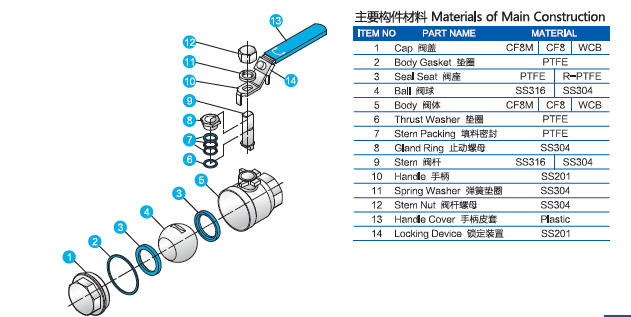
Internal components such as stems, balls, gland nuts, and stop pins use matching corrosion-resistant materials to prevent galvanic reaction and premature wear. The table below outlines key structural elements typically evaluated during mechanical specification.
| Component | Material Role | Design Function |
| Valve Body | Pressure Boundary | Houses internal trims and connects securely to external piping runs. |
| Floating Ball | Closure Element | Rotates against soft seats to open or isolate internal fluid pathways. |
| Valve Stem | Torque Transmitter | Transfers manual handle or actuator torque directly to the sphere. |
| Seat Rings | Sealing Interface | Forms tight contact against the ball to block fluid migration downstream. |
| Stem Packing | Secondary Seal | Prevents fugitive emissions and fluid leaks along the drive shaft. |
| Lever Handle | Manual Operator | Provides visual position indication and quick quarter-turn manual operation. |
Body construction options may include one-piece, two-piece, or three-piece configurations depending on line size and servicing preferences. Designers should confirm specific alloy designations and seat compounds with official Unitech technical sheets for exact chemical compatibility.
Industrial Applications and Fluid Media Compatibility
Threaded stainless ball valves operate across a diverse range of commercial and industrial processing facilities. Their corrosion resistance and mechanical resilience make them suitable for both clean utility services and aggressive chemical handling.
Unitech Stainless Steel Screwed Ball Valves handle clean water, cooling fluids, compressed air, industrial gases, and non-abrasive process liquids. Facility managers select these valves for installations where threaded pipe fittings are standard practice.
- Chemical handling systems where process streams require corrosion-resistant alloy boundaries.
- Water treatment and cooling lines requiring dependable shutoff without mineral scale binding.
- Compressed air and inert gas distribution lines where tight seat sealing prevents supply losses.
- Industrial washdown systems and food processing utilities needing exterior rust resistance.
- Petrochemical skid packages and fuel distribution manifolds utilizing compact threaded fittings.
For high-viscosity media, slurry handling, or aggressive acids, chemical resistance varies substantially based on temperature and concentration. Technical verification using Unitech engineering documents helps avoid unintended seal degradation or body erosion.
Critical Evaluation Factors for Valve Selection
Proper soupape selection requires balancing process operating conditions with mechanical pipe requirements. Sizing errors or material mismatches can lead to seat leaks, excessive operating torque, or piping stress.
Thread profile compatibility must receive immediate attention during engineering review, verifying whether piping calls for NPT, BSPT, or BSPP threads. Mating incompatible thread geometries damages threads and prevents fluid-tight mechanical joints.
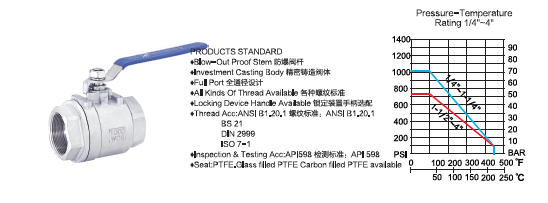
Always review published Unitech engineering data sheets to determine maximum pressure ratings and continuous temperature thresholds for specific valve models before placing orders.
Engineers must also evaluate port style, choosing between full-bore and standard-bore designs based on allowable pressure drop. Automated systems require checking top-mounting pad dimensions if pneumatic or electric actuators will replace manual lever handles.
Installation Practices and Routine Maintenance Guidelines
Installing threaded valves demands careful alignment and proper sealant selection to prevent thread galling on stainless steel surfaces. Stainless alloys can bind during threading if joined dry or cross-threaded under excessive torque.
Follow structured mechanical practices when threading valves into line positions to maintain valve body integrity and seat alignment.
- Inspect male pipe threads and female valve ports to remove burrs, metal shavings, and dirt.
- Apply an approved PTFE tape or paste thread sealant formulated specifically for stainless steel fittings.
- Thread the valve onto the pipe by hand until snug to confirm proper thread engagement without cross-threading.
- Apply a wrench only to the valve hex end closest to the pipe joint being tightened to prevent twisting the valve body.
- Cycle the lever handle fully open and closed after tightening to verify smooth movement and unobstructed ball clearance.
Routine maintenance includes periodic visual checks for stem packing leakage, handle tightness, and external corrosion around fittings. If weeping occurs around the stem, tighten the gland packing nut in small increments until leakage stops, taking care not to over-compress the seal.
Frequently Asked Questions
What thread types are available on Unitech Stainless Steel Screwed Ball Valves?
Unitech produces threaded valves with standard industrial thread patterns such as NPT or BSP options. Consult Unitech technical documentation to confirm the exact thread standard provided on specific valve models.
Can these screwed ball valves handle high-temperature steam lines?
Steam compatibility depends strictly on the seat and seal materials installed within the valve body. Review the pressure-temperature rating charts in Unitech product manuals before using threaded valves in steam applications.
How can thread galling be prevented during stainless steel valve installation?
Applying a dedicated anti-galling thread sealant or quality PTFE tape helps lubricate the mating surfaces during assembly. Avoid overtightening and never force cross-threaded pipe joints.
Can manual lever handles be replaced with automated actuators?
Certain valve bodies feature integrated mounting pads designed for electric or pneumatic actuation packages. Check the manufacturer dimensional drawings to confirm mounting flange standards and stem connection dimensions.
How often should screwed ball valves be exercised in process lines?
Valves kept continuously open or closed benefit from routine cycling during scheduled plant maintenance to prevent seat sticking. Frequency depends on line media properties, particulate content, and facility maintenance protocols.
Summary of Valve Integration
Unitech Stainless Steel Screwed Ball Valves deliver straightforward mechanical installation, robust alloy construction, and dependable quarter-turn shutoff across industrial piping systems. Matching process fluid characteristics, working pressures, and connection standards to manufacturer specifications supports safe, long-term line performance. Consult official Unitech technical catalogs and engineering sheets to verify all design parameters prior to system procurement.