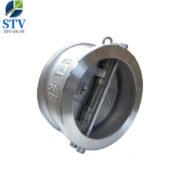

Screwed 316 Swing Check Valve
If you need a strong check valve, stainless steel swing check valves are better than brass. They last longer, resist rust better, and can be used in more ways. Look at this table to compare how long they last and how much pressure they can handle.
Type de vanne | Durability Rating | Corrosion Resistance | Note de pression |
|---|---|---|---|
Stainless Steel 304 | ~1000 | High (general corrosion) | High |
Stainless Steel 316/316L | ~1000 | Excellent (chlorides, acids) | High |
Bronze/Brass | ~400 | Good (fresh water, mild seawater) | Moderate |
You should pick stainless steel or brass valves that fit your system. This could be for water, HVAC, or compressed air. |
Key Takeaways
Stainless steel swing check valves last a long time and do not rust easily. They are better than brass valves for tough places. This makes them good for harsh environments.
Pick brass check valves for smaller jobs and to save money. They work well in home plumbing and watering systems.
Think about what you need the valve for and what will flow through it. Stainless steel is good for high pressure and strong chemicals. Brass is best for clean water and weak chemicals.
Quick Comparison
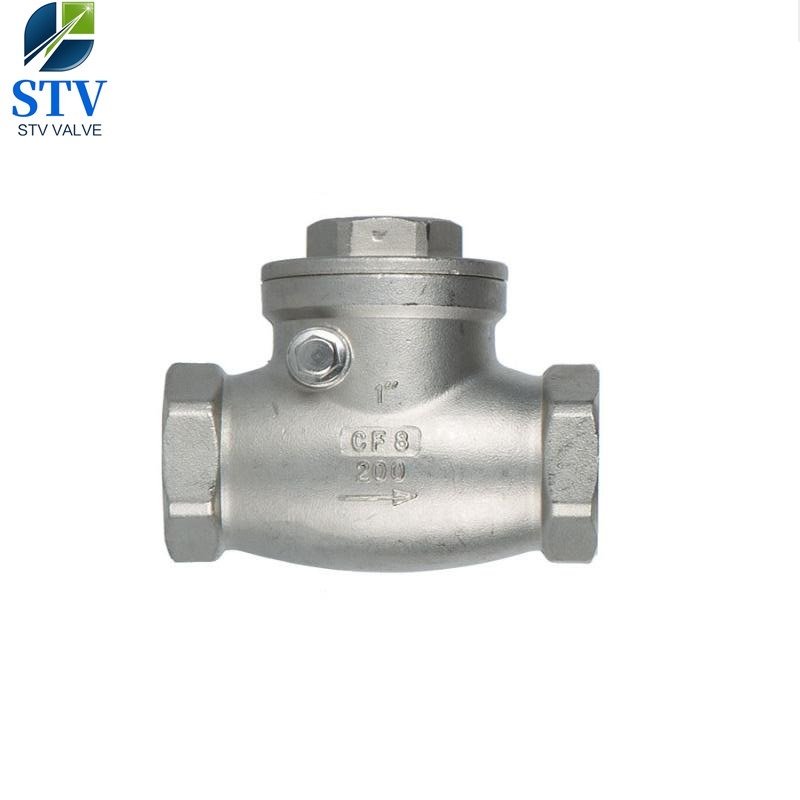
Stainless Steel Check Valve, Swing Check Valve
Matériel
Acier inoxydable and brass are very different. Stainless steel swing check valves have iron, chromium, and nickel. Brass check valves are made from copper and zinc. Here is a table that shows the main differences:
Feature | Stainless Steel Valves | Brass Valves |
|---|---|---|
Corrosion Resistance | More corrosion-resistant due to chromium | Prone to corrosion, affected by pH |
Strength | Higher tensile and yield strength | Less strong, more likely to fail |
Heat Resistance | Can withstand higher temperatures | Softens at lower temperatures |
Cost | Generally more expensive | Generally less expensive |
Applications | Used in harsher environments | Common in plumbing and HVAC |
Corrosion Resistance
You want your check valve to last a long time. Stainless steel swing check valves resist corrosion very well. They work great in marine, chemical, and food places. Brass check valves are okay in fresh water. But they can break down in salty or harsh places.
Matériel | Corrosion Resistance | Notes |
|---|---|---|
Laiton | Moderate | Susceptible to dezincification and general corrosion in harsh conditions. |
Acier inoxydable | High | Excellent for marine use; resistant to pitting and general corrosion. |
Durability
A good swing check valve should last many years. Stainless steel check valves can last 10 to 20 years. They handle high pressure and heat better than brass. Brass check valves wear out faster in tough places.
Cost
Price is important when you choose a check valve. Stainless steel swing check valves cost more at first. Brass check valves are cheaper, so people use them for small jobs or clean water. Stainless steel can save money later because it lasts longer.
Applications
Swing check valves can be used in many places. Stainless steel is best for food, chemicals, marine, and high-pressure lines. Brass check valves are good for plumbing and HVAC. Here is a table that shows where each type works best:
Application Type | Reason for Preference |
|---|---|
Food and beverage applications | FDA-approved stainless steel is safe for food contact and does not leach substances. |
Chemical processing | Suitable for handling aggressive chemicals and high-temperature fluids. |
Marine environments | Excellent corrosion resistance makes them ideal for seawater and shipbuilding. |
High-pressure and high-temperature systems | Can withstand extreme pressures and temperatures, suitable for steam lines and industrial boilers. |
Stainless Steel Swing Check Valve Features
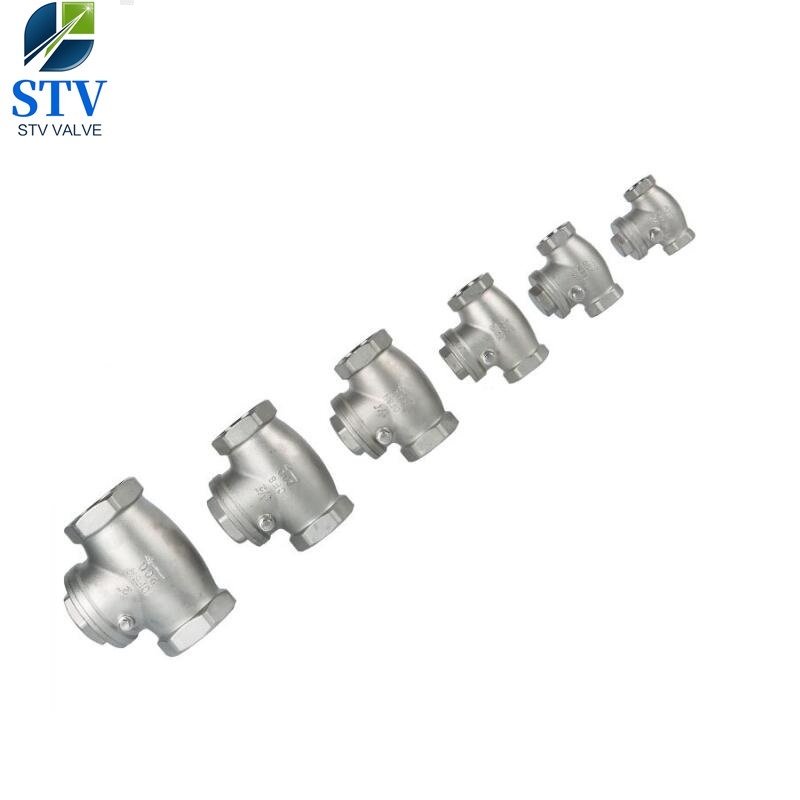
200 Wog Swing Check Valve, Check Valve, Screwed Check Valve
Construction
When you look at a stainless steel swing check valve, you see strong parts built for tough jobs. The body uses cast stainless steel with smooth curves to stop stress and reduce turbulence. The hinge sits close to the disc’s center, so it moves easily and lasts longer. The disc is one solid piece, heat-treated for extra strength, and has a shiny seat for tight sealing. You also get seat rings that fight corrosion and damage. The PTFE cap and hinge pin seal make maintenance simple and keep leaks away. Here’s a quick table to show you the main construction features:
Feature | Description |
|---|---|
Corps | Cast stainless steel, rounded for less stress and erosion |
Hinge | Easy to maintain, placed for smooth movement |
Disque | One-piece, heat-treated, mirror finish for sealing |
Seat Rings | Forged, hard, and built to stop corrosion |
Cap & Pin Seal | PTFE cap, blind flange, spiral wound gasket for sealing and easy access |
Sealing and Reliability
You want a valve that seals tight every time. Stainless steel swing check valve designs use a hinge pin seal and PTFE cap to block leaks. The disc’s mirror finish helps it close snugly, so you get reliable performance. These valves handle high pressure up to 200 PSI and work in temperatures from -40°F to 400°F. You can trust them in water, HVAC, and compressed air systems. Stainless steel valves also resist rust and damage, so you don’t have to worry about breakdowns.
Installation Options
You get lots of choices with stainless steel swing check valves. You can install them in horizontal pipes, where gravity helps the disc close. You can also use them in vertical pipes, as long as the flow goes upward. This flexibility makes them perfect for many setups. You can pick from sizes between 1/4″ and 4″, and choose threaded BSP or NPT connections for a secure fit. If you need other stainless steel valves, like stainless steel ball valves or stainless steel gate valves, you’ll find similar options for easy installation. These features make stainless steel check valves a smart pick for almost any job.
Brass Check Valve Comparison
Material Properties
Brass valves are made from copper and zinc. Some types have tin, lead, or silicon added. These extras make the valve stronger or help stop rust. Here’s a table that lists common brass alloys used in check valves:
Alloy | Composition | Best for | Key Properties |
|---|---|---|---|
C83600 | 85% Cu, 5% Sn, 5% Pb, 5% Zn | General-purpose valve bodies | Excellent machinability and pressure tightness |
C37700 | 60% Cu, 39% Zn, 1% Pb | Valve stems and internal components | Good strength and wear resistance |
C69300 | 65% Cu, 34% Zn, 1% Si | Potable water applications | Excellent corrosion resistance |
CW602N | 61% Cu, 36% Zn, 0.1% As | High dezincification resistance | Excellent for aggressive water conditions |
C46500 | 60% Cu, 39.2% Zn, 0.8% Sn | Marine applications | Enhanced corrosion resistance in seawater |
Brass check valve bodies are tough and last a long time. They are easy to work with, so plumbers like them. Some brass alloys are best for drinking water. Others are good for hard water or sea water.
Performance
You want your check valve to work well under stress. Brass valves can handle up to 400 PSI. They work in temperatures from -20°F to 400°F. Brass valves do not rust easily, so they last longer. Their tensile strength is between 40,000 and 45,000 PSI. The hardness is 80-85 Rockwell B. Here are some quick facts:
Maximum pressure: Up to 400 PSI
Temperature range: -20°F to 400°F
Corrosion resistance: Excellent
Tensile strength: 40,000-45,000 PSI
Hardness: 80-85 Rockwell B
Brass check valves keep their shape and seal well. They work even when water or air moves fast. You can trust brass valves for plumbing and HVAC jobs. Brass ball valves and brass gate valves also work well in these places.
Typical Uses
You can find brass check valves in many places. They are used in homes, offices, and factories. Here are some ways people use brass check valves:
Hot water systems keep hot and cold water apart.
Irrigation systems stop dirty water from going backward.
Pumping systems help keep water pressure steady at home.
Fire protection systems send water to sprinklers.
HVAC systems stop water from flowing the wrong way.
Industrial processes keep water clean for machines.
Brass valves are good for these jobs because they last and need little care. You can trust brass check valves to keep water moving safely.
Performance
Corrosion Resistance
When you pick a swing check valve, you want it to last in tough places. Stainless steel swing check valves stand out because they fight rust and damage better than brass. If you use a check valve in a marine environment, stainless steel 316 is the top choice. It works well in chemical plants and places with lots of salt or harsh chemicals. Brass check valves do a good job in fresh water, but they struggle in salty or corrosive spots.
Stainless steel 316 has nickel and molybdenum, which boost corrosion resistance.
Brass is not the best for marine use because it can break down faster.
Here’s a quick look at how each material performs in marine environments:
Matériel | Corrosion Resistance in Marine Environments | Key Components |
|---|---|---|
Stainless Steel 316 | Superior | Nickel, Molybdenum |
Laiton | Good, but not for highly corrosive places | N/A |
Strength
You want your swing check valve to handle pressure and keep working. Stainless steel swing check valves are strong and reliable. Brass check valves also hold up well, but stainless steel gives you more confidence in tough jobs. Both types can handle up to 200 PSI and work in hot or cold conditions.
Type de vanne | Max Pressure (WOG) | Max Temperature (°F) |
|---|---|---|
Stainless Steel (316) | 200 PSI | 400 |
Laiton | 200 PSI | 450 |
Stainless steel swing check valves are built for heavy-duty use. You can trust them in places where you need extra strength.
Temperature & Pressure
You need a check valve that works in different temperatures and pressures. Stainless steel swing check valves can handle up to 5,000 PSI and work from -30°F to 400°F. Brass check valves can take up to 2,000 PSI and also work in the same temperature range. If you need a swing check valve for high-pressure jobs, stainless steel is the better pick.
Matériel | Max Pressure (psi) | Operating Temperature (°F) |
|---|---|---|
Laiton | 2,000 | -30 to +400 |
Acier inoxydable | 5,000 | -30 to +400 |
Tip: If you work in extreme conditions, stainless steel swing check valves give you more safety and longer life.
Applications
Fluid Compatibility
You want your swing check valve to work with the right fluids. Not every check valve fits every job. Stainless steel swing check valves handle many fluids, like water, air, and fuel. Brass check valves work well with water, oil, and gas. Here’s a quick table to help you see which valve fits your needs:
Type de vanne | Compatible Fluids |
|---|---|
Acier inoxydable | Water, Air, Fuel, etc. |
Laiton | Water, Oil, Gas, etc. |
If you use a swing check valve for water or air, stainless steel is a great choice. For oil or gas, you might pick a brass check valve. Always check the fluid before you choose your valve.
Industry Use
You see swing check valves in many industries. They help keep fluids moving in one direction. For example, the pulp and paper industry uses swing check valves because they are simple and reliable. These valves stop backflow and keep the system safe. Here’s a table that shows how one industry uses them:
Industry | Reasons for Selection |
|---|---|
Pulp and Paper | Simple design, easy to use, stops backflow, keeps system running during all phases. |
You also find swing check valves in water treatment, HVAC, and chemical plants. Each industry picks the right check valve for its needs.
Maintenance
You want a check valve that is easy to take care of. Stainless steel swing check valves need little maintenance. The PTFE cap and hinge pin seal help stop leaks. You can install these valves in different ways, so you can reach them when you need to check or clean them. Brass check valves also need little care, but you should check them for wear if you use them with harsh fluids. Regular checks help your swing check valve last longer and keep your system safe.
Cost Analysis
Initial Cost
When you shop for a check valve, price often comes first. Brass valves usually cost less than stainless steel ones. You might see a big difference if you compare prices at the store. Many people pick brass valves for small jobs or when they need to save money right away. If you have a tight budget, a brass check valve can look like the best choice. You can find these valves in most hardware stores, and they fit many home projects. Stainless steel check valves cost more at first. You pay extra for the strong metal and special features. If you need a check valve for a tough job, the higher price can make sense.
Tip: Think about how often you want to replace your check valve. Sometimes, paying more now saves you money later.
Long-Term Value
You want your check valve to last. Brass valves work well, but they wear out faster. You may need to replace a brass check valve every 5 to 10 years. That means more trips to the store and more money spent over time. Stainless steel check valves last much longer. Some keep working for 15 to 20 years or more. You do not have to worry about rust or damage as much. This saves you money on repairs and replacements. Take a look at this table to see how the two types compare:
Type de vanne | Lifespan (Years) | Replacement Cost Impact |
|---|---|---|
Brass Check Valves | 5 – 10 | Higher due to frequent replacements |
Stainless Steel Valves | 15 – 20+ | Lower due to infrequent replacements |
If you want fewer headaches and lower costs in the long run, a stainless steel check valve is a smart pick. You spend more at first, but you save money and time later.
Choosing the Right Valve
When to Use Stainless Steel Valves
It is important to pick the right swing check valve. Stainless steel valves are best when you need something strong. They work well with harsh chemicals, salty water, or high heat. These valves are used in chemical plants and oil refineries. You also see them in water treatment places. Stainless steel swing check valves do not rust easily. They last a long time, even in hard jobs.
Here is a table that shows where stainless steel valves are best:
Application Area | Why Choose Stainless Steel Valves |
|---|---|
Wastewater Treatment Plants | Handles corrosive liquids, prevents rust |
Oil and Gas Refineries | Stops reverse flow, keeps operations safe |
Chemical Plants | Works with many chemicals, resists corrosion |
Water Treatment Facilities | Keeps water clean, protects pumps |
HVAC and Plumbing Systems | Controls flow for chilled water, steam, or hot water |
Power Plants | Maintains safety in steam and cooling circuits |
Marine Applications | Perfect for ballast and seawater systems |
You may wonder why you should pick stainless steel valves. Here are some reasons: You need a swing check valve for high pressure or heat. You want a valve that lasts many years. You work where there is a lot of salt or moisture. You need a valve for many types of fluids.
Tip: Pick stainless steel valves if you want fewer replacements and less rust.
You can use these valves in oil pipelines and chemical systems. They also work in water treatment, HVAC, power plants, and marine jobs. Stainless steel valves are strong and reliable. They give you peace of mind.
When to Use Brass Check Valve
Brass swing check valves are good for lighter jobs. They are used in homes, offices, and small businesses. Brass valves work well with water and mild chemicals. They do not cost too much. You see them in water supply and irrigation systems. They help water move the right way and stop it from going backward.
Here is a table that shows where brass valves are best:
Application Area | Why Choose Brass Valves |
|---|---|
Water Supply Systems | Prevents backflow, keeps water delivery efficient |
Irrigation Systems | Protects against contamination from chemicals or fertilizers |
HVAC Systems | Maintains system efficiency, stops water from flowing backward |
Residential Plumbing | Safeguards municipal water supplies from household backflow |
Well Pump Systems | Keeps water from draining back into the well |
Booster Pumps | Maintains pressure, prevents water from flowing backward |
You should use a brass swing check valve when you need one for water or mild chemicals. It is a good choice for homes or small businesses. Brass valves are best for places with low pressure and temperature. They are easy to put in and take care of.
Brass valves are great for water and mild chemicals.
They work well in home plumbing, irrigation, and HVAC.
Note: Brass valves are a smart pick if you want to save money.
Brass valves work well for less money. You can trust them for water supply and irrigation. They are easy to find and simple to use.
You want the right swing check valve for your job. Stainless steel works best for tough places and harsh fluids. Brass saves money for everyday use. Check this table before you decide:
Factor | Why It Matters |
|---|---|
Fluid type | Stops corrosion |
Pressure/flow | Prevents leaks |
Space | Fits your setup |
Next, pick the right material, size, and rating. Make sure you install and maintain your valve for top performance.
FAQ
How do you install a screwed 316 swing check valve?
You can install it in either a horizontal or vertical pipe. Just make sure the flow arrow points in the direction you want the fluid to go.
Can you use a stainless steel swing check valve for drinking water?
Yes, you can. Stainless steel is safe for drinking water. It does not rust or leach harmful substances into your water supply.
What maintenance does a swing check valve need?
Check for leaks and clean the valve if needed. The PTFE cap and hinge pin seal help keep maintenance simple and quick.