
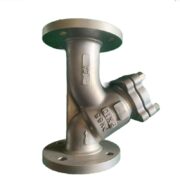
Y Strainer Parts: A Comprehensive Guide to Components, Materials, and Maintenance
Y Strainer Parts: A Comprehensive Guide to Components, Materials, and Maintenance
Y strainers are critical components in fluid systems, protecting downstream equipment from debris and contaminants. Understanding the various parts that make up these devices is essential for proper selection, maintenance, and troubleshooting. This guide provides detailed information about each component of a Y strainer, helping maintenance personnel, engineers, and procurement specialists make informed decisions when servicing or replacing these vital system protectors.

Understanding Y Strainer Function and Design
Y strainers derive their name from their Y-shaped configuration, which creates an angled pocket for the straining element. These devices mechanically remove solids from liquid, gas, or steam lines, protecting valuable equipment such as pumps, meters, and control valves from damage. The design allows for continuous flow while capturing debris in the strainer basket.
Y strainers operate on a simple principle: fluid enters through the inlet, passes through a perforated or mesh screen that traps particulates, and the filtered fluid exits through the outlet. The strainer’s body forms a chamber where the screen is housed, with the “branch” of the Y containing the removable screen assembly for cleaning or replacement.
These strainers are versatile and can be installed in horizontal or vertical positions, though proper orientation is crucial to ensure effective filtration and easy maintenance. When installed horizontally, the screen pocket should face downward to prevent debris from continuing into the flow when the strainer is opened.
What is the primary purpose of a Y strainer?
A Y strainer’s primary purpose is to protect downstream equipment by removing solid particles from fluid systems. They act as mechanical filters, trapping debris that could cause damage or blockages in pumps, valves, meters, and other sensitive components.
Where are Y strainers typically installed?
Y strainers are commonly installed in steam lines, liquid processing systems, water treatment facilities, HVAC systems, and industrial applications where protection from debris is necessary. They’re often placed upstream of equipment that requires protection from particulates.
Y Strainer Body: The Foundation Component
Primary Function
The strainer body is the main housing that contains the screen and creates the flow path for the fluid. It provides structural integrity to the assembly and connects to the pipeline through various end connections. The body forms the characteristic Y-shape that gives these strainers their name, with the main flow path forming the trunk of the Y and the screen chamber forming the branch.
Common Materials
Y strainer bodies are manufactured from various materials to suit different applications:
- Cast Iron: Economical option for low-pressure applications with temperatures up to 450°F (232°C). Commonly used in water and steam services.
- Carbon Steel: Offers good strength and durability for higher pressure applications up to 850°F (454°C). Suitable for oil, steam, and gas services.
- Stainless Steel: Provides excellent corrosion resistance for chemical processing, food production, and pharmaceutical applications. Common grades include 304 and 316 stainless steel.
- Bronze/Brass: Offers good corrosion resistance for marine applications and potable water systems.
- PVC/CPVC: Used in lower temperature, non-metallic applications where chemical resistance is required.
| Body Material | Max Pressure (PSI) | Temp Range (°F) | Common Applications |
| Fonte | 250-300 | -20 to 450 | Water, steam, air |
| Acier Carbone | 600-1500 | -20 to 850 | Oil, gas, steam |
| Acier inoxydable | 600-1500 | -60 to 1000 | Chemicals, food, pharmaceuticals |
| Bronze/Brass | 200-400 | -20 to 400 | Marine, potable water |
| PVC/CPVC | 150-235 | 32 to 140/180 | Chemical, water treatment |
Key Specifications
When selecting a Y strainer body, consider these critical specifications:
Connection Types
- Threaded (NPT/BSPT)
- Flanged (ANSI, DIN)
- Socket Weld
- Butt Weld
- Grooved
Pressure Ratings
- Class 150 (150 PSI)
- Class 300 (300 PSI)
- Class 600 (600 PSI)
- Class 900 (900 PSI)
- Class 1500 (1500 PSI)
Size Range
- 1/2″ to 24″ (common)
- Larger sizes available
- Metric equivalents
- Reduced port options
- Full port options
Maintenance & Troubleshooting
The Y strainer body requires regular inspection for these common issues:

- External Corrosion: Look for rust, pitting, or discoloration on the exterior. Address promptly to prevent through-wall leaks.
- Connection Leaks: Check for fluid seepage at threaded connections, flanges, or welds. Tighten connections or replace gaskets as needed.
- Internal Erosion: Heavy particulate flow can erode the body interior over time. Inspect during screen maintenance.
- Cracks: Thermal cycling or water hammer can cause body cracks. Replace immediately if found.
- Pressure Boundary Integrity: Perform periodic pressure tests to ensure the body maintains its pressure rating.
Need Help Selecting the Right Y Strainer Body?
Our experts can help you choose the correct body material and specifications for your specific application requirements.
Screen/Mesh: The Critical Filtering Element
Primary Function
The screen or mesh is the heart of the Y strainer, performing the actual filtration function. It captures and retains solid particles while allowing the fluid to pass through. The screen is typically cylindrical or conical in shape and fits into the branch of the Y-shaped body. Its design maximizes the filtration area while minimizing flow restriction.
Common Materials
Screen materials must balance strength, corrosion resistance, and cost considerations:
- Stainless Steel: The most common screen material, available in 304 and 316 grades. Offers excellent corrosion resistance and durability.
- Monel: A nickel-copper alloy used in highly corrosive environments, particularly seawater applications.
- Brass/Bronze: Used in less demanding applications where moderate corrosion resistance is needed.
- Alloy 20: Provides superior resistance to sulfuric acid and other aggressive chemicals.
- Poly-Ribbed Stainless Steel: Combines polymer support with stainless mesh for added strength.

| Mesh Size | Opening (inches) | Opening (mm) | Typical Applications |
| 4 | 0.187 | 4.76 | Large debris, startup protection |
| 20 | 0.034 | 0.864 | General purpose, steam |
| 40 | 0.015 | 0.381 | Fine filtration, water |
| 80 | 0.007 | 0.177 | Very fine filtration |
| 100 | 0.0055 | 0.140 | Ultra-fine filtration |
Key Specifications
When selecting a strainer screen, consider these important specifications:
Mesh Count
Refers to the number of openings per linear inch. Common mesh counts include:
- 4-12 mesh: Coarse filtration
- 20-40 mesh: Medium filtration
- 60-100 mesh: Fine filtration
- Over 100 mesh: Ultra-fine filtration
Screen Types
Different construction methods for various applications:
- Perforated: Punched holes in metal sheet
- Wire Mesh: Woven wire screen
- Wedge Wire: V-shaped wire profile
- Reinforced: Mesh with supporting structure
Performance Factors
Critical considerations for proper operation:
- Open Area Ratio: Higher ratio = less pressure drop
- Collapse Pressure: Resistance to differential pressure
- Cleanability: Ease of removing trapped debris
- Compatibility: Material suitable for the fluid

Maintenance & Troubleshooting
The screen element requires the most frequent maintenance of all Y strainer parts:
- Clogging: The most common issue. Indicated by increased pressure drop across the strainer. Regular cleaning is required.
- Tearing/Punctures: Physical damage to the screen allows particles to pass through. Inspect carefully during cleaning.
- Corrosion: Chemical attack can weaken the screen material. Look for discoloration or thinning.
- Deformation: High differential pressure can collapse or distort screens. Check for proper shape.
- Improper Seating: Screens must seat properly in the body to prevent bypass. Ensure correct installation.
Maintenance Tip: To clean a Y strainer screen, first isolate the strainer by closing upstream and downstream valves. Slowly open the drain to relieve pressure. Remove the cover and carefully extract the screen. Clean with appropriate solvents or brushes, inspect for damage, and reinstall. Always replace damaged screens rather than attempting repairs.
Find the Right Replacement Screen
Need a replacement mesh screen for your Y strainer? We offer screens in various materials and mesh sizes to match your exact filtration requirements.
Cover, Gaskets, and Sealing Components
Cover/Cap Primary Function
The cover (also called cap or access plug) provides access to the screen for inspection, cleaning, or replacement. It creates a pressure-tight seal when installed and must withstand the same pressure and temperature conditions as the body. The cover typically threads into or bolts onto the branch of the Y-shaped body.
Common Cover Materials
Cover materials generally match the body material to ensure compatible thermal expansion properties and prevent galvanic corrosion:
- Cast Iron: Used with cast iron bodies for water and steam service.
- Carbon Steel: Paired with carbon steel bodies for higher pressure applications.
- Stainless Steel: Used with stainless bodies for corrosive environments.
- Bronze/Brass: For bronze body strainers in water service.
- PVC/CPVC: Used with plastic bodies for chemical applications.

Gasket/Seal Primary Function
Gaskets and seals create leak-tight joints between the cover and body. They must be compatible with the process fluid, temperature, and pressure conditions. Proper gasket selection and installation are critical for preventing leaks.
Common Gasket Materials
- EPDM: Good for water, steam, and alkaline solutions. Temperature range: -40°F to 300°F.
- FKM (Viton): Excellent chemical and high-temperature resistance. Range: -15°F to 400°F.
- PTFE: Superior chemical resistance for aggressive media. Range: -100°F to 450°F.
- Compressed Non-Asbestos Fiber: For general industrial applications.
- Spiral Wound: Metal and filler combination for high-pressure applications.
Key Specifications
When selecting covers and gaskets, consider these specifications:
Cover Types
- Threaded: Most common for smaller sizes
- Bolted: Used for larger sizes and higher pressures
- Quick-Release: For frequent access applications
- With Drain Plug: Facilitates draining before opening
Gasket Profiles
- Flat: Simple design for lower pressures
- Ring: Concentrates sealing force
- O-Ring: Provides reliable sealing
- Spiral Wound: For high-pressure applications
- Metal Jacketed: For extreme conditions
Compatibility Factors
- Chemical Resistance: Must withstand process fluid
- Temperature Rating: Suitable for operating conditions
- Pressure Rating: Must handle system pressure
- Compression Set: Ability to maintain seal over time
Maintenance & Troubleshooting
Covers and gaskets require regular inspection and maintenance:
- Leakage: The most obvious sign of gasket failure. Look for fluid seepage around the cover joint.
- Gasket Compression Set: Gaskets can take a permanent set over time, reducing their sealing ability. Replace if flattened or hardened.
- Thread Damage: Inspect threaded covers for worn or damaged threads that could prevent proper sealing.
- Corrosion: Check cover surfaces for pitting or corrosion that could create leak paths.
- Overtightening Damage: Excessive torque can damage both gaskets and cover threads. Use proper torque specifications.
“Always replace gaskets when performing maintenance on Y strainers. Reusing gaskets is a common cause of leaks and can lead to unexpected downtime. The minimal cost of a new gasket is insignificant compared to the potential consequences of a leak.”
Need Replacement Gaskets or Covers?
We stock a complete range of Y strainer covers and gaskets in various materials to ensure a perfect seal for your application.
Find Replacement Sealing Components
Blow-Off Valve and Drain Plug Components
Primary Function
The blow-off valve or drain plug serves multiple critical functions in a Y strainer:
- Allows for draining the strainer before maintenance
- Enables “blowing down” accumulated debris without disassembly
- Provides a sampling point for system fluid
- Serves as a low-point drain in some installations
In systems with continuous operation requirements, blow-off valves are particularly valuable as they allow for cleaning without taking the strainer offline. By momentarily opening the valve, the pressure differential forces debris out through the drain port.
Common Materials
Drain components typically match or are compatible with the body material:
- Bronze: Common for cast iron and bronze strainers
- Carbon Steel: Used with carbon steel bodies
- Stainless Steel: For corrosive environments
- PVC/CPVC: For plastic strainer bodies
Key Specifications
When selecting or replacing drain components, consider these specifications:
Connection Types
- TNP (National Pipe Thread)
- BSPT (British Standard Pipe Thread)
- Socket Weld
- Flanged (for larger sizes)
Valve Types
- Ball Valve: Quick operation, full port
- Globe Valve: Throttling capability
- Needle Valve: Precise flow control
- Plug: Simple, economical option
Size Considerations
- Typically 1/4″ to 1″ NPT
- Sized based on strainer body size
- Larger for high-solids applications
- Smaller for clean service applications
Maintenance & Troubleshooting
Drain components require regular attention to ensure proper operation:
- Leakage: Check for seepage around threads or valve stem. Apply appropriate thread sealant during installation.
- Clogging: Drain ports can become clogged with debris. Periodically verify free flow.
- Valve Operation: Ensure valves operate smoothly. Lubricate or replace as needed.
- Thread Damage: Inspect for crossed or damaged threads that could lead to leaks or difficulty in removal.
- Corrosion: Look for signs of corrosion that could compromise function or lead to failure.
Safety Warning: Always verify that the strainer is depressurized before removing drain plugs or opening blow-off valves for maintenance. Hot fluids and sudden pressure release can cause serious injury. Follow proper lockout/tagout procedures and wear appropriate personal protective equipment.
Upgrade Your Y Strainer Maintenance Capability
Convert standard drain plugs to blow-off valves for easier maintenance and reduced downtime. Our conversion kits are available for all common Y strainer sizes and materials.
Explore Blow-Off Valve Options
Y Strainer Parts Selection Guide
Selecting the right replacement parts for your Y strainer ensures optimal performance and longevity. Use this quick reference guide to identify the key considerations for each component:
| Component | Key Selection Criteria | Common Mistakes to Avoid |
| Corps | Material compatibility, pressure rating, connection type, flow capacity | Undersizing, using incompatible materials with process fluid |
| Screen/Mesh | Mesh size, material, collapse strength, open area ratio | Too fine mesh (causing excessive pressure drop), incorrect material for fluid |
| Cover/Cap | Material match with body, thread compatibility, pressure rating | Overtightening, mismatched materials causing galvanic corrosion |
| Gaskets/Seals | Chemical compatibility, temperature range, compression set resistance | Reusing old gaskets, incorrect material for process conditions |
| Drain/Blow-off | Size, valve type, material compatibility, accessibility | Inadequate valve size for blowdown, improper thread sealant |