Valves for Throttling: Complete Technical Guide for Industrial Applications
What Are Throttling Valves and How Do They Work?
Throttling valves are specialized flow control devices designed to regulate the rate, pressure, and sometimes the direction of fluids passing through a pipeline system. Unlike simple on/off valves, throttling valves operate in partially open positions to create a controlled restriction in the flow path.
Figure 1: Working principle of throttling valves showing pressure and flow regulation
The primary function of throttling valves is to introduce a controlled pressure drop in the system by partially obstructing the flow passage. This obstruction converts pressure energy into kinetic energy and heat, effectively reducing downstream pressure while maintaining precise control over flow rates. The ability to maintain stable flow conditions despite fluctuations in system pressure makes throttling valves essential components in numerous industrial applications.
Types of Valves Suitable for Throttling Applications
Not all valve designs are equally effective for throttling service. The ideal throttling valve must provide stable, precise control while withstanding the mechanical stresses and potential damage from continuous partial-opening operation. Here are the primary valve types used for throttling applications:
Vannes à soupape
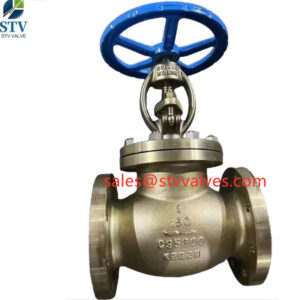
Globe valves are considered the industry standard for throttling applications due to their inherent design advantages:
- Excellent throttling characteristics with precise flow control
- Linear relationship between stem travel and flow rate
- Guided disc movement for stable operation
- Available with various plug designs for different flow characteristics
- Suitable for high-pressure and high-temperature applications
Technical Note: Globe valves create a tortuous flow path where fluid must change direction, naturally reducing velocity and providing better control during throttling operations.
Butterfly Valves
Butterfly valves offer several advantages for throttling applications where space is limited:
- Lightweight and compact design ideal for large diameter pipelines
- Lower cost compared to other throttling valve options
- Quick operation with quarter-turn actuation
- Good throttling capabilities in the 20-80% open range
- Available with high-performance disc designs for improved throttling
Butterfly valves may experience disc flutter and premature wear when used for throttling at low opening percentages (below 20%) or in high-velocity applications.
Needle Valves
Needle valves excel in applications requiring extremely precise flow control:
- Exceptional precision for fine flow adjustment
- Tapered needle design allows for gradual opening
- Ideal for low-flow applications and instrumentation
- Multiple turns from fully closed to fully open position
- Excellent for laboratory and calibration applications
Ball Valves with V-Port
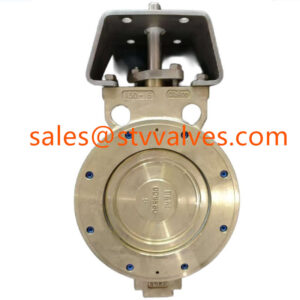
C95800 High Performance Butterfly Valve factory
While standard ball valves are not ideal for throttling, specialized V-port ball valves offer improved control characteristics:
- V-shaped port provides more gradual flow control than standard round ports
- Better throttling characteristics in the 10-90% open range
- Maintains the quarter-turn operation of traditional ball valves
- More resistant to erosion in throttling service than standard ball valves
- Good alternative when space constraints prevent using globe valves
Technical Specifications for Throttling Applications
When selecting valves for throttling service, several key technical specifications must be considered to ensure optimal performance and longevity:
| spécification | Description | Importance in Throttling |
| Flow Coefficient (Cv) | Measure of valve flow capacity – volume of water at 60°F that will flow through a valve with a 1 psi pressure drop | Critical for proper valve sizing and ensuring adequate flow control range |
| Flow Characteristic | Relationship between valve opening and flow rate (linear, equal percentage, quick opening) | Determines control response and stability throughout the operating range |
| Rangeability | Ratio of maximum to minimum controllable flow rate | Higher values indicate better control across wider flow ranges |
| Pressure Recovery Factor (FL) | Measure of pressure recovery downstream of the valve | Affects cavitation potential and noise generation |
| Seat Leakage Class | Allowable leakage when valve is in closed position (Classes I-VI) | Determines shut-off capability when throttling is not required |
Figure 2: Flow characteristics comparison for different throttling valve types
Industry Applications for Throttling Valves
Throttling valves are essential components across numerous industries where precise flow control is critical for operational efficiency and safety:
Oil & Gas
- Wellhead pressure control
- Flow regulation in processing facilities
- Pump recirculation systems
- Gas compression systems
Power Generation
- Boiler feedwater control
- Steam conditioning systems
- Turbine bypass systems
- Cooling water regulation
Chemical Processing
- Reactor feed control
- Distillation column reflux
- Heat exchanger temperature control
- Pressure reduction stations
Traitement de l'eau
- Distribution pressure control
- Chemical dosing systems
- Filter backwash control
- Level control in storage tanks
HVAC Systems
- Chilled water flow control
- Steam distribution systems
- Zone temperature regulation
- Pressure reducing stations
Food & Beverage
- Ingredient metering systems
- CIP (Clean-in-Place) systems
- Pasteurization temperature control
- Tank level regulation
“Selecting the right throttling valve for specific industry applications can significantly impact system efficiency, maintenance requirements, and operational costs over the lifecycle of the installation.”
Selection Criteria for Throttling Valves
Choosing the optimal throttling valve requires careful consideration of multiple factors related to both the application requirements and valve characteristics:
Figure 3: Decision flowchart for throttling valve selection process
Process Parameters
- Fluid Properties: Viscosity, temperature, corrosiveness, presence of solids
- Flow Conditions: Normal, maximum, and minimum flow rates
- Pressure Conditions: Inlet pressure, allowable pressure drop, outlet pressure requirements
- Écart de température: Normal operating temperature and potential extremes
Pro Tip: Always size throttling valves to operate in the 20-80% open range during normal conditions. This provides margin for adjustment in both directions and avoids operating near the closed position where control is less precise and wear is accelerated.
Valve-Specific Considerations
- Control Precision: Required accuracy of flow regulation
- Response Time: How quickly the valve must respond to control signals
- Turndown Ratio: Range of controllable flow (max flow ÷ min controllable flow)
- Fail Position: Desired valve position upon loss of actuator power (open, closed, or last position)
- Noise Limitations: Maximum allowable noise generation
- Cavitation/Flashing Potential: Risk of damage from vapor bubble formation and collapse
Material Selection for Throttling Valves
Material selection is critical for throttling valves as they often experience higher wear rates than on/off valves due to their continuous operation in partially open positions:
| Component | Common Materials | Selection Considerations |
| Body/Bonnet | Carbon steel, stainless steel, bronze, ductile iron | Pressure rating, temperature, corrosion resistance |
| Trim (Disc/Plug/Ball) | Stainless steel, chrome-moly steel, stellite-faced | Erosion resistance, cavitation resistance |
| Seats | Metal (various alloys), PTFE, PEEK, elastomers | Temperature limits, leakage class requirements |
| Tige | Stainless steel, monel, inconel | Strength, corrosion resistance |
| Emballage | PTFE, graphite, EPDM | Temperature limits, chemical compatibility |
Maintenance Requirements for Throttling Valves
Throttling valves require more frequent maintenance than on/off valves due to their continuous operation in partially open positions, which can accelerate wear on trim components.
Figure 4: Key maintenance procedures for throttling valves
Common Maintenance Issues
- Trim Erosion: High-velocity flow across throttling elements causes material loss
- Seat Damage: Particulates trapped between seating surfaces during closure
- Packing Wear: Stem movement causes gradual compression and deterioration of packing
- Actuator Drift: Gradual loss of precise positioning due to wear in actuator components
- Stem Binding: Improper lubrication or misalignment causing difficult operation
Preventive Maintenance Schedule
| Maintenance Task | Frequency | Purpose |
| External visual inspection | Monthly | Identify external leakage, actuator issues, or visible damage |
| Stem packing adjustment | Quarterly | Prevent leakage around stem while maintaining smooth operation |
| Actuator calibration check | Semi-annually | Verify accurate positioning and response to control signals |
| Internal inspection | Annually or during scheduled outages | Assess trim condition, seat integrity, and internal components |
| Complete overhaul | Every 3-5 years (application dependent) | Replace worn components, restore original performance |
Maintenance Tip: Document the valve position during normal operation. A significant change in position required to maintain the same flow rate often indicates internal wear or damage requiring attention.
Comparative Analysis of Throttling Valve Types
Each throttling valve type offers distinct advantages and limitations. Understanding these differences is essential for selecting the optimal valve for specific applications:
Figure 5: Performance comparison of common throttling valve types
| Type de vanne | Control Precision | Rangeability | Pressure Drop | Size/Weight | Cost | Best Applications |
| Globe | Excellent | 40:1 to 100:1 | High | Large/Heavy | High | Critical control, high pressure, severe service |
| Butterfly | Good (20-80% open) | 20:1 to 30:1 | Low | Compact/Light | Low-Medium | Large diameter, low pressure, space constraints |
| Needle | Excellent | 150:1 to 200:1 | High | Small/Light | Low-Medium | Instrumentation, low flow, precise control |
| Ball (V-Port) | Good | 50:1 to 100:1 | Low | Medium/Medium | Medium-High | Moderate control needs, abrasive fluids |
| Diaphragm | Good | 25:1 to 40:1 | Moyen | Medium/Medium | Moyen | Sanitary applications, slurries, corrosive fluids |
Best Practices for Throttling Valve Implementation
Installation Recommendations
- Install straight pipe runs of 5-10 pipe diameters upstream and 3-5 pipe diameters downstream
- Provide adequate support to minimize pipe stress on valve body
- Install isolation valves and bypass lines for critical service applications
- Include pressure gauges upstream and downstream for monitoring
- Ensure proper orientation according to manufacturer specifications
- Consider noise reduction measures for high-pressure drop applications
Operation Guidelines
- Avoid operating below 10% open position for extended periods
- Implement proper startup procedures to prevent water hammer
- Monitor for unusual noise that may indicate cavitation
- Establish baseline performance data for future comparison
- Implement regular inspection schedules based on service severity
- Train operators on proper adjustment procedures
Can standard ball valves be used for throttling applications?
Standard ball valves are not recommended for continuous throttling service. Their design creates uneven flow patterns and accelerated wear when partially open. For throttling applications requiring a ball valve design, specialized V-port ball valves should be used instead as they provide more gradual and controlled flow characteristics.
What is the difference between a control valve and a throttling valve?
While the terms are often used interchangeably, control valves typically refer to automated valves with precision actuators that respond to control signals to maintain specific process parameters. Throttling valves is a broader term that includes any valve used to regulate flow, whether manually operated or automated. All control valves perform throttling, but not all throttling valves are control valves.
How do I prevent cavitation damage in throttling valves?
Cavitation occurs when pressure drops below the vapor pressure of the liquid, causing vapor bubbles to form and then violently collapse. To prevent cavitation damage: (1) Use multi-stage trim designs that gradually reduce pressure, (2) Select hardened or cavitation-resistant materials for trim components, (3) Consider pressure-balanced trim designs, (4) Install the valve where system pressure is highest, or (5) Use multiple valves in series to distribute the pressure drop.
Need Expert Assistance Selecting the Right Throttling Valve?
Our team of valve specialists can help you identify the optimal throttling valve solution for your specific application requirements. With decades of industry experience, we provide technical consultation to ensure you select the right valve type, materials, and specifications for reliable performance.
Conclusion
Selecting the right valve for throttling applications requires careful consideration of multiple factors including the fluid properties, system requirements, control precision needs, and environmental conditions. Globe valves remain the industry standard for critical throttling applications, while butterfly valves, needle valves, and specialized ball valves offer viable alternatives for specific scenarios.
By understanding the technical specifications, performance characteristics, and maintenance requirements of different throttling valve types, engineers and procurement specialists can make informed decisions that optimize system performance, minimize maintenance costs, and extend equipment life. Remember that proper sizing, material selection, and installation are just as important as valve type selection in ensuring reliable throttling performance.
Figure 6: Range of throttling valve solutions for diverse industrial applications