
Why Use a Ball Valve Versus a Globe Valve?
Why Use a Ball Valve Versus a Globe Valve? Understanding the Right Choice for Your System
Selecting the optimal valve type is critical for system efficiency, safety, and performance. With numerous options available, understanding the distinct advantages of robinets à tournant sphérique et vannes à soupape helps engineers make informed decisions tailored to their specific needs. Here at PrecisionFlow Controls, we regularly guide clients through this comparison – let’s explore why one might prevail over the other in your application.
What’s the Fundamental Distinction?
The core contrast lies in their operational mechanics:
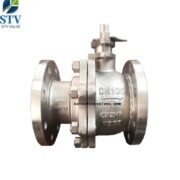
Vannes à bille function as rotational quarter-turn devices. A central hollow ball spins 90 degrees within the valve body. Aligning its bore with the pipeline opens flow fully; perpendicular position blocks it completely. Think of it like turning a doorknob sharply left or right.
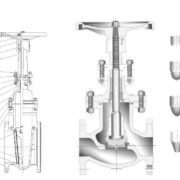
Vannes à soupape operate via linear stem movement (hence also called “plug valves”). A discoid plug attached to the bottom of the stem ascends or descends vertically against stationary seats stacked inside the rounded body chamber. Partial openings proportionally restrict flow based on lift height. It’s similar to sliding open a vertical window shade.
This inherent design difference dictates their primary strengths:
✅ Ball Valves Excel At: Fast, tight shutoff with minimal pressure drop when fully open. Ideal for isolation duties where leakage prevention matters most.
📉 Globe Valves Specialize In: Precision throttling and modulating variable flow rates accurately across a wide range. Best for flow control scenarios requiring fine adjustments.
How Does Each Work Mechanically?
Ball Valve Operation
Imagine placing a drilled marble inside a tube fitting. Twist that marble a quarter turn so its hole channels fluid straight through – that’s essentially how a floating ball valve works. Most feature:
1.A trunnion-mounted or supported ball ensuring stable alignment even under pressure surges.
2. Resilient seating materials (like PTFE or PEEK) creating bubble-tight seals upon closure after just 90° rotation.
3.Handle position clearly indicating status: parallel = Open; perpendicular = Closed. Some include locking mechanisms for safety compliance.
Their simplicity enables incredibly rapid actuation—manual lever throws can cycle in seconds—and exceptional resistance to clogging from particulates suspended in the media stream due to the unobstructed full-bore path when open.
Globe Valve Functionality
Picture adjusting water volume using an old faucet handle pushing up/down: raising the stem lifts the plug away from lower seats incrementally increasing aperture area. Modern industrial versions refine this principle:
* Single or multi-port designs allow parallel paths reducing trim losses during throttling compared to traditional gate alternatives.
* Linear characteristic curves provide predictable capacity changes relative to stem travel percentage – vital for process control loops using positioners/actuators responding to PID signals.
* Disc contour variations (V-port, needle, equal percentage profiles) optimize specific control responses such as linear, quick opening characteristics suited to different processes like heater coil temperature management or reactor feed rate regulation.
Ball vs. Globe: Which Reigns Supreme?
Neither universally wins; context determines suitability:
| Criterion | Ball Valve Advantages | Globe Valve Advantages |
|---|---|---|
| Shutoff Capability | Superior tightness due to metal-to-metal or resilient seat compression; less susceptible to line pressure effects than older class designs. Lower risk of slam damage from fast closing speeds. | Sealing depends heavily on precise plug alignment & seat integrity – less robust against sudden pressure spikes without complex packing systems. Slower closing rates mitigate some shock but increase wear over time near seats. |
| Pressure Drop | Minimal loss when fully open thanks to straight-through passage matching pipe ID. Efficient energy usage across long pipeline runs. | Higher inherent loss even at full lift due to tortuous path around baffle plate obstructing core flow area significantly. Not ideal where pumping costs dominate economics. |
| Throttling Precision | Generally poor modulation capability outside extreme ends (fully open/closed). Intermediate positions cause turbulence leading to cavitation damage, vibration, noise, and unpredictable flow rates plus accelerated erosion of internal components. Avoid prolonged partial opening! | Engineered specifically for stable intermediate positioning offering smooth adjustment down to very low flows with repeatable accuracy essential for chemical dosing or pressure cascade controls. |
| Contaminated Media Handling | Self-cleaning nature prevents buildup thanks to unobstructed centerline design flushing debris out easily during operation cycles. Less prone to jamming solid particles unlike complex disc geometries inside globe bodies trapping matter near seats over time. | Tends to accumulate scale deposits or sticky substances around moving parts impairing motion reliability unless frequently exercised or fitted with purge ports adding complexity/cost. |
| Maintenance & Longevity | Simpler construction translates into longer service intervals needing only occasional lubrication and visual inspections absent signs of external leakage at gland packing boxes. Fewer parts exposed to wear from dynamic loading during frequent cycling operations commonplace in batch processes switching tanks frequently. | More intricate assembly involving guided stems, multiple graphite piston rings etc. demands careful disassembly/reassembly following manufacturer guidelines closely every scheduled turnaround period especially critical applications exceeding recommended cycle counts before mandatory overhaul per API standards. |
| Cost Considerations | Lower initial purchase price coupled with reduced lifetime ownership expenses stemming from lower maintenance frequency requirements makes them attractive economically for simple on/off services without advanced control needs. | Higher upfront investment partially offset by extended useful lifespan under demanding throttling conditions where alternative technologies fail prematurely but still represents significant capital expenditure requiring justification based on process benefits gained versus alternatives like control balls or butterfly variants sometimes sufficient albeit less precise solutions… |
PrecisionFlow Controls – Your Trusted Partner in Valve Selection
We maintain extensive inventories meeting diverse requirements:
* Ball Valves: Full range including standard two-piece cast iron up through high-performance three-piece stainless steel designs rated ANSI Class 600+, top entry trunnion mounted trunnion balls ideal for high-pressure high temp steam service, hygienic variants compliant with FDA/USDA standards for food dairy pharmaceutical applications, and specialty alloys resisting corrosive chemicals aggressive environments. Sizes cover ½” thru 24”.