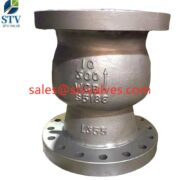

Ball Check Valves – Operation, Applications & Selection Guide
Ball Check Valves – Operation, Applications & Selection Guide
Ball check valves are essential components in fluid systems designed to prevent backflow by using a spherical ball that permits flow in only one direction. These valves operate automatically based on fluid pressure, making them reliable safeguards against reverse flow that could damage equipment or contaminate systems. In this comprehensive guide, we’ll explore how ball check valves work, their key features, applications across industries, and how to select the right valve for your specific requirements.

How Ball Check Valves Operate
A typical ball check valve consists of a spring-loaded ball that pushes against a seat inside the valve body. The operating principle is straightforward yet effective in controlling flow direction.
Forward Flow Operation
When pressurized fluid flows in the intended direction, it pushes the ball against the spring, causing it to rise from its seat. This creates an opening that allows fluid to pass through the valve. The pump’s capacity must always be sufficient to overcome the spring stiffness for proper operation.
Reverse Flow Prevention
If flow attempts to reverse direction, the combination of spring force and backpressure pushes the ball firmly against the seat, creating a tight seal that blocks the flow path. This simple mechanism effectively prevents backflow without requiring external power or manual intervention.

The ball has a slightly larger diameter than the valve seat’s through-hole, and the seat typically features a conical taper to properly guide the ball, ensuring a positive seal. If there’s a drop in pump capacity, a smaller ball or spring with less stiffness should be used to maintain proper operation.
The cracking pressure—the minimum upstream pressure required to open the valve—must be attained at the inlet side to allow flow. This pressure should exceed any back pressure in the system to ensure proper valve function.
Key Features and Benefits of Ball Check Valves
Simple, Compact Design
Ball check valves feature a straightforward design with minimal moving parts, making them compact, reliable, and easy to install in various piping configurations. Their simplicity contributes to long-term durability and reduced maintenance requirements.
Self-Cleaning Operation
During operation, the ball rotates continuously, which creates a self-cleaning action that prevents debris from accumulating on its surface. This feature is particularly valuable in systems handling fluids with solid contaminants, as it helps maintain valve performance with minimal intervention.
Quick Response
Ball check valves respond rapidly to changes in flow direction, providing immediate protection against backflow. Spring-loaded versions offer even faster response times, making them ideal for applications where preventing reverse flow is critical for system integrity.
Versatile Installation
These valves can be installed in both horizontal and vertical positions, offering flexibility in system design. When installed vertically, the flow should be upward to ensure proper operation and sealing.
Vantaggi
- Automatic operation without external power
- Minimal maintenance requirements
- Effective sealing even at low back pressure
- Smooth, full bore design minimizes pressure loss
- Resistant to water hammer when properly sized
- Suitable for a wide range of fluid applications
Limitations
- May create noise if pump capacity is insufficient
- Requires minimum cracking pressure to operate
- Not suitable for throttling applications
- Can experience water hammer if improperly sized
- Limited use with highly viscous fluids
Applications of Ball Check Valves
The simplicity and effectiveness of ball check valves make them popular across numerous industries and applications where preventing backflow is essential.
Water Systems
Ball check valves are widely used in water supply systems, including:
- Municipal water distribution
- Sprinkler systems
- Sump pumps
- Water heaters
By preventing backflow, these valves ensure that potentially contaminated water downstream cannot reenter the supply line, maintaining water quality and system integrity.
Wastewater Management
In wastewater applications, ball check valves are essential components in:
- Pumping stations
- Sewage systems
- Treatment facilities
- Effluent discharge lines
Their self-cleaning action is particularly valuable in these systems, where solid contaminants are common, helping maintain performance with minimal maintenance.
Industrial Processes
Various industrial applications rely on ball check valves, including:
- Chemical processing
- Oil and gas production
- Food and beverage manufacturing
- Pharmaceutical production
In these settings, the valves protect sensitive equipment from backflow while handling a wide range of fluids, including corrosive chemicals and high-temperature media.

Specialized Applications
Ball check valves are also used in specialized applications such as:
- Injection molding: Preventing plastic material from flowing backward during processing
- Fire protection systems: Ensuring water flows only toward sprinklers when needed
- Irrigation networks: Maintaining directional flow and preventing backflow contamination
- HVAC systems: Controlling fluid direction in heating and cooling applications
Need Help Selecting the Right Valve for Your Application?
Our valve experts can help you determine the optimal ball check valve specifications based on your specific application requirements.
Materials of Construction
Ball check valves are manufactured using various materials to accommodate different operating conditions, fluid types, and compatibility requirements.
Body Materials
| Materiale | Properties | Applicazioni | Temperature Range |
| Acciaio inossidabile | Excellent corrosion resistance, high strength, durability | Chemical processing, food industry, pharmaceutical, high-temperature applications | -20°F to 800°F (-29°C to 427°C) |
| Brass/Bronze | Good corrosion resistance, antimicrobial properties | Potable water, plumbing systems, HVAC | 0°F to 400°F (-18°C to 204°C) |
| PVC/CPVC | Excellent chemical resistance, lightweight, economical | Water treatment, chemical handling, irrigation | 32°F to 140°F (0°C to 60°C) |
| Polypropylene (PP) | Chemical resistant, lightweight, cost-effective | Chemical processing, water treatment | 32°F to 180°F (0°C to 82°C) |
| Ferro duttile | High strength, durability, cost-effective | Water distribution, wastewater, general industrial | -20°F to 450°F (-29°C to 232°C) |
Ball and Seal Materials
Metal Balls
Stainless steel or brass balls offer durability and are suitable for high-pressure and high-temperature applications. They provide excellent wear resistance but may require precise machining for proper sealing.
Rubber-Lined Balls
Metal cores with NBR (Nitrile) rubber lining offer improved sealing capabilities while maintaining durability. The rubber hardness is optimized to prevent the ball from sticking to the seat.
Polyurethane Balls
Ideal for abrasive media, polyurethane balls offer excellent wear resistance. They’re also available in different weights to address specific challenges like water hammer or noise.
PTFE/Teflon Balls
Provide exceptional chemical resistance and are suitable for applications involving corrosive fluids. They offer low friction but may have temperature limitations compared to metal options.
Material Selection Tip: When selecting ball check valve materials, consider not only the fluid compatibility but also the operating conditions, including pressure, temperature, and potential for abrasion or corrosion. For challenging applications, consult with valve specialists to ensure optimal material selection.
Technical Specifications & Selection Criteria
Selecting the right ball check valve requires careful consideration of several technical factors to ensure optimal performance and compatibility with your system.
Size and Connection Types
Ball check valves are available in various sizes and connection configurations to accommodate different piping systems:
- Intervallo di dimensioni: Typically available from DN15 (1/2″) to DN600 (24″), with the most common sizes being DN15 to DN100
- Threaded Connections: NPT (National Pipe Thread) or BSP (British Standard Pipe) for smaller valves (DN15-DN50)
- Flanged Connections: ANSI, DIN, or JIS standards for larger valves (DN50-DN600)
- Socket Weld: For permanent installation in high-pressure or high-temperature applications
- Butt Weld: Provides a smooth internal surface, reducing turbulence and pressure drop
Pressure and Temperature Ratings
Understanding the pressure and temperature requirements of your system is crucial for proper valve selection:
- Valutazione della pressione: Typically ranges from 150 PSI (10 bar) for plastic valves to 3000 PSI (207 bar) for high-pressure metal valves
- Intervallo di temperatura: Varies by material, from 32°F to 140°F (0°C to 60°C) for PVC to -20°F to 800°F (-29°C to 427°C) for stainless steel
- Pressure-Temperature Correlation: Maximum pressure rating typically decreases as temperature increases
Cracking Pressure
The cracking pressure—the minimum upstream pressure required to open the valve—is a critical specification:
- Standard Spring-Loaded: Typically 0.5 to 2 PSI (0.03 to 0.14 bar)
- Low Cracking Pressure: As low as 0.1 PSI (0.007 bar) for sensitive applications
- High Cracking Pressure: Up to 5 PSI (0.34 bar) for applications requiring stronger backflow prevention
Flow Coefficient (Cv)
The flow coefficient indicates the flow capacity of the valve and helps determine pressure drop:
- Definition: Volume of water (in gallons per minute) that will flow through the valve with a pressure drop of 1 PSI
- Importance: Higher Cv values indicate less restriction and lower pressure drop
- Sizing: Select a valve with a Cv value appropriate for your flow rate to minimize energy loss
Download Our Comprehensive Ball Check Valve Selection Guide
Get detailed specifications, sizing charts, and material compatibility tables to help you select the perfect ball check valve for your application.
Installation and Maintenance
Proper installation and regular maintenance are essential for ensuring the long-term performance and reliability of ball check valves.
Installation Best Practices
Flow Direction
Always install the valve according to the flow direction arrow marked on the valve body. Incorrect orientation will prevent proper operation and may cause system failure.
Orientation
Ball check valves can be installed horizontally or vertically (with upward flow). In vertical installations, ensure the flow is upward to allow gravity to assist in seating the ball when flow stops.
Support
Provide adequate support for the valve and connected piping to prevent stress on the valve body. Avoid using the valve to support pipe weight or compensate for misalignment.
Clearance
Allow sufficient clearance around the valve for maintenance access, particularly if the valve has a removable bonnet or requires periodic inspection.
Maintenance Guidelines
- Regular Inspection: Periodically check for signs of leakage, unusual noise, or vibration that might indicate problems.
- Cleaning: If the valve performance deteriorates, disassemble according to manufacturer instructions and clean the ball and seat to remove any debris or buildup.
- Ball Examination: Inspect the ball for wear, scratches, or deformation that might affect sealing. Replace if necessary.
- Seat Inspection: Check the valve seat for wear, erosion, or damage. A damaged seat may require replacement of the entire valve.
- Spring Testing: For spring-loaded valves, verify that the spring maintains proper tension and is free from corrosion or damage.
Maintenance Tip: If noise or water hammer occurs during operation, consider adjusting the ball weight. Heavier balls can help prevent water hammer when the pump stops, while lighter balls may be needed if the pump capacity is insufficient to properly open the valve.
Ball Check Valves vs. Other Check Valve Types
Understanding the differences between ball check valves and other check valve designs helps in selecting the most appropriate valve for specific applications.
Ball Check Valve vs. Swing Check Valve
| Feature | Ball Check Valve | Valvola di ritegno a battente |
| Design | Uses a spherical ball that moves against a seat | Uses a hinged disc that swings open and closed |
| Installation | Can be installed horizontally or vertically (with upward flow) | Primarily horizontal installation; special designs needed for vertical use |
| Flow Characteristics | Full bore design with minimal pressure drop | Moderate pressure drop due to disc obstruction |
| Response Time | Quick response, especially with spring-loaded designs | Slower response, may allow some backflow before closing |
| Self-Cleaning | Ball rotates during operation, providing self-cleaning action | Limited self-cleaning capability |
Ball Check Valve vs. Lift Check Valve
Lift check valves use a disc or piston that moves vertically to allow or block flow. Compared to ball check valves, they:
- Typically have higher pressure drops
- Are more suitable for high-pressure applications
- Must be installed in horizontal pipes with vertical flow
- Provide more guided disc movement, reducing wear
Ball Check Valve vs. Dual Plate (Wafer) Check Valve
Dual plate check valves feature two semi-circular plates hinged at the center. Compared to ball check valves, they:
- Offer a more compact face-to-face dimension
- Provide faster closing action
- Are lighter in weight
- May be more prone to wear in applications with solids
“The selection between ball check valves and other check valve types should be based on specific application requirements, including flow characteristics, installation orientation, pressure conditions, and the presence of solids in the fluid.”
Frequently Asked Questions About Ball Check Valves
How do I know if a ball check valve is suitable for my specific application?
To determine suitability, consider the type of fluid (corrosive, abrasive, clean), operating pressure and temperature, required flow rate, and installation orientation. For corrosive fluids, select appropriate materials like stainless steel or specialized plastics. For abrasive media, consider valves with hardened components or polyurethane balls. Always verify that the valve’s pressure and temperature ratings exceed your system’s requirements.
Can ball check valves handle high-pressure and high-temperature applications?
Yes, when constructed from appropriate materials. Stainless steel ball check valves can typically handle pressures up to 3000 PSI (207 bar) and temperatures up to 800°F (427°C). However, always verify the specific pressure-temperature ratings for your selected valve, as maximum pressure typically decreases as temperature increases.
Is a spring-loaded ball check valve necessary for low-pressure applications?
Spring-loaded ball check valves are often beneficial in low-pressure systems as they provide faster closing action and more reliable sealing. The spring ensures the ball returns to the seat quickly when flow stops or reverses, even when there’s insufficient backpressure to close a non-spring-loaded valve. For vertical installations with upward flow, a spring-loaded design is particularly recommended.
How do I troubleshoot a noisy ball check valve?
Noise in ball check valves is often caused by rapid ball movement or water hammer. Solutions include:
- Using a heavier ball (typically 20% heavier) to reduce bouncing and water hammer
- Ensuring adequate pump capacity to fully open the valve
- Checking for proper valve sizing—an undersized valve may cause turbulence and noise
- Verifying correct installation orientation
- Installing water hammer arrestors in the system
How often should ball check valves be maintained?
Maintenance frequency depends on the application, fluid conditions, and operating environment. In clean fluid applications, ball check valves may operate for years without maintenance. For systems with particulates or corrosive fluids, inspect valves every 6-12 months. Always follow manufacturer recommendations and establish a preventive maintenance schedule based on your specific operating conditions.
Conclusione
Ball check valves are essential components in fluid systems across numerous industries, providing reliable backflow prevention with minimal maintenance requirements. Their simple yet effective design, featuring a ball that moves to allow or block flow based on fluid pressure, makes them ideal for applications ranging from water treatment and plumbing to chemical processing and industrial systems.
When selecting a ball check valve, consider factors such as fluid compatibility, pressure and temperature requirements, installation orientation, and specific application needs. By choosing the right valve materials and specifications, you can ensure optimal performance, longevity, and system protection.