
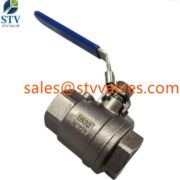
Ball Valve Sizing: A Comprehensive Guide for Industrial Applications
Ball Valve Sizing: A Comprehensive Guide for Industrial Applications
Proper ball valve sizing is critical for ensuring system efficiency, safety, and longevity in industrial applications. Whether you’re designing a new system or troubleshooting an existing one, understanding how to correctly size ball valves can prevent costly issues like excessive pressure drops, insufficient flow rates, and premature valve failure. This guide provides the essential knowledge and practical methods needed to select the optimal ball valve size for your specific requirements.
Why Proper Ball Valve Sizing Matters
Selecting the correct ball valve size is more than just matching pipe diameters. It directly impacts several critical aspects of your system’s performance:
Flow Efficiency
Undersized valves create flow restrictions that increase pressure drops and energy consumption. Properly sized valves ensure optimal flow rates without unnecessary resistance.
System Reliability
Incorrect valve sizing can lead to premature wear, cavitation, and system failures. Right-sized valves operate within their design parameters, extending service life.
Operational Costs
Properly sized ball valves minimize energy consumption, reduce maintenance requirements, and prevent costly downtime due to system failures or inefficiencies.
Understanding Ball Valve Sizing Fundamentals
Before diving into specific calculations, it’s essential to understand the key terminology and concepts related to ball valve sizing:
Key Sizing Parameters
Nominal Pipe Size (NPS)
The American standard for designating pipe diameter, expressed in inches. Despite the name, NPS doesn’t directly correspond to the actual inner or outer diameter of the pipe but refers to a standardized nominal size.
Diameter Nominal (DN)
The international metric designation for pipe size, expressed in millimeters. Like NPS, these numbers represent nominal rather than actual dimensions.
Valve Bore Types
Full Bore: The internal diameter matches the pipe’s internal diameter, allowing maximum flow with minimal pressure drop.
Reduced Bore: The internal diameter is smaller than the pipe’s internal diameter, creating more flow resistance but often at a lower cost.
Flow Coefficient (Cv)
A measure of the valve’s flow capacity, defined as the number of gallons per minute (GPM) of 60°F water that will flow through a valve with a 1 PSI pressure drop.
Essential Ball Valve Sizing Calculations
Accurate sizing requires understanding the relationship between flow rate, pressure drop, and valve capacity. Here are the fundamental calculations used in ball valve sizing:
Flow Coefficient (Cv) Method
The Cv method is the most common approach to valve sizing. It relates the flow rate through a valve to the pressure drop across it:

Basic Cv Formula: Cv = Q / √ΔP
Where:
- Cv = Flow coefficient
- Q = Flow rate (GPM for liquids)
- ΔP = Pressure drop across the valve (PSI)
Sizing Procedure
- Determine the required flow rate (Q) for your application
- Establish the acceptable pressure drop (ΔP) across the valve
- Calculate the required Cv using the formula above
- Select a valve with a Cv rating equal to or greater than your calculated value
- Add a safety margin of 10-15% to account for system variations
Need Help With Complex Valve Sizing?
Our engineering team can assist with your specific application requirements and ensure optimal valve selection.
Understanding Ball Valve Pressure Ratings
Pressure ratings indicate the maximum pressure a valve can safely handle at specific temperatures. These ratings are crucial for proper valve selection:

Common Pressure Rating Designations
| Rating Type | Descrizione | Typical Applications |
| CWP (Cold Working Pressure) | Maximum pressure at ambient temperature (typically 100°F/38°C) | Non-shock cold water, oil, or gas service |
| WOG (Water, Oil, Gas) | Maximum pressure for water, oil, or gas at ambient temperature | General industrial applications with these media |
| Class 150 | Up to 285 PSI at ambient temperature | Standard industrial applications |
| Class 300 | Up to 740 PSI at ambient temperature | Medium-pressure industrial environments |
| Class 600 | Up to 1480 PSI at ambient temperature | High-pressure specialized applications |
Temperature Considerations
Pressure ratings typically reference ambient temperatures, but valves must be derated for higher temperatures. Always consult manufacturer charts to determine how much the pressure rating decreases as temperature increases.
Important: A Class 150 valve rated for 285 PSI at 100°F might only handle 260 PSI at 200°F. Always verify the pressure-temperature relationship for your specific operating conditions.
Ball Valve Material Selection
The material of the ball valve body and components significantly impacts its performance, pressure rating, and compatibility with different media:

Common Ball Valve Materials
| Materiale | Code | Characteristics | Suitable Applications |
| Acciaio al carbonio | WCB | Good strength, moderate corrosion resistance | General industrial, oil & gas, non-corrosive media |
| Stainless Steel 316 | CF8M | Excellent corrosion resistance, good at high temperatures | Chemical processing, food & beverage, corrosive environments |
| Stainless Steel 304 | CF8 | Good corrosion resistance, economical | Less aggressive environments than 316, water systems |
| Low-Temperature Carbon Steel | LCB | Enhanced low-temperature toughness | Cryogenic services, low-temperature operations |
| Brass/Bronze | – | Good corrosion resistance, economical | Water, steam, non-aggressive fluids |
Material selection must consider chemical compatibility with the process fluid, temperature range, and pressure requirements. Incompatible materials can lead to corrosion, leakage, or catastrophic failure.
Ball Valve End Connection Types
The end connection type must match your piping system for proper installation and leak-free operation:
Threaded Connections
Common in smaller valve sizes (typically up to 2″ or DN50), threaded connections use NPT (National Pipe Thread) or BSPT (British Standard Pipe Thread) standards. They’re easy to install but may have lower pressure ratings than welded connections.
Flanged Connections
Used for larger valve sizes and higher-pressure applications, flanged connections use standardized flanges (RF, FF, RTJ) that bolt together. They allow for easier maintenance as the valve can be removed without cutting the pipe.
Socket Weld Connections
Common in high-pressure or high-temperature applications, socket weld connections provide a strong, leak-tight joint. The pipe fits into a socket on the valve and is welded in place.
Butt Weld Connections
Used for critical applications where joint integrity is paramount, butt weld connections involve welding the valve directly to the pipe end. This creates the strongest possible joint with minimal flow restriction.
Common Ball Valve Sizing Errors to Avoid
Even experienced engineers can make these common mistakes when sizing ball valves:
Best Practices
- Calculate required Cv based on actual flow requirements
- Consider both minimum and maximum flow scenarios
- Account for fluid properties (viscosity, density, temperature)
- Include a reasonable safety margin (10-15%)
- Verify pressure-temperature ratings for actual operating conditions
- Consider future system expansion needs
Common Mistakes
- Selecting valve based solely on pipe diameter
- Ignoring pressure drop considerations
- Overlooking fluid characteristics
- Failing to account for temperature effects on pressure ratings
- Choosing oversized valves “just to be safe”
- Neglecting to verify material compatibility with process fluid
Ball Valve Sizing Chart and Reference
Use this reference chart to assist with preliminary valve sizing. Always verify with manufacturer-specific data for your selected valve model:
| NPS (inches) | DN (mm) | Full Bore Cv | Reduced Bore Cv | Typical Flow Rate (GPM) | Typical Flow Rate (L/min) |
| 1/2″ | 15 | 20 | 15 | 15-25 | 57-95 |
| 3/4″ | 20 | 32 | 24 | 25-40 | 95-151 |
| 1″ | 25 | 50 | 40 | 40-75 | 151-284 |
| 1-1/2″ | 40 | 120 | 95 | 75-150 | 284-568 |
| 2″ | 50 | 200 | 160 | 150-300 | 568-1136 |
| 3″ | 80 | 460 | 370 | 300-700 | 1136-2650 |
| 4″ | 100 | 800 | 640 | 700-1200 | 2650-4542 |
Need More Detailed Sizing Information?
Access our comprehensive valve sizing calculator for precise specifications tailored to your application.
Practical Considerations for Ball Valve Selection
Beyond the technical calculations, these practical factors should influence your ball valve selection:
Installation Space
Consider the available space for installation and operation. Ball valves require clearance for the handle to rotate. Larger valves need more installation space and may require additional support.
Maintenance Access
Ensure sufficient access for maintenance and potential replacement. Flanged connections offer easier maintenance access compared to welded connections.
Actuation Requirements
Consider whether manual, pneumatic, electric, or hydraulic actuation is needed based on frequency of operation, remote control requirements, and emergency shutdown needs.
Application-Specific Considerations
High Temperature Applications
For high-temperature services, consider special seat materials and body designs that can withstand thermal expansion. Standard PTFE seats typically have temperature limitations around 450°F (232°C).
Cryogenic Services
Cryogenic applications require special materials and design considerations to maintain sealing integrity at extremely low temperatures. Extended bonnet designs may be necessary.
Abrasive Media
When handling abrasive fluids, consider hardened ball and seat materials or specialized coatings to resist wear. Full-port designs may be preferred to minimize turbulence.
Corrosive Environments
For corrosive media, material selection is critical. Stainless steel, lined valves, or special alloys may be required depending on the specific corrosive agent.
Frequently Asked Questions About Ball Valve Sizing
How do different fluid types affect ball valve sizing?
Fluid properties significantly impact valve sizing. For liquids, viscosity affects flow behavior and may require larger valve sizes to maintain flow rates. For gases, compressibility must be considered, and special calculations are needed that account for gas density, temperature, and pressure. Steam applications require consideration of both liquid and gas phases.
What happens if I use an incorrectly sized ball valve?
Undersized valves create excessive pressure drops, reducing flow capacity and potentially causing cavitation or flashing. This leads to increased energy consumption, noise, vibration, and premature valve failure. Oversized valves may cause poor control, excessive turbulence, and unnecessary costs. Both scenarios can significantly reduce system efficiency and increase operational expenses.
How does material selection affect valve sizing?
Material selection directly impacts pressure and temperature ratings, which in turn affect sizing requirements. Different materials have different strength characteristics and may require thicker walls for the same pressure rating, potentially reducing the flow path. Material compatibility with the process fluid is also critical to prevent corrosion and ensure long-term performance.
Should I always choose a full bore ball valve?
Not necessarily. While full bore valves offer minimal pressure drop and are ideal for applications where unrestricted flow is critical (like pigging operations), reduced bore valves are often sufficient for many applications and typically cost less. The decision should be based on your specific flow requirements, acceptable pressure drop, and budget considerations.
When should I consult with a valve sizing expert?
Consider consulting an expert for complex systems, critical applications, extreme operating conditions (high pressure/temperature), specialized media (highly corrosive, abrasive, or hazardous), or when system efficiency is paramount. Professional sizing ensures optimal performance, safety, and compliance with industry standards and regulations.
Conclusione
Proper ball valve sizing is a critical engineering task that directly impacts system performance, efficiency, and safety. By understanding the fundamental principles, performing accurate calculations, and considering all relevant factors, you can select ball valves that provide optimal flow control while minimizing energy consumption and maintenance requirements.
Remember that valve sizing involves balancing multiple factors including flow requirements, pressure considerations, material compatibility, and practical installation needs. When in doubt, consult manufacturer specifications or seek expert advice to ensure your valve selection meets both current requirements and future operational needs.