
Understanding Wedge Gate Valve: Complete Guide to Industrial Applications
How Wedge Gate Valves Work: Operating Mechanism

gate valve catalog
Cross-section of a typical wedge gate valve showing key components
Wedge gate valves operate on a simple yet effective principle. The valve contains a wedge-shaped disc (gate) that moves perpendicular to the fluid flow path. When actuated, the gate travels along the stem, either blocking or allowing flow through the valve body.
Key Components
- Body: Houses the internal components and connects to the pipeline
- Bonnet: Provides access to internal components and seals the valve body
- Wedge/Gate: The closure element that blocks or allows flow
- Stem: Connects the actuator to the wedge, enabling movement
- Seat: Provides the sealing surface for the wedge
- Packing: Prevents leakage around the stem
- Handwheel/Actuator: The mechanism that operates the valve
- Gland: Compresses the packing to maintain the stem seal
Operation Sequence
When opening a wedge gate valve, the stem rotates, lifting the wedge from its seated position. As the wedge rises, it creates an unobstructed flow path through the valve body. This design allows for minimal pressure drop when fully open, as the flow path remains clear and unimpeded.
During closure, the wedge descends and makes contact with the valve seats. The wedge’s tapered design creates a tight seal as it’s forced against the seats, effectively stopping flow. The mechanical advantage of the wedge shape enhances sealing capability under pressure.
Need Technical Specifications?
Get detailed engineering data for wedge gate valves to support your project requirements.
Request Specification Sheet
Types of Wedge Gate Valves: Finding the Right Solution
Wedge gate valves come in several variations, each designed to address specific operational requirements. Understanding these types helps in selecting the appropriate valve for your application.
Solid Wedge Gate Valves
Solid wedge gate valves feature a one-piece, rigid wedge disc. This design offers excellent strength and durability, making it suitable for general service applications.
Solid Wedge Applications
- General water and steam services
- Applications with consistent operating temperatures
- Systems requiring high structural integrity
- Services with minimal thermal cycling
Flexible Wedge Gate Valves
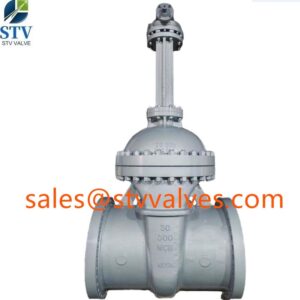
Bolt-Bonnet-Gate-Valve -ASTM-A216-WC6-30-Inch-300-LB-RF-End
Flexible wedge designs incorporate a single-piece wedge with a center relief that allows slight flexing. This flexibility enables the wedge to adjust to thermal expansion and contraction, providing better sealing under varying temperature conditions.
Flexible Wedge Applications
- Systems with thermal cycling
- Applications requiring reliable sealing under temperature fluctuations
- Steam service where thermal expansion is a concern
- Moderate to high-pressure applications
Split Wedge Gate Valves
Split wedge designs consist of two-piece wedge assemblies that can adjust to seat irregularities. The two halves of the wedge are typically connected by a mechanism that allows them to align independently with the seats, improving sealing on worn or misaligned seats.
Split Wedge Applications
- Older systems with potential seat wear
- Applications where perfect alignment cannot be guaranteed
- Services requiring reliable sealing despite minor seat damage
- Systems with frequent thermal cycling
Resilient Wedge Gate Valves
Resilient wedge gate valves feature a metal wedge fully encapsulated with elastomeric material (typically EPDM or NBR). This design provides excellent sealing capabilities and is particularly popular in water and wastewater applications.
Resilient wedge design with elastomer coating for enhanced sealing
Resilient Wedge Applications
- Water distribution systems
- Wastewater treatment facilities
- Applications requiring bubble-tight shutoff
- Services where corrosion resistance is important
Advantages and Disadvantages of Wedge Gate Valves
Understanding the strengths and limitations of wedge gate valves is essential for making informed decisions about their application in industrial systems.
Vantaggi
- Minimal pressure drop when fully open due to unobstructed flow path
- Bi-directional flow capability
- Reliable tight shutoff when properly specified
- Simple, durable design with fewer moving parts
- Available in a wide range of sizes, materials, and pressure classes
- Cost-effective for larger diameter applications
- Long service life when properly maintained
Disadvantages
- Not suitable for throttling or flow regulation
- Requires more space and clearance for stem movement
- Slower operation compared to quarter-turn valves
- Potential for wedge and seat wear with frequent cycling
- Cavity between gate and body can collect debris
- May experience thermal binding in high-temperature applications
- Higher torque requirements for larger sizes
Flow comparison between wedge gate valves and other common valve types
Comparison with Other Valve Types
| Feature | Valvola a saracinesca a cuneo | Valvola a sfera | Valvola a farfalla | Valvola a globo |
| Flow Resistance | Very Low | Very Low | Moderate | High |
| Operation Speed | Slow | Fast | Fast | Moderate |
| Throttling Capability | Poor | Limited | Good | Excellent |
| Space Requirement | High | Moderate | Low | Moderate |
| Sealing Reliability | Good | Excellent | Good | Excellent |
Need Help Selecting the Right Valve?
Our valve specialists can help you determine which type best suits your specific application requirements.
Download Selection Guide
Common Industrial Applications for Wedge Gate Valves
Wedge gate valves find extensive use across various industries due to their reliable shutoff capabilities and durable construction. Here are the primary applications where these valves excel:
Wedge gate valves installed in a municipal water treatment system
Water Systems
- Municipal water distribution networks
- Water treatment facilities
- Irrigation systems
- Fire protection systems
Oil & Gas
- Pipeline isolation
- Tank farm applications
- Refinery process lines
- Production wellheads
Power Generation
- Steam systems
- Cooling water circuits
- Feedwater systems
- Isolation for maintenance
Chemical Processing
- Process isolation
- Tank inlet/outlet control
- Batch processing systems
- Emergency shutdown systems
Estrazione
- Slurry transport systems
- Water management
- Tailings pipelines
- Process water control
Pulp & Paper
- Stock preparation lines
- Chemical additive systems
- Water and steam distribution
- Effluent treatment
Application-Specific Considerations
Actuated wedge gate valve for remote operation in critical applications
When selecting wedge gate valves for specific applications, several factors must be considered to ensure optimal performance and longevity:
High-Temperature Services
For high-temperature applications such as steam systems, special attention must be paid to material selection and thermal expansion considerations. Flexible wedge designs often perform better in these environments due to their ability to accommodate thermal expansion without binding.
Corrosive Media
When handling corrosive fluids, material compatibility is crucial. Stainless steel, nickel alloys, or specialized coatings may be necessary to prevent corrosion and extend valve life. Resilient wedge designs with appropriate elastomer selection can also provide excellent corrosion resistance.
Abrasive Services
For slurries and other abrasive media, hardened materials or special coatings are recommended to minimize erosion of sealing surfaces. In some cases, knife gate valves may be a better alternative for highly abrasive applications.
Cryogenic Applications
Special materials and design considerations are required for extremely low-temperature services. Material embrittlement and thermal contraction must be addressed through proper material selection and design modifications.
Selection Criteria for Wedge Gate Valves
Choosing the right wedge gate valve requires careful consideration of multiple factors to ensure optimal performance, reliability, and longevity in your specific application.
Proper valve selection requires thorough evaluation of specifications and application requirements
Key Selection Parameters
| Parameter | Considerations | Impact on Selection |
| Valutazione della pressione | Maximum system pressure, surge pressure, vacuum conditions | Determines pressure class (150#, 300#, etc.) and body material requirements |
| Temperature Range | Normal operating temperature, maximum/minimum temperatures | Affects material selection, packing type, and wedge design |
| Media Characteristics | Corrosiveness, abrasiveness, viscosity, solids content | Influences material selection, seat design, and stem sealing |
| Flow Requirements | Flow rate, pressure drop limitations | Affects valve size and port configuration |
| Actuation Method | Manual, electric, pneumatic, hydraulic | Determines stem design, torque requirements, and accessories |
| Installation Space | Available space, stem clearance, maintenance access | May dictate stem type (rising vs. non-rising) and actuator orientation |
| Frequency of Operation | Rarely operated vs. frequently cycled | Influences material durability requirements and maintenance needs |
Industry Standards and Certifications
Wedge gate valves are manufactured according to various industry standards that ensure quality, performance, and interchangeability. Key standards include:
- API600: Steel gate valves with flanged or butt-welding ends
- API602: Steel gate valves for small bore applications
- API603: Corrosion-resistant gate valves
- AWWA C500: Metal-seated gate valves for water supply service
- AWWA C509/C515: Resilient-seated gate valves for water supply service
- MSS SP-70: Cast iron gate valves
- MSS SP-80: Bronze gate valves
- ASME B16.34: Valves – flanged, threaded, and welding end
Industry certification markings ensure compliance with relevant standards
Need Expert Valve Selection Assistance?
Our team can help you select the right wedge gate valve for your specific application requirements.
Contact Our Valve Specialists
Installation, Maintenance, and Troubleshooting
Proper installation and regular maintenance are essential for ensuring the reliable operation and extended service life of wedge gate valves. Following best practices can prevent common issues and minimize downtime.
Regular maintenance ensures continued reliable operation of wedge gate valves
Installation Best Practices
- Install valves with the stem in the upright position when possible
- Ensure proper alignment with connecting piping to prevent stress
- Provide adequate support for the valve and adjacent piping
- Clean pipe ends thoroughly before installation
- Use proper gaskets and bolting materials compatible with the application
- Tighten bolts in a cross-pattern sequence to ensure even compression
- Allow sufficient clearance for stem travel and handwheel operation
- Verify smooth operation after installation
Maintenance Requirements
Regular maintenance helps prevent unexpected failures and extends valve service life. Key maintenance activities include:
Routine Inspection
- Check for external leakage
- Inspect for corrosion or damage
- Verify smooth operation
- Check stem packing condition
Periodic Maintenance
- Lubricate stem and gears
- Tighten or replace packing
- Clean and inspect seating surfaces
- Cycle valve to prevent seizure
Overhaul
- Disassemble and inspect internals
- Replace worn components
- Refinish or replace seating surfaces
- Replace all soft goods
Common Issues and Troubleshooting
| Problem | Possible Causes | Recommended Solutions |
| Stem Leakage | Worn or loose packing, damaged stem | Tighten packing gland, replace packing, inspect stem for damage |
| Seat Leakage | Debris on seating surfaces, worn seats, improper closure | Clean seating surfaces, lap or replace seats, ensure proper torque application |
| Difficult Operation | Overtightened packing, stem damage, corrosion, insufficient lubrication | Adjust packing, lubricate stem, inspect for damage or corrosion |
| Thermal Binding | Thermal expansion in high-temperature applications | Use flexible wedge design, proper material selection, operational procedures |
| Body-Bonnet Leakage | Loose bolting, damaged gasket, improper assembly | Retighten bolting, replace gasket, verify proper assembly procedure |
Disassembled wedge gate valve components during maintenance overhaul
Conclusion: Making the Right Wedge Gate Valve Selection
Wedge gate valves remain a fundamental component in industrial fluid control systems due to their reliable shutoff capabilities, straightforward operation, and robust design. By understanding the different types, applications, and selection criteria discussed in this guide, engineers and procurement specialists can make informed decisions when specifying these critical components.
Remember that proper selection involves careful consideration of operating conditions, media characteristics, and system requirements. Equally important are proper installation, regular maintenance, and adherence to industry standards to ensure optimal performance and longevity.
Whether you’re designing a new system or upgrading existing infrastructure, selecting the right wedge gate valve is essential for safe, efficient, and reliable operation.