

NRS vs OS&Y Gate Valves: Understanding the Critical Differences
When selecting gate valves for industrial applications, the choice between Non-Rising Stem (NRS) and Outside Screw and Yoke (OS&Y) designs can significantly impact system performance, maintenance requirements, and safety protocols. Each valve type offers distinct advantages for specific applications, making it essential to understand their fundamental differences before making a selection decision.
This comprehensive guide examines the key distinctions between NRS vs OS&Y gate valves, exploring their design mechanisms, operational characteristics, maintenance considerations, and ideal applications. Whether you’re designing a new system or upgrading existing infrastructure, this comparison will help you make an informed valve selection that aligns with your specific requirements.
Gate Valve Fundamentals: A Brief Overview
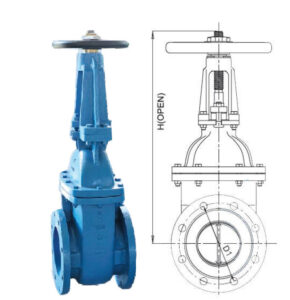
OS&Y Gate Valve
Cutaway view of a standard gate valve showing key internal components
Gate valves are linear motion valves that control flow by raising or lowering a gate (or wedge) perpendicular to the flow path. When fully open, these valves provide minimal flow restriction and pressure drop, making them ideal for on/off applications rather than flow regulation.
The primary components of a gate valve include the body, bonnet, stem, gate/wedge, seat rings, and handwheel. The stem connects the handwheel to the gate, transferring rotational motion into linear movement that positions the gate. This stem design is where the critical distinction between NRS and OS&Y valves emerges.
“Gate valves are designed for full open or full closed operation. Using them for throttling or flow regulation can lead to premature wear, vibration issues, and reduced valve lifespan.”
NRS Gate Valves: Design and Functionality
What is an NRS Gate Valve?
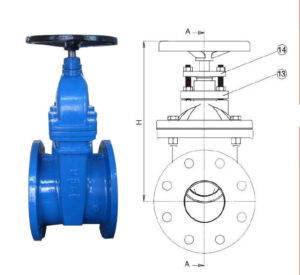
NRS Gate Valves
Non-Rising Stem (NRS) gate valves feature a design where the stem rotates but does not rise out of the valve body during operation. In this configuration, the stem’s threads are located inside the valve body, and the stem rotates within a threaded portion of the gate. As the handwheel turns, the gate moves up or down while the stem maintains a fixed height.
Key Design Features of NRS Gate Valves
- Fixed stem height regardless of valve position (open or closed)
- Internal threading between the stem and gate
- Compact vertical profile suitable for limited-space installations
- Typically includes position indicators since the stem position isn’t visible
- Stem threads are exposed to the flow medium
Operational Characteristics
When operating an NRS gate valve, the handwheel rotation causes the stem to turn in place while the gate moves linearly. This design makes it impossible to visually determine the valve’s position (open or closed) by simply looking at the stem height. Instead, these valves often incorporate position indicators or require counting handwheel turns to determine valve status.
Important Note: Since the stem threads in NRS valves are exposed to the flow medium, these valves may experience accelerated wear in applications with abrasive or corrosive media. This consideration is crucial when selecting valve types for harsh environments.
OS&Y Gate Valves: Design and Functionality
What is an OS&Y Gate Valve?
Outside Screw and Yoke (OS&Y) gate valves feature a design where the stem visibly rises out of the valve body during operation. The stem threads are located outside the valve body and engage with a fixed nut in the yoke. As the handwheel turns, the stem moves linearly through the yoke, raising or lowering the gate.
Key Design Features of OS&Y Gate Valves
- Visible rising and lowering stem that indicates valve position
- External threading between the stem and yoke
- Requires additional vertical clearance to accommodate the rising stem
- Stem threads are isolated from the flow medium
- Yoke structure provides support for the stem and operating mechanism
Operational Characteristics
When operating an OS&Y gate valve, the handwheel rotation causes the stem to move linearly, raising or lowering both the stem and the attached gate. This design provides immediate visual confirmation of the valve’s position—when the stem is raised, the valve is open; when lowered, the valve is closed.
“The visible stem position of OS&Y valves makes them preferred for critical applications where quick visual verification of valve status is essential for operational safety.”
NRS vs OS&Y Gate Valves: Critical Differences
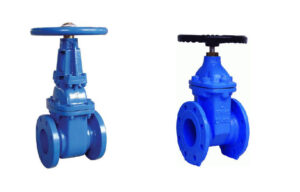
DIFFERENT NRS vs OS&Y Gate Valves
Side-by-side comparison of NRS (left) and OS&Y (right) gate valve designs
| Feature | NRS Gate Valves | OS&Y Gate Valves |
| Stem Movement | Rotates in place (non-rising) | Rises and lowers visibly |
| Threading Location | Internal (exposed to medium) | External (protected from medium) |
| Position Indication | Not visually apparent | Clearly visible stem position |
| Space Requirements | Compact (minimal vertical space) | Requires additional clearance |
| Thread Wear | Higher (exposed to medium) | Lower (protected from medium) |
| Maintenance Access | More difficult (internal components) | Easier (external components) |
Comparative Advantages and Disadvantages
NRS Gate Valve Advantages
- Compact design ideal for limited-space installations
- Suitable for underground or buried applications
- Protected stem reduces risk of external damage
- Lower initial cost in many cases
- Less susceptible to environmental contamination
NRS Gate Valve Disadvantages
- No visual indication of valve position
- Stem threads exposed to flow medium
- Higher potential for internal wear
- More difficult to maintain and repair
- Requires separate position indicators for critical applications
OS&Y Gate Valve Advantages
- Clear visual indication of valve position
- Protected stem threads reduce wear
- Easier maintenance and inspection
- Better sealing performance in many applications
- Preferred for critical safety systems
OS&Y Gate Valve Disadvantages
- Requires more vertical installation space
- Exposed stem vulnerable to damage
- Generally higher initial cost
- Not suitable for underground installations
- May require stem protection in harsh environments
Application-Specific Recommendations
OS&Y gate valves installed in a fire protection system with visible rising stems
Recommended Applications for NRS Gate Valves
Water Distribution Systems
NRS gate valves are ideal for municipal water distribution networks, particularly for underground installations where space is limited and visual position indication is less critical. Their compact design and protection from external elements make them suitable for buried service.
Wastewater Treatment Facilities
In wastewater applications where valves may be exposed to corrosive environments or submerged conditions, NRS gate valves provide reliable service with reduced risk of stem damage. Their design is particularly valuable in locations with limited access or inspection frequency.
Recommended Applications for OS&Y Gate Valves
Fire Protection Systems
OS&Y gate valves are mandated by NFPA standards for fire protection systems due to their visible position indication. The ability to quickly verify valve status is critical for emergency response and system testing. These valves are typically painted red and secured in the open position during normal operation.
Industrial Process Systems
In industrial applications where frequent operation and visual verification are required, OS&Y gate valves provide superior performance. Their external threading design reduces wear in systems with abrasive or corrosive media, while the visible stem position enhances operational safety.
Selection Guide: Choosing Between NRS and OS&Y Gate Valves
Selecting the appropriate gate valve type requires careful consideration of several factors specific to your application. Use this decision framework to guide your selection process:
Decision flowchart for selecting the appropriate gate valve type based on application requirements
Key Selection Factors
Installation Environment
Choose NRS if: The valve will be installed underground, submerged, or in areas with severe space constraints.
Choose OS&Y if: The valve will be installed in accessible locations where visual position indication is beneficial and vertical space is available.
Operational Requirements
Choose NRS if: The valve will be operated infrequently and position indication is not critical for safety or operation.
Choose OS&Y if: The valve requires frequent operation, visual status verification, or is part of a critical safety system.
Media Characteristics
Choose NRS if: The medium is relatively clean and non-abrasive, or external environmental conditions are harsh.
Choose OS&Y if: The medium is abrasive or corrosive, as the external threading reduces exposure to the flow medium.
Maintenance Considerations for NRS and OS&Y Gate Valves
Routine maintenance being performed on an OS&Y gate valve
NRS Gate Valve Maintenance
- Lubrication: Requires periodic disassembly to access and lubricate internal stem threads
- Inspection: Check for leakage around the stem packing and body joints
- Position Verification: Test operation through full range of motion to confirm proper functioning
- Corrosion Protection: Apply protective coatings to external surfaces, particularly for buried installations
- Replacement Considerations: Internal components may wear faster, potentially requiring more frequent replacement
OS&Y Gate Valve Maintenance
- Stem Lubrication: Regularly apply lubricant to exposed stem threads to prevent corrosion and ensure smooth operation
- Visual Inspection: Check stem alignment, thread condition, and packing integrity
- Stem Protection: In harsh environments, consider protective covers for exposed stems
- Operational Testing: Cycle the valve periodically to prevent seizing and verify proper function
- Packing Adjustment: Tighten or replace packing as needed to prevent leakage around the stem
Maintenance Tip: Regardless of valve type, establish a regular maintenance schedule based on operating conditions, frequency of use, and manufacturer recommendations. Document all maintenance activities to track performance trends and anticipate replacement needs.
Frequently Asked Questions About NRS vs OS&Y Gate Valves
How can I tell if an OS&Y gate valve is open or closed?
An OS&Y gate valve’s position can be determined by observing the stem position. When the stem is raised (extended outward), the valve is open. When the stem is lowered (retracted inward), the valve is closed. This visual indication is one of the primary advantages of OS&Y valves, particularly in safety-critical applications.
Why are OS&Y gate valves required in fire protection systems?
Fire protection standards (such as NFPA 13) typically require OS&Y gate valves because their visible stem position provides immediate verification of valve status. This is critical during emergencies and inspections. Additionally, OS&Y valves can be easily fitted with tamper switches that monitor unauthorized valve closure, enhancing system security.
Are NRS gate valves less expensive than OS&Y gate valves?
Generally, NRS gate valves have a lower initial cost compared to equivalent OS&Y gate valves due to their simpler design and fewer components. However, when considering total lifecycle costs including maintenance and potential replacement, OS&Y valves may offer better long-term value in applications where their benefits are relevant.
Can NRS gate valves be used in fire protection systems?
While NRS gate valves are not typically permitted as main control valves in fire protection systems due to the lack of visual position indication, they may be allowed in certain limited applications where the valve is secured in the open position and supervised. Always consult current fire protection standards and local codes before specifying valve types for fire systems.
How do I determine the appropriate valve size for my application?
Valve sizing depends on several factors including flow rate requirements, pressure conditions, and pipe diameter. As a general rule, the valve should match the pipe size to minimize pressure drop. For critical applications, consult with a fluid systems engineer to perform proper sizing calculations based on your specific system parameters.
Conclusion: Making the Right Valve Selection
The choice between NRS vs OS&Y gate valves ultimately depends on your specific application requirements, installation environment, and operational needs. Both valve types offer distinct advantages that make them suitable for different scenarios.
NRS gate valves excel in space-constrained and underground applications where visual position indication is less critical. Their compact design and protection from external elements make them ideal for buried service in water distribution and similar applications.
OS&Y gate valves provide superior performance in applications requiring visual position verification, frequent operation, or protection from abrasive media. Their design makes them particularly valuable in fire protection systems, industrial processes, and critical infrastructure where operational status must be immediately apparent.
By carefully evaluating the factors outlined in this guide and consulting with valve specialists when necessary, you can select the optimal gate valve type that balances performance, maintenance requirements, and cost considerations for your specific application.