
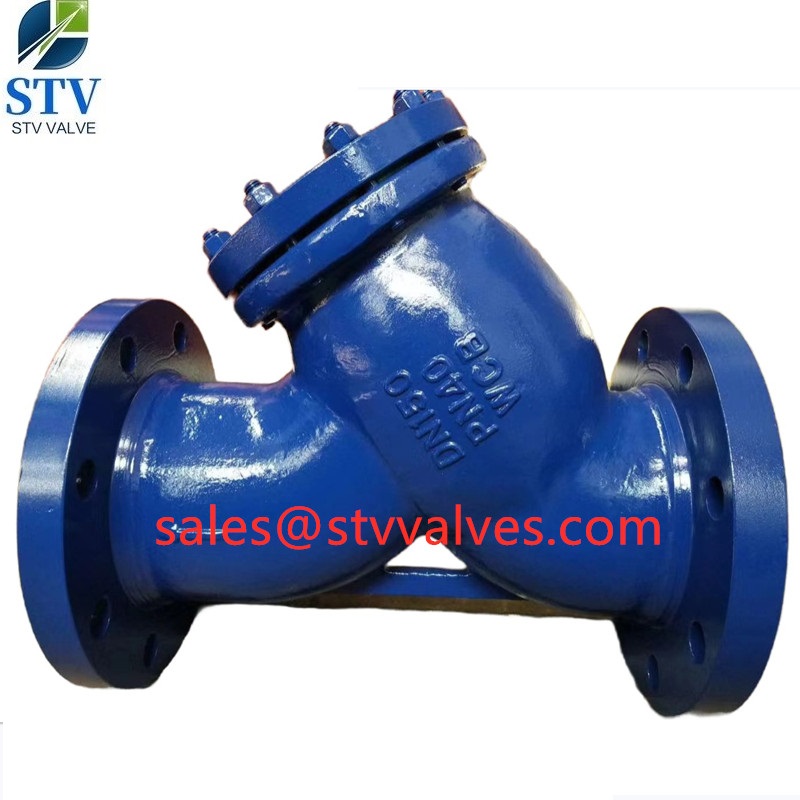
What Is a DIN Y Type Strainer and How Is It Used in Industry
China DN 200 Y Type Strainer Manufacture,China DN 200 Y Type Strainer Factory,China DN 200 Y Type Strainer Supplier,DN 200 Y Type Strainer In China.
A DIN Y type strainer serves as a critical component in industrial pipelines. This device filters out solid contaminants such as dirt, scale, and welding particles from steam, gas, or liquid systems. Its perforated or wire mesh screen physically traps these solids, which can otherwise damage valves and equipment. By removing debris, the strainer protects downstream components and helps maintain system efficiency. DIN Y type strainers offer versatility across many industries and meet strict DIN standards, making them a reliable choice for operations worldwide. Many facilities select a china din y type strainer for dependable performance.
Key Takeaways
- DIN Y type strainers filter solid particles from steam, gas, and liquids to protect industrial equipment and keep systems efficient.
- Their Y-shaped design fits both horizontal and vertical pipelines and offers easy installation in tight spaces.
- Choosing the right mesh size and material ensures effective filtration and long service life for different media and conditions.
- Proper installation and regular cleaning prevent clogging, reduce maintenance costs, and extend equipment lifespan.
- DIN Y type strainers are widely used in industries like power, oil and gas, mining, and water treatment for reliable equipment protection.
What Is a DIN Y Type Strainer
Definition
A DIN Y type strainer is a mechanical device designed to filter out solid particles from fluids in industrial pipelines. Its Y-shaped body features an angled inlet and outlet, which helps direct the flow through a mesh or perforated screen. This design allows the strainer to trap debris such as rust, scale, and dirt, preventing these contaminants from reaching sensitive downstream equipment. The DIN Y type strainer stands out from other industrial strainers, such as T-type strainers, due to its unique shape and installation options.
| Feature | DIN Y Type Strainer | Other Industrial Strainers (T-type) |
|---|---|---|
| Design | Y-shaped body with angled inlet and outlet | T-shaped body with 90-degree inlet and outlet |
| Installation | Suitable for horizontal or vertical installation | Can be installed horizontal, vertical, or at right angles |
| Filtering | Larger filtration surface area, suited for low particle concentration | Handles high-velocity, viscous fluids, and large debris |
| Maintenance | Requires process shutdown for cleaning | Easier cleaning without draining, quick-opening covers |
| Cost | More cost-effective, standard design | More expensive, custom-made |
| Typical Applications | Protects downstream equipment in liquid applications with steam, air, or inert gases, often in smaller pipelines and lower pressure systems | Used in high-pressure, large pipelines, hazardous materials, and high flow applications |
Note: The Y-type strainer’s larger filtration surface area makes it ideal for systems with lower particle concentrations and less demanding environments.
Main Parts
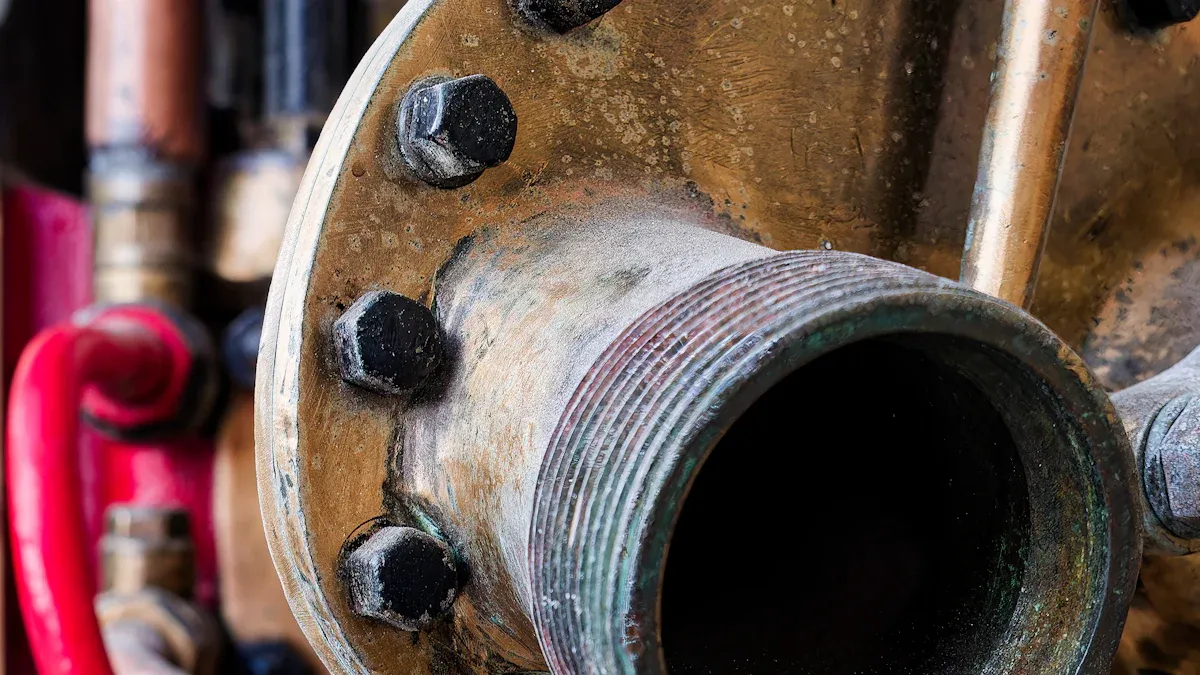
A DIN Y type strainer consists of several essential components, each made from materials chosen for durability and compatibility with different media. The main parts include the body, mesh (filter screen), seal, bracket, hex nuts, and stud bolts. Manufacturers use materials such as cast steel, stainless steel, and PTFE to ensure long service life and resistance to corrosion.
| Component | Typical Materials |
|---|---|
| Corp | Cast steel (GS-C25), Stainless steel (CF8, CF8M) |
| Mesh | Oţel inoxidabil |
| Seal | Stainless steel, PTFE |
| Bracket | Cast steel (GS-C25), Stainless steel (CF8, CF8M) |
| Hex nuts | A194-2H grade steel |
| Stud bolts | ASTM A193-B7 steel |
The mesh size can be customized, but a common size is around 80mm. The strainer supports a wide range of sizes (DN15 to DN600) and pressure ratings (PN16 to PN40). It operates effectively in temperatures from -29°C to +425°C, making it suitable for steam, gas, oil, and water applications.
DIN Standards
DIN Y type strainers comply with strict German and European standards to ensure safety, reliability, and performance. These standards cover design, dimensions, materials, and testing procedures.
| Standard Aspect | DIN Standard(s) | EN Standard(s) |
|---|---|---|
| Design | DIN 3356 | EN12516 |
| Face-to-face dimensions | DIN 3202 | EN558 |
| Flanged ends | DIN 2543-2545 | EN1092-1 |
| Test and inspection | DIN 3230 | EN12266 |
Key requirements include:
- Nominal pressure ratings (such as PN16)
- Strength tests at 1.5 times the nominal pressure
- Sealing tests at 1.1 times the nominal pressure
- Gas or air seal tests at 0.6 times the nominal pressure
- Suitable temperature range from -196℃ to 600℃
Tip: Compliance with these standards ensures that DIN Y type strainers deliver consistent performance and meet the demands of modern industrial systems.
How It Works
Filtration Process
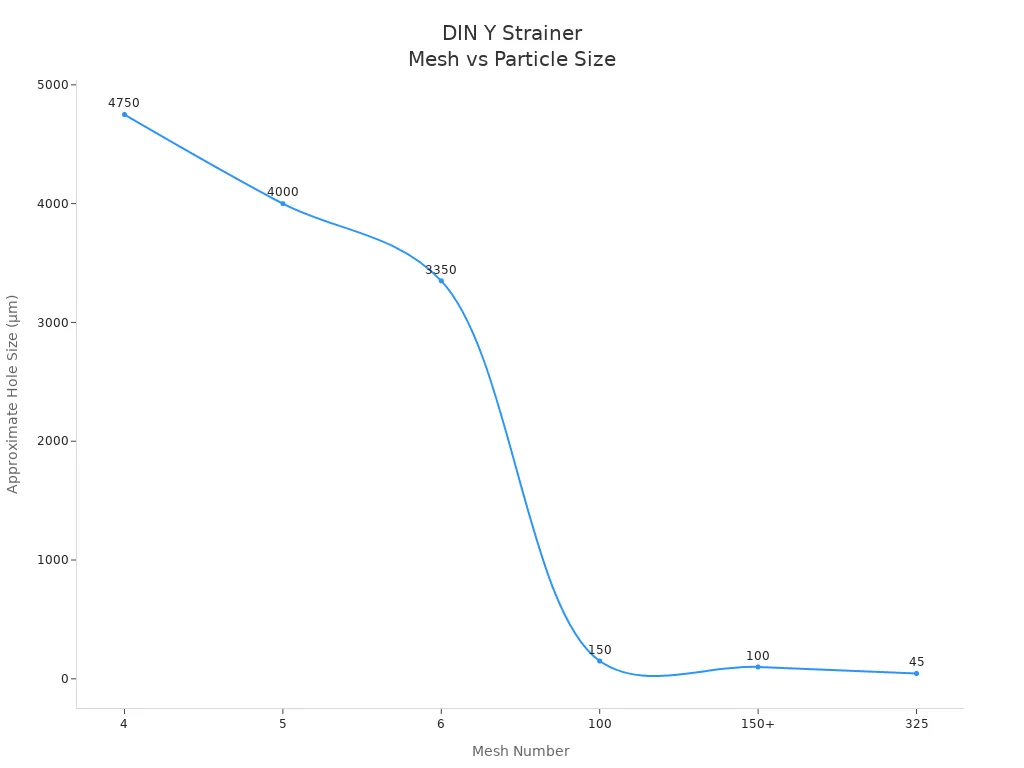
A DIN Y type strainer removes solid particles from fluids by forcing the flow through a mesh or perforated screen. The Y-shaped body directs the fluid so that debris collects in the strainer leg, while clean fluid continues downstream. Operators can select different mesh sizes to match the required filtration precision. The mesh number determines the size of particles the strainer can capture. For example, a mesh with a higher number filters out smaller particles.
| Mesh Number | Approximate Hole Size (mm) | Approximate Hole Size (µm) |
|---|---|---|
| 4 | 4.75 | 4750 |
| 5 | 4.00 | 4000 |
| 6 | 3.35 | 3350 |
| 100 | 0.15 | 150 |
| 150+ | Below 0.1 | Below 100 |
| 325 | 0.045 | 45 |
A typical DIN Y type strainer can filter particles from about 4.75 mm down to 45 microns, depending on the mesh size. For instance, a DI076 Ductile Iron Y-Type Strainer uses a 1 mm stainless steel screen, which removes particles larger than 1 mm. The choice of mesh depends on the application. Coarse filtration uses 10–40 mesh, medium uses 60–100 mesh, and high precision uses 150 mesh or more.
DIN Y type strainers work best in low to moderate flow conditions. They protect pumps, flow meters, and control valves from small debris. Compared to strecurătoare de coș, Y type strainers have a smaller filter area and lower dirt-holding capacity. Basket strainers suit large-scale processing and high debris loads, while Y type strainers fit compact spaces and lighter-duty tasks.
Operators can improve filtration efficiency by choosing Y strainers with blow-off valves. This feature allows cleaning the screen without shutting down the system, which extends the screen’s life and reduces maintenance.
Installation Options
Proper installation ensures the DIN Y type strainer works efficiently and protects downstream equipment. The orientation of the strainer depends on the type of media and the direction of flow.
- In steam or gas pipelines, installers should position the filter screen horizontally. This setup prevents water accumulation and erosion.
- In liquid pipelines, the filter screen should face downward. Gravity helps debris settle into the strainer leg.
- For vertical installations, fluid must enter from the bottom and exit at the top. This arrangement allows sediment to collect at the bottom.
- For horizontal installations, the flow arrow on the strainer body must align with the pipeline flow. The drain port should point downward for easy debris removal.
Incorrect installation can cause several problems:
- Ineffective filtration allows impurities to pass through, risking damage to downstream equipment.
- Pressure drop and clogging may occur, reducing system performance.
- Mechanical stress from poor orientation can shorten the strainer’s lifespan and lead to cracks or failure.
Always follow the manufacturer’s guidelines for orientation and flow direction. Proper installation reduces maintenance needs and extends equipment life.
Media Compatibility
DIN Y type strainers handle a wide range of media, including steam, gas, and liquids. The table below summarizes their compatibility and limitations:
| Media Type | Compatibility with DIN Y Type Strainers | Limitations |
|---|---|---|
| Steam | Commonly used; handles high pressure and temperature well | Standard carbon steel not suitable above 1500 psi and 1000°F; chrome-moly alloy preferred for high temp/pressure |
| Gas (Air, Natural Gas) | Compatible; high pressure common but lower temperatures allow use of carbon steel bodies | None significant; ordinary carbon steel sufficient due to lower temperatures |
| Liquid | Effective for filtering debris like sand and gravel; protects downstream equipment | Lower dirt holding capacity requires frequent cleaning; blow-off valves recommended for cleaning without shutdown |
DIN Y type strainers perform well in steam systems, especially when made from chrome-moly alloys for high temperature and pressure. In gas pipelines, carbon steel bodies are usually sufficient because temperatures remain lower. For liquid applications, the strainer removes sand, gravel, and other solids, but operators should clean the screen regularly. Blow-off valves help maintain performance by allowing debris removal without stopping the process.
Selecting the right material and mesh size for the media ensures reliable operation and long service life.
Aplicații
Industrial Uses
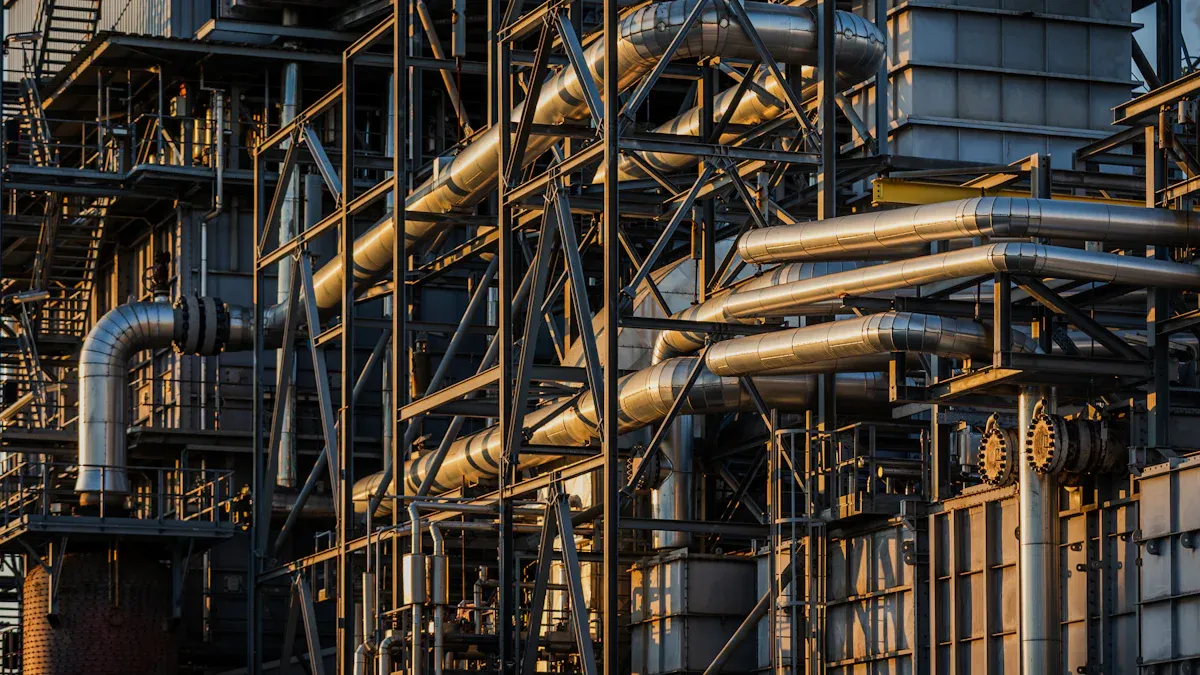
DIN Y type strainers play a vital role in many industries. Their main job is to filter out solid particles and protect equipment. The table below shows where these strainers are most common and why companies choose them:
| Leading Industries | Primary Reasons for Adoption |
|---|---|
| Power Generation | Filtration of impurities, removal of suspended solids, protection of downstream equipment, high filtration precision, operational efficiency |
| Oil & Gas | Removal of particulate matter, system fouling reduction, automatic cleaning capabilities, protection of equipment |
| Refining | Purification of fluids, reduction of turbidity, automatic backwashing, low maintenance costs |
| Minerit | Filtering raw water, high dirt holding capacity, automatic cleaning without interrupting supply |
| Water & Sewage | Removal of algae, rust, bacteria; purification of water quality; minimal water consumption during cleaning |
These industries rely on DIN Y type strainers to keep their systems running smoothly. For example, oil and gas plants use them to filter steam, gas, and light-duty liquids. Chemical processing and water treatment facilities also depend on these strainers for reliable operation. Manufacturers build DIN Y type strainers from materials like stainless steel, cast iron, and special alloys. This ensures they last in tough environments.
Equipment Protection
DIN Y type strainers protect pumps, valves, meters, and other sensitive equipment. They trap rust, sand, and other debris before it can reach downstream components. This action prevents abrasion, clogging, and damage. As a result, equipment lasts longer and needs less maintenance. Operators find that using these strainers reduces downtime and keeps fluid systems working efficiently. The design allows for easy cleaning, which further helps lower maintenance costs. By keeping impurities out, DIN Y type strainers help avoid costly repairs and extend the life of the entire system.
Tip: Regular cleaning of the strainer screen ensures the best protection for all downstream equipment.
HVAC and Water Systems
Engineers often choose DIN Y type strainers for HVAC and water systems. These strainers have a compact, angled chamber that traps particles early and keeps pressure drop low. Manufacturers use corrosion-resistant materials like stainless steel and carbon steel, making them suitable for demanding conditions. Key features include:
- Flanged, threaded, or welded connections for easy installation
- Drain plugs or blow-off valves for cleaning without removal
- Customizable filtration ratings to match system needs
- Operation at temperatures up to 400°C and pressures up to 150 bar
These features help protect pumps, valves, and instruments from debris. The strainers also reduce maintenance frequency and operational costs. Their design supports both horizontal and vertical installation, making them flexible for different system layouts. In HVAC and water treatment, DIN Y type strainers ensure smooth flow and reliable performance.
Caracteristici cheie
Durability
DIN Y type strainers deliver long-lasting performance in harsh industrial environments. Manufacturers use robust materials such as stainless steel, carbon steel, and duplex steel for the body. These metals resist corrosion and mechanical wear, even when exposed to aggressive chemicals or high temperatures. The filter basket often uses stainless steel grades like SS304 or SS316, which provide extra strength and longevity. Gaskets and seals come in options like graphite, PTFE, or spiral-wound stainless steel, ensuring a tight seal and resistance to leaks. The use of seamless pipes and heavy-duty steel plates in construction adds to the strainer’s mechanical strength. Internal supports made from flat and round bars reinforce the structure, helping the strainer withstand high pressure and vibration. Compliance with standards such as ASME, EN, and API ensures each unit meets strict quality requirements.
| Component | Material Options |
|---|---|
| Corp | Stainless steel (CF8, CF8M, CF3M), Carbon steel (WCB), Duplex |
| Filter Basket | Stainless steel (SS304, SS316) |
| Gasket/Seal | Graphite, PTFE, Spiral wound SS with graphite, Viton, Buna |
| Acoperi | Matching body material, lifting lugs |
| Bolting & Nuts | Zinc-coated carbon steel, Stainless steel (SS304/316) |
The combination of these materials and construction methods ensures DIN Y type strainers remain reliable and durable, even in the most demanding applications.
Maintenance
Proper maintenance keeps DIN Y type strainers operating efficiently and extends their service life. Operators should follow a regular inspection and cleaning routine:
- Inspect the strainer visually for leaks, corrosion, or loose connections.
- Remove and check the filter element for clogging or damage.
- Monitor the pressure drop across the strainer; a sudden increase signals the need for cleaning.
- Clean the filter by shutting down the system, removing the element, rinsing or brushing off debris, and reinstalling with new gaskets if needed.
- Replace worn or damaged elements with compatible parts.
- Lubricate moving parts such as drain plugs or valves.
- Keep detailed maintenance records to track performance.
- Follow manufacturer instructions for all procedures.
- Train staff and provide the right tools for maintenance tasks.
- Upgrade to newer models if current strainers no longer meet system needs.
Regular cleaning and inspection prevent blockages and reduce the risk of equipment failure.
Flexibility
DIN Y type strainers adapt easily to different pipeline configurations and flow requirements. The compact Y-shaped design fits both horizontal and vertical pipelines, making installation simple in tight spaces. Manufacturers offer a wide range of materials, including stainless steel, carbon steel, brass, and special alloys, to match various fluids and environmental conditions. Connection types such as flanged, threaded, socket weld, and butt weld ensure compatibility with many pipeline systems. Sizes range from ½ inch to 60 inches, and pressure ratings cover 150LB to 2500LB. Customizable mesh and screen types allow users to select the right filtration level for each application. Features like quick-opening covers and blow-off connections make cleaning and maintenance fast and easy. The strainer’s design supports leak-free operation under high pressure and temperature, ensuring reliable performance in diverse industrial settings.
Engineers value DIN Y type strainers for their ability to handle changing system demands and challenging operating conditions.
China DIN Y Type Strainer
Market Overview
China holds a strong position in the global market for DIN Y type strainers. Export data shows that China is the second largest exporter of flanged Y type strainers, with 112 shipments recorded in the twelve months ending September 2024. This figure highlights the active role of the china din y type strainer in international trade. Although global exports declined by 19% compared to the previous year, China experienced a 100% year-on-year growth in September 2024. This growth demonstrates the increasing demand for the china din y type strainer in various regions.
Shipment records from China to countries like Vietnam reveal a wide range of DIN standard Y type strainers. These products vary in diameter and material, with shipment values ranging from hundreds to thousands of dollars. The data confirms that the china din y type strainer remains a popular choice for both domestic and export markets. While detailed five-year trends are not available, the recent surge in exports suggests a positive outlook for the industry.
Leading manufacturers in the region contribute to this growth. The table below lists some notable companies producing the china din y type strainer:
| Manufacturer Name | Origin | Product Highlights / Standards Supported |
|---|---|---|
| Wellgrow Industries Corp. | Taiwan | DIN standard compatible Y-type strainers, stainless steel |
| Astam Valve Enterprise Co., Ltd. | Taiwan | Cast steel Y strainers, DIN PN10, PN16 ratings |
| Yzng Trong International Co., Ltd. | Taiwan | Stainless steel Y-strainers, ASTM A-351 Gr.CF8M body |
| Valtec Ind. Co., Ltd. | Taiwan | Listed as a top supplier for Y strainers |
| Chuan Chuan Metal Valves Co., Ltd. | China | Jacket type Y strainers, cast carbon steel and alloy steel |
The presence of both Chinese and Taiwanese manufacturers ensures a diverse supply of the china din y type strainer for global buyers.
Sourcing Considerations
Buyers seeking a china din y type strainer should pay close attention to quality standards and certifications. Verifying compliance with DIN standards, such as DIN EN1092-1 and DIN3202-F1, is essential. These standards cover important aspects like flange dimensions, pressure ratings, and material specifications. Other international standards, including BS4504, Uni, GOST, ANSI, ASME B16.5, JIS, API, and PN16 Class150#, may also apply to the china din y type strainer.
When evaluating suppliers, buyers should check for the following:
- Adherence to DIN and international standards for the china din y type strainer
- Use of approved materials, such as stainless steel, cast iron, ductile iron, or carbon steel
- Availability of documentation confirming compliance with relevant standards
- Clear product labeling and technical data sheets
A reliable china din y type strainer supplier will provide detailed specifications and support third-party inspections if needed.
Selecting the right china din y type strainer involves more than just price. Buyers should consider the supplier’s reputation, product range, and ability to meet project requirements. Careful sourcing ensures long-term performance and safety in industrial applications.
DIN Y type strainers deliver reliable protection for pumps, valves, and meters by removing debris and contaminants. Their durable construction and efficient design help reduce maintenance costs and prevent system failures. Key benefits include:
- Long service life from corrosion-resistant materials
- Flexible installation options for various pipelines
- Easy cleaning and maintenance for less downtime
To maximize performance, users should:
- Select the correct mesh size and material for the application.
- Install the strainer in the proper orientation.
- Follow regular maintenance routines.
Proper selection and care ensure safe, efficient, and cost-effective operation across many industries.
FAQ
What is the typical maintenance interval for a DIN Y type strainer?
Operators usually inspect and clean the strainer every three to six months. The actual interval depends on the system’s debris load and operating conditions. Regular checks help prevent clogging and maintain optimal flow.
Can a DIN Y type strainer handle corrosive fluids?
Manufacturers offer DIN Y type strainers in materials like stainless steel and PTFE. These materials resist corrosion from aggressive chemicals. Users should always select the correct material for the specific fluid to ensure long service life.
How do you know when the strainer needs cleaning?
A sudden increase in pressure drop across the strainer signals clogging. Operators should monitor pressure gauges before and after the strainer. When the difference rises, cleaning becomes necessary to restore normal flow.
Are DIN Y type strainers suitable for both horizontal and vertical pipelines?
Yes. The Y-shaped design allows installation in both horizontal and vertical pipelines. Installers must follow manufacturer guidelines for orientation to ensure effective filtration and easy debris removal.
What mesh size should users choose for their application?
Mesh size depends on the size of particles that need removal. For coarse debris, a lower mesh number works best. For fine filtration, a higher mesh number is ideal. Users should consult system requirements before selecting a mesh