
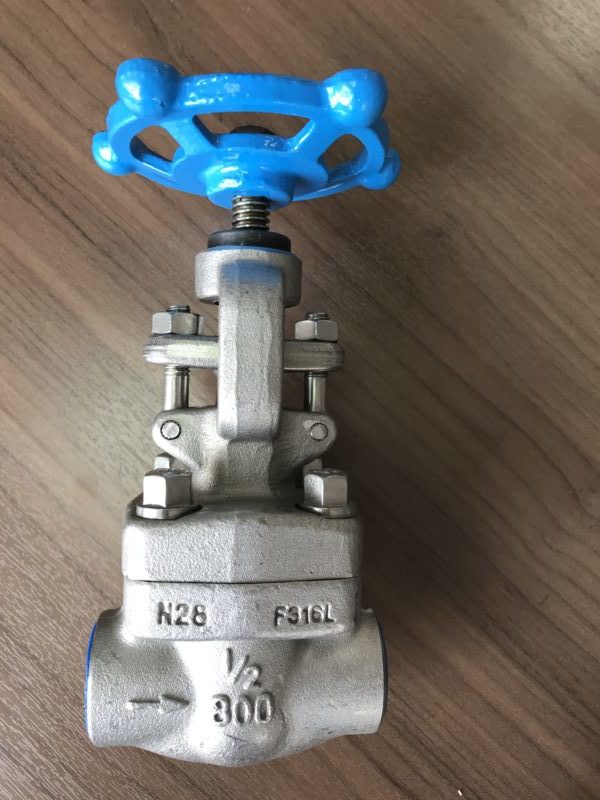
Care este motivul etanșării forțate a supapelor din oțel forjat din oțel inoxidabil?
Motivul pentru care supapă din oțel forjat din oțel inoxidabil adopts the forced sealing is that when the stainless steel forged steel valve is closed, the external force is forced to press the ram to the valve seat to ensure the sealing of the sealing surface. Stainless steel forged steel valves should generally be installed horizontally in the pipeline. When the gate valve is closed, the sealing surface can be sealed only by the medium pressure, that is, the sealing surface of the ram is pressed against the valve seat on the other side by the medium pressure to ensure the sealing of the sealing surface, which is self-sealing
The forced sealing of stainless steel forged steel valves is primarily implemented to ensure absolute leak-tightness under high-pressure, high-temperature, or corrosive conditions. Here are the key reasons:
1. High-Pressure & High-Temperature Resistance
Forged steel valves are used in demanding environments (e.g., oil & gas, petrochemicals, power plants).
Forced sealing (e.g., through a wedge or parallel disc design) ensures the valve remains sealed even under extreme pressure fluctuations or thermal expansion.
2. Prevention of Seat Erosion
In aggressive media (e.g., steam, acids, abrasive fluids), soft-seated valves may degrade over time.
Forged steel valves often use metal-to-metal sealing (e.g., Stellite-hardened seats) with forced closure to maintain sealing integrity.
3. Zero-Leakage Requirements
Industries like LNG, nuclear, or chemical processing mandate bubble-tight shutoff (API 598/ISO 15848 standards).
Forced sealing (e.g., via live-loaded packing or double-piston effect seats) compensates for wear and thermal cycling.
4. Thermal & Mechanical Stress Compensation
Stainless steel expands/contracts with temperature changes.
Forced sealing mechanisms (e.g., flexible wedge gates or spring-loaded discs) adapt to prevent seat distortion.
5. Safety & Compliance
Standards like ASME B16.34 și API 6D require valves to maintain sealing under test pressures (1.5x rated pressure).
Forged steel construction + forced sealing ensures compliance with fire-safe (API 607/ISO 10497) and fugitive emission (ISO 15848) norms.
Common Forced Sealing Designs:
Gate Valves: Wedge-and-seat forced closure.
Globe Valves: Plug-and-disc compression.
Check Valves: Spring-assisted sealing.
Conclusion:
Forced sealing in stainless steel forged valves is critical for safety, durability, and performance in harsh conditions, preventing leaks that could lead to equipment failure or hazardous incidents.
Would you like details on specific valve types or sealing mechanisms?
china F316L gate valves Manufacture
.