Bellow Seal Globe Valve vs Globe Valve: A Comprehensive Comparison
Bellow Seal Globe Valve vs Globe Valve: A Comprehensive Comparison
When selecting industrial valves for critical applications, understanding the differences between a bellow seal globe valve and a standard globe valve can significantly impact system performance, maintenance requirements, and operational costs. This comprehensive comparison explores the key distinctions, advantages, and ideal applications for each valve type to help you make an informed decision for your specific needs.

Understanding the Basics: Definitions and Core Functions
Что такое шаровой клапан?
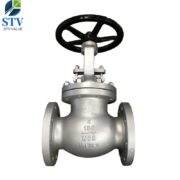
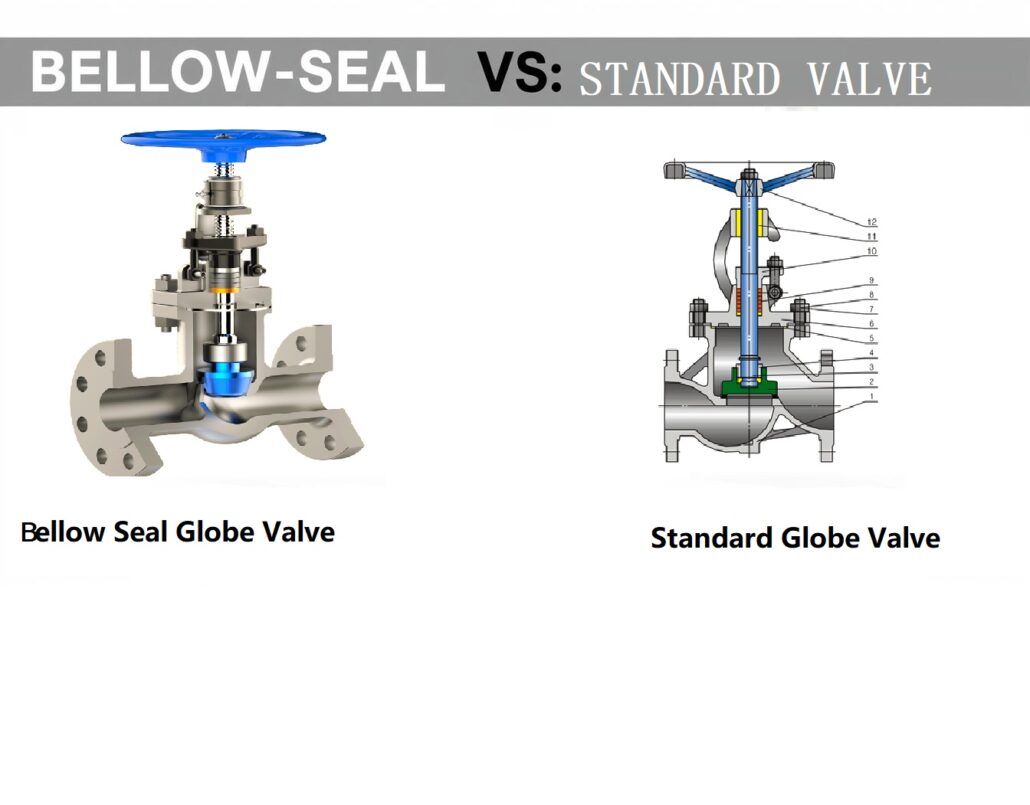
Bellow Seal Globe Valve vs Globe Valve side-by-side comparison
А шаровой вентиль is a linear motion valve used to stop, start, and regulate fluid flow. Its name derives from the spherical body shape with the two halves of the body separated by an internal baffle. This valve features a movable disc-type element and a stationary ring seat in a generally spherical body.
Standard globe valves rely on packing materials (typically graphite or PTFE) around the stem to prevent leakage. This design has been widely used across numerous industries for decades due to its reliability and relatively simple construction.
What is a Bellow Seal Globe Valve?
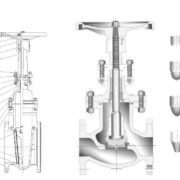
Standard globe valve cross-section showing internal components

Standard globe valve cross-section showing internal components
A bellow seal globe valve is an advanced variation of the standard globe valve that incorporates a bellows seal assembly. This flexible, accordion-like metal component creates a hermetic seal between the valve stem and bonnet, effectively eliminating the potential for stem leakage.
The bellows expands and contracts as the valve operates, maintaining a complete seal throughout the valve’s movement. This design significantly reduces the risk of media leakage, making it ideal for applications involving hazardous, toxic, or valuable fluids.
Key Structural Differences
The fundamental distinction between these two valve types lies in their sealing mechanism design. Understanding these structural differences is crucial for selecting the appropriate valve for your application.
Sealing Mechanism
The most significant structural difference is in the sealing system. Standard globe valves use compression packing (typically graphite or PTFE) that surrounds the stem and is compressed by a gland follower to create a seal. This design, while effective for many applications, can wear over time and may require periodic adjustment and replacement.
In contrast, bellow seal globe valves utilize a metallic bellows that is welded to both the stem and bonnet. This creates a hermetic seal that completely isolates the process fluid from the environment, eliminating the potential leak path along the stem.
Stem Design and Movement
In standard globe valves, the stem moves directly through the packing, which creates friction and potential wear points. The stem is typically exposed to the process media, which can lead to corrosion or erosion depending on the fluid properties.
Bellow seal globe valves feature a stem that is protected by the bellows assembly. As the valve operates, the bellows flexes (expands and contracts) while maintaining the seal integrity. This design protects the stem from direct contact with potentially corrosive process media.
Secondary Sealing
Bellow seal globe valves typically incorporate a secondary packing seal as a backup safety feature. If the bellows should fail, this secondary seal prevents immediate leakage and provides time for maintenance. This dual-sealing approach significantly enhances the safety profile of these valves in critical applications.
Need Expert Guidance on Valve Selection?
Our valve specialists can help you determine the optimal valve type for your specific application requirements, ensuring maximum performance and safety.
Request Expert Consultation
Performance Comparison: Bellow Seal Globe Valve vs Globe Valve
Шаровой клапан с сильфонным уплотнением Преимущества
- Superior leakage prevention with hermetic seal
- Extended service life with minimal maintenance
- Excellent performance in extreme conditions
- Enhanced safety for hazardous media
- Reduced environmental emissions
- Lower total cost of ownership over time
Standard Globe Valve Преимущества
- Lower initial purchase cost
- Simpler design with fewer components
- Easier maintenance procedures
- More widely available replacement parts
- Suitable for most general applications
- Familiar technology for maintenance teams
Leakage Prevention Capabilities
The bellow seal globe valve excels in preventing leakage, which is its primary advantage. The metal bellows creates a hermetic seal that eliminates the stem leakage path entirely. This makes it the preferred choice for applications where even minimal leakage could pose safety hazards, environmental concerns, or product loss.
Standard globe valves, while reliable for general applications, may experience minor leakage over time as packing materials wear or compress. This is particularly true in applications with temperature cycling, high pressure, or corrosive media that can accelerate packing degradation.
Temperature and Pressure Handling
Both valve types can be designed for high-temperature and high-pressure applications, but bellow seal globe valves typically offer superior performance under extreme conditions. The bellows design maintains its integrity across a wider temperature range, and the elimination of packing compression issues improves performance consistency.
| Performance Factor | Шаровой клапан с сильфонным уплотнением | Standard Globe Valve |
| Temperature Range | -196°C to 550°C | -29°C to 450°C |
| Pressure Rating | Up to Class 2500 | Up to Class 2500 |
| Leakage Rate | Zero (hermetic seal) | Minimal to moderate (depends on packing) |
| Service Life | 15-20 years | 8-12 years |
| Maintenance Frequency | Low (3-5 years) | Moderate (1-2 years) |
Maintenance Requirements
Standard globe valves typically require more frequent maintenance, primarily involving packing adjustment and replacement. The packing can compress over time, requiring periodic tightening of the gland follower to maintain the seal. Eventually, complete packing replacement becomes necessary.
Bellow seal globe valves require significantly less maintenance due to the elimination of adjustable packing. The bellows assembly is designed to operate for extended periods without attention. However, when maintenance is required, it may be more complex and costly due to the specialized bellows component.
Application Scenarios: Where Each Valve Type Excels
Ideal Applications for Bellow Seal Globe Valves
Bellow seal шаровые клапаны are the preferred choice in applications where leakage prevention is critical and where the media being handled is hazardous, toxic, expensive, or environmentally sensitive. These valves excel in:
Chemical Processing
Used for handling corrosive chemicals, acids, and other reactive substances where leakage could create safety hazards or environmental issues.
Pharmaceutical Manufacturing
Essential for processes involving high-purity requirements, sterile conditions, or expensive active pharmaceutical ingredients where contamination or loss must be prevented.
Nuclear Power Plants
Critical for handling radioactive fluids where absolute containment is mandatory for safety and regulatory compliance.
Ideal Applications for Standard Globe Valves
Standard globe valves remain the cost-effective choice for general applications where occasional minor leakage is acceptable and where media is non-hazardous. These valves are well-suited for:
Water Systems
Commonly used in water distribution, cooling systems, and other applications where the media is non-toxic and minor leakage poses minimal risk.
HVAC Systems
Ideal for regulating flow in heating, ventilation, and air conditioning systems where cost-effectiveness is important.
General Industrial Processes
Suitable for many manufacturing processes involving non-hazardous fluids where budget considerations outweigh the need for zero-leakage performance.
Need Help Selecting the Right Valve for Your Application?
Download our comprehensive Valve Selection Guide to understand which valve type best suits your specific industry requirements.
Download Valve Selection Guide
Cost Comparison and Total Cost of Ownership
When evaluating bellow seal globe valves versus standard globe valves, it’s essential to consider both initial costs and long-term ownership expenses. While the upfront investment differs significantly, the total cost of ownership calculation may yield surprising results.
Initial Investment
Bellow seal globe valves typically cost 2-3 times more than standard globe valves of equivalent size and pressure class. This price premium reflects the more complex design, specialized manufacturing processes, and higher-grade materials required for the bellows assembly.
Standard globe valves offer a lower barrier to entry, making them attractive for projects with tight capital budgets or applications where leakage concerns are minimal.
Maintenance Costs
Standard globe valves incur regular maintenance costs for packing adjustment and replacement. These expenses include not only the materials but also labor costs and potential system downtime during maintenance procedures.
Bellow seal globe valves require significantly less frequent maintenance, resulting in lower ongoing maintenance costs. However, when maintenance is needed, it may be more expensive due to the specialized nature of the bellows component.
Total Cost of Ownership Analysis
When calculating total cost of ownership over a typical 15-year service life, the initial cost advantage of standard globe valves is often offset by higher maintenance expenses and potential costs associated with leakage (product loss, environmental cleanup, regulatory fines).
Case Study: A chemical processing plant replaced 24 standard globe valves with bellow seal globe valves in a corrosive acid handling system. Despite the higher initial investment of $86,000, the company saved approximately $142,000 over eight years through reduced maintenance costs, eliminated product loss, and avoided environmental compliance issues.
Industry Standards and Certifications
Both valve types must comply with various industry standards and certifications, though bellow seal globe valves often face more stringent requirements due to their applications in critical systems.
| Standard/Certification | Relevance to Bellow Seal Globe Valve | Relevance to Standard Globe Valve |
| API 602 | Mandatory for petrochemical applications | Mandatory for petrochemical applications |
| АСМЭ Б16.34 | Critical for pressure-containing components | Critical for pressure-containing components |
| ISO 15848 | Essential for fugitive emissions certification | Often not required for general applications |
| TA-Luft | Required for environmental compliance in many regions | Not typically required |
| Fire Safe Certification | Often required due to critical applications | Required only for specific applications |
When selecting either valve type, ensure that it meets all relevant standards for your specific industry and application. This is particularly important for bellow seal globe valves used in hazardous service where regulatory compliance is strictly enforced.
Installation and Maintenance Considerations
Installation Requirements
Bellow seal globe valves require more careful handling during installation to protect the bellows assembly from damage. Proper alignment is critical, and installation should be performed by technicians familiar with these specialized valves.
Standard globe valves are generally more forgiving during installation, with fewer special handling requirements. This can result in faster installation times and lower installation costs.
Maintenance Procedures
Maintenance of standard globe valves primarily involves packing adjustment and replacement, which is relatively straightforward and can often be performed by general maintenance personnel.
Bellow seal globe valves require less frequent maintenance, but when service is needed, it typically demands more specialized skills, particularly if the bellows assembly requires inspection or replacement.
Important: Never attempt to disassemble a bellow seal globe valve without proper training. The bellows assembly is a precision component that can be easily damaged if handled incorrectly.
Lifecycle Management
For optimal performance and longevity, both valve types benefit from a structured lifecycle management approach:
- Develop a valve-specific maintenance schedule based on manufacturer recommendations and operating conditions
- Implement regular inspection protocols to identify potential issues before they lead to failure
- Maintain an inventory of critical spare parts, especially for bellow seal globe valves where components may have longer lead times
- Document all maintenance activities and valve performance to identify patterns and optimize maintenance intervals
Recent Technological Advancements
Both valve types continue to evolve with technological advancements that enhance performance, reliability, and ease of maintenance.
Innovations in Bellow Seal Globe Valves
- Multi-ply bellows designs that offer enhanced durability and longer cycle life while maintaining flexibility
- Advanced welding techniques that improve the integrity of bellows-to-bonnet and bellows-to-stem connections
- Integrated sensors that monitor bellows condition and provide early warning of potential failures
- Optimized flow paths that reduce turbulence and improve flow characteristics
Innovations in Standard Globe Valves
- Improved packing materials that offer better sealing performance and longer service life
- Live-loading systems that automatically adjust packing compression to maintain seal integrity
- Corrosion-resistant coatings that extend valve life in aggressive environments
- Streamlined body designs that reduce pressure drop and improve flow efficiency
Conclusion: Making the Right Choice for Your Application
The choice between a bellow seal globe valve and a standard globe valve ultimately depends on your specific application requirements, budget constraints, and long-term operational priorities.
The right valve choice is not simply about selecting the most advanced technology, but rather about matching valve capabilities to application requirements while considering total lifecycle costs.
Choose a bellow seal globe valve when:
- Handling hazardous, toxic, or valuable media where leakage must be prevented
- Operating in environments with strict emissions regulations
- Seeking to minimize maintenance requirements and system downtime
- The long-term total cost of ownership is a priority over initial investment
Choose a standard globe valve when:
- Working with non-hazardous media where minor leakage is acceptable
- Operating under budget constraints that prioritize lower initial costs
- Maintenance resources are readily available for more frequent service
- Simpler valve design is preferred for ease of maintenance and repair