
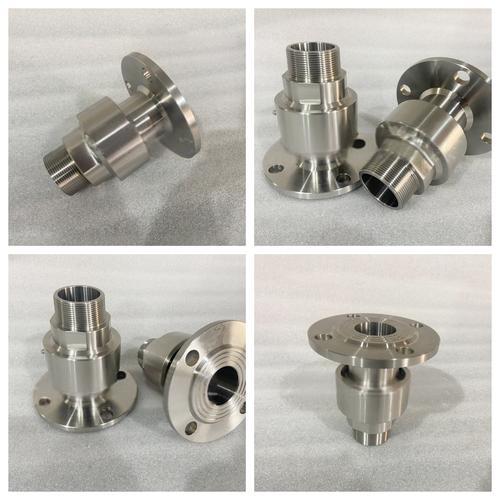
Flanged vs Threaded Connections: A Comprehensive Comparison
Flanged vs Threaded Connections: A Comprehensive Comparison
When designing or maintaining piping systems, choosing the right connection type is crucial for performance, safety, and cost-effectiveness. Flanged and threaded connections are two of the most common methods for joining pipes and valves, each with distinct advantages and ideal applications. This guide explores the key differences between these connection types to help you make informed decisions for your specific requirements.
Understanding Connection Types in Piping Systems

Flanged connection (left) vs threaded connection (right) with key components labeled
Before diving into the specifics of flanged vs threaded connections, it’s important to understand why connection selection matters. The right connection type ensures system integrity, prevents leaks, simplifies maintenance, and optimizes operational efficiency. Factors such as pressure, temperature, pipe size, maintenance requirements, and budget all influence which connection type is most appropriate.
Both flanged and threaded connections serve the same fundamental purpose—joining pipes and components together—but they do so through different mechanisms and offer varying benefits depending on the application context.
What Are Flanged Connections?

Different types of flanged connections including raised face and ring-type joint designs
A flanged connection consists of two flat circular discs (flanges) that are attached to the ends of pipes or valves. These flanges are aligned and joined together using bolts, with a gasket placed between them to create a leak-resistant seal.
Types of Flanged Connections
Several types of flanged connections are used in industrial applications:
- Weld Neck Flanges: Feature a long tapered hub that’s welded to the pipe, providing a smooth transition for fluid flow.
- Slip-On Flanges: Slide over the pipe and are welded in place, offering easier alignment during installation.
- Socket Weld Flanges: Include a socket that the pipe fits into before welding, ideal for smaller diameter high-pressure piping.
- Blind Flanges: Solid discs used to close off the end of a piping system.
- Lap Joint Flanges: Used with stub ends, allowing the flange to rotate for bolt hole alignment.
- Threaded Flanges: Feature internal threads that screw onto pipe threads, eliminating the need for welding.
Flange Face Types
Flanges also come with different face types to accommodate various sealing requirements:
- Raised Face (RF): The most common type, with a slightly raised surface around the bore.
- Flat Face (FF): Completely flat sealing surface, often used with non-metallic piping.
- Ring-Type Joint (RTJ): Features a groove for a metal ring gasket, used in high-pressure applications.
- Tongue and Groove: Interlocking faces that help contain the gasket.
- Male and Female: One flange has a raised face that fits into a recess on the mating flange.

Installation of a large flanged connection in an industrial facility
Advantages of Flanged Connections
- Superior strength and durability for high-pressure applications
- Excellent for large diameter pipes (3″ and above)
- Easy disassembly for maintenance and inspection
- Better leak prevention with proper gasket selection
- Suitable for high-temperature environments
- Can accommodate thermal expansion and contraction
- Allows for pipe spools to be assembled without welding
Limitations of Flanged Connections
- Higher initial cost compared to threaded connections
- Requires more space for installation and maintenance
- More complex installation process requiring proper alignment
- Heavier components, especially in larger sizes
- Requires additional components (gaskets, bolts, nuts)
- Gaskets may need periodic replacement
- More expensive to insulate in certain applications
What Are Threaded Connections?

Close-up view of male and female threaded pipe connections
Threaded connections involve pipes or fittings with matching helical ridges (threads) cut into their surfaces. One component has external (male) threads while the other has internal (female) threads. When screwed together, these threads create a mechanical joint that can be sealed with thread tape or sealant.
Types of Threaded Connections
Several thread standards are used in industrial applications:
- NPT (National Pipe Tapered): The US standard featuring tapered threads that create a wedging action for better sealing.
- NPS (National Pipe Straight): Straight threads that require a gasket or sealant for fluid-tight connections.
- BSPT (British Standard Pipe Tapered): Similar to NPT but with a 55-degree thread flank angle instead of 60 degrees.
- BSPP (British Standard Pipe Parallel): Straight threads that rely on a sealing ring or washer.

Application of PTFE thread tape to ensure proper sealing in a threaded connection
Advantages of Threaded Connections
- Lower initial cost compared to flanged connections
- Quick and easy installation with basic tools
- No special equipment (welders, etc.) required
- Space-saving design ideal for compact installations
- Well-suited for smaller pipe diameters (3″ and under)
- Lightweight components for easier handling
- Good for low to medium pressure applications
Limitations of Threaded Connections
- Lower pressure and temperature ratings than flanged connections
- More prone to leaks, especially under vibration or thermal cycling
- Difficult to disassemble after long service periods
- Risk of thread damage during installation or maintenance
- Not suitable for very high pressure or high temperature applications
- Threads can weaken pipe walls, reducing overall strength
- May loosen over time in systems with vibration
Pressure and Temperature Considerations

Pressure-temperature rating comparison between flanged and threaded connections
One of the most critical factors in choosing between flanged and threaded connections is understanding their pressure and temperature handling capabilities.
Flanged Connection Ratings
Flanged connections are classified according to pressure classes established by standards organizations like ANSI (American National Standards Institute). Common pressure classes include 150, 300, 600, 900, and 1500, with each class rated for specific pressure-temperature combinations.
| ANSI Class | Carbon Steel (PSI) | Stainless Steel (PSI) | Temperature Range |
| 150 | 285 | 275 | -20°F to 400°F |
| 300 | 740 | 720 | -20°F to 400°F |
| 600 | 1480 | 1440 | -20°F to 400°F |
| 900 | 2220 | 2160 | -20°F to 400°F |
| 1500 | 3705 | 3600 | -20°F to 400°F |
It’s important to note that as temperature increases, the maximum allowable pressure decreases. Flanged connections maintain their integrity better under high-pressure and high-temperature conditions compared to threaded connections.
Threaded Connection Ratings
Threaded connections generally have lower pressure ratings than their flanged counterparts. The pressure capacity depends on the thread type, pipe material, and pipe schedule (wall thickness). Typically, threaded connections are suitable for pressures up to 2000 PSI in smaller sizes, but this rating decreases significantly as temperature increases or pipe size grows.
Installation and Maintenance Considerations
Flanged Connection Installation
Installing flanged connections requires several steps:
- Align the mating flanges precisely
- Insert the appropriate gasket between flanges
- Insert bolts through the flange holes
- Hand-tighten nuts onto the bolts
- Tighten bolts in a cross-pattern sequence to ensure even compression
- Torque bolts to specified values using a calibrated torque wrench

Proper bolt tightening sequence for flanged connections
Threaded Connection Installation
Installing threaded connections involves:
- Clean threads thoroughly to remove debris
- Apply appropriate thread sealant or PTFE tape
- For tape: Wrap 3-4 turns in direction of threads
- For pipe dope: Apply evenly to male threads
- Thread components together hand-tight
- Use appropriate wrenches to tighten 1-2 turns beyond hand-tight
- Avoid over-tightening which can damage threads

Proper application of PTFE tape on threaded pipe
Maintenance Requirements
Flanged Connection Maintenance
- Periodic inspection of bolts for proper torque
- Gasket replacement during system overhauls
- Inspection of flange faces for damage or corrosion
- Relatively easy disassembly for component replacement
- May require gasket scraping and surface cleaning during reassembly
Threaded Connection Maintenance
- Periodic inspection for leaks, especially at joints
- More difficult to disassemble after extended service
- May require cutting and rethreading for component replacement
- Thread sealant or tape must be reapplied during reassembly
- Thread damage may necessitate pipe replacement
Selecting the Right Connection for Your Application
Decision flowchart for selecting the appropriate connection type
Choosing between flanged and threaded connections depends on several key factors. Use this guide to determine which connection type is most appropriate for your specific application:
When to Choose Flanged Connections
- High-Pressure Systems: For applications exceeding 400 PSI, flanged connections provide better pressure containment.
- High-Temperature Applications: When operating temperatures exceed 400°F, flanged connections maintain better sealing integrity.
- Large Pipe Diameters: For pipes 3″ and larger, flanged connections are generally more practical and secure.
- Frequent Maintenance: If the system requires regular disassembly for cleaning or component replacement.
- Critical Safety Applications: Where leak prevention is paramount, such as toxic or hazardous fluid handling.
- Vibration-Prone Systems: Flanged connections resist loosening better under vibration conditions.
When to Choose Threaded Connections
- Low to Medium Pressure: Ideal for systems operating below 400 PSI.
- Moderate Temperatures: Best suited for applications below 400°F.
- Smaller Pipe Sizes: Most practical and cost-effective for pipes 2″ and smaller.
- Space Constraints: When installation space is limited and compact connections are needed.
- Budget Considerations: When initial cost is a primary concern.
- Simple Installation: When specialized tools or skills (welding) are unavailable.
- Temporary Systems: For systems that may need to be disassembled or relocated.

Industry-specific applications: Oil refinery using flanged connections (left) vs. residential plumbing with threaded connections (right)
Industry-Specific Recommendations
| Industry | Recommended Connection | Rationale |
| Oil & Gas / Petrochemical | Flanged | High pressure, temperature, and safety requirements; need for reliable sealing with hazardous materials |
| Power Generation | Flanged | High temperature steam systems, thermal cycling, and critical safety applications |
| Chemical Processing | Flanged | Corrosive media, high integrity requirements, and frequent maintenance needs |
| Water/Wastewater | Mixed | Flanged for large mains; threaded for smaller service lines and instrumentation |
| HVAC | Mixed | Threaded for smaller lines and moderate pressures; flanged for larger distribution systems |
| Residential/Commercial Plumbing | Threaded | Lower pressures, smaller pipe sizes, and cost considerations |
Cost Comparison: Flanged vs Threaded
Total installed cost comparison between flanged and threaded connections by pipe size
When evaluating connection types, it’s important to consider both initial and long-term costs:
Flanged Connection Costs
- Higher Material Costs: Flanges, gaskets, bolts, and nuts add to material expenses
- Higher Labor Costs: More time-intensive installation requiring skilled labor
- Maintenance Costs: Periodic gasket replacement and bolt re-torquing
- Lower Replacement Frequency: Longer service life reduces long-term replacement costs
- Lower Leak-Related Costs: Better sealing reduces potential for costly leaks and downtime
Threaded Connection Costs
- Lower Material Costs: Fewer components required
- Lower Initial Labor Costs: Faster, simpler installation
- Higher Maintenance Costs: Potential for more frequent leaks and repairs
- Higher Replacement Costs: May require more frequent replacement or repair
- Potential Downtime Costs: Higher risk of leaks may lead to more system downtime
While threaded connections typically have a lower initial cost, flanged connections often provide better value over the system’s lifetime, especially in critical applications where reliability and maintenance access are important.
Conclusion: Making the Right Connection Choice
The choice between flanged and threaded connections should be based on a thorough evaluation of your specific application requirements. Flanged connections excel in high-pressure, high-temperature environments and larger pipe sizes, offering superior sealing and easier maintenance. Threaded connections provide cost-effective solutions for smaller pipe sizes and moderate operating conditions, with simpler installation requirements.
Consider not just the initial installation costs but also long-term maintenance requirements, safety factors, and system reliability when making your selection. In many cases, the optimal piping system may incorporate both connection types, using each where its strengths are most beneficial.
By understanding the key differences between flanged vs threaded connections outlined in this guide, you can make informed decisions that enhance the performance, safety, and cost-effectiveness of your piping systems.
Download Our Complete Guide to Industrial Pipe Connections
Get our comprehensive 25-page guide with detailed specifications, selection flowcharts, and maintenance procedures for all industrial pipe connection types. Perfect for engineers, maintenance professionals, and system designers.
Frequently Asked Questions
What is the main difference between flanged and threaded connections?
Flanged connections use two flat discs (flanges) bolted together with a gasket between them, while threaded connections use male and female threads that screw directly together. Flanged connections are generally stronger, better for high-pressure applications, and easier to maintain, while threaded connections are simpler to install, more compact, and typically less expensive.
At what pipe size should I switch from threaded to flanged connections?
The transition point is typically around 3 inches (DN 80) in diameter. Below this size, threaded connections are often more practical and cost-effective. Above 3 inches, flanged connections become more practical due to the difficulty of threading and assembling larger pipes, and the higher pressure capabilities required for larger systems.
How do I prevent leaks in threaded connections?
To prevent leaks in threaded connections: 1) Clean threads thoroughly before assembly, 2) Apply appropriate thread sealant or PTFE tape (3-4 wraps in the direction of the threads), 3) Avoid over-tightening which can damage threads, 4) Use the correct thread type and ensure compatibility between components, and 5) Periodically inspect connections for signs of leakage or loosening.
What gasket material should I use for my flanged connection?
Gasket material selection depends on your specific application conditions. For general service, compressed non-asbestos fiber (CNAF) gaskets work well. For high temperatures, consider graphite or metal gaskets. For chemical resistance, PTFE gaskets are often used. Critical factors include temperature, pressure, chemical compatibility, and flange type. Always consult manufacturer specifications or an engineer for critical applications.